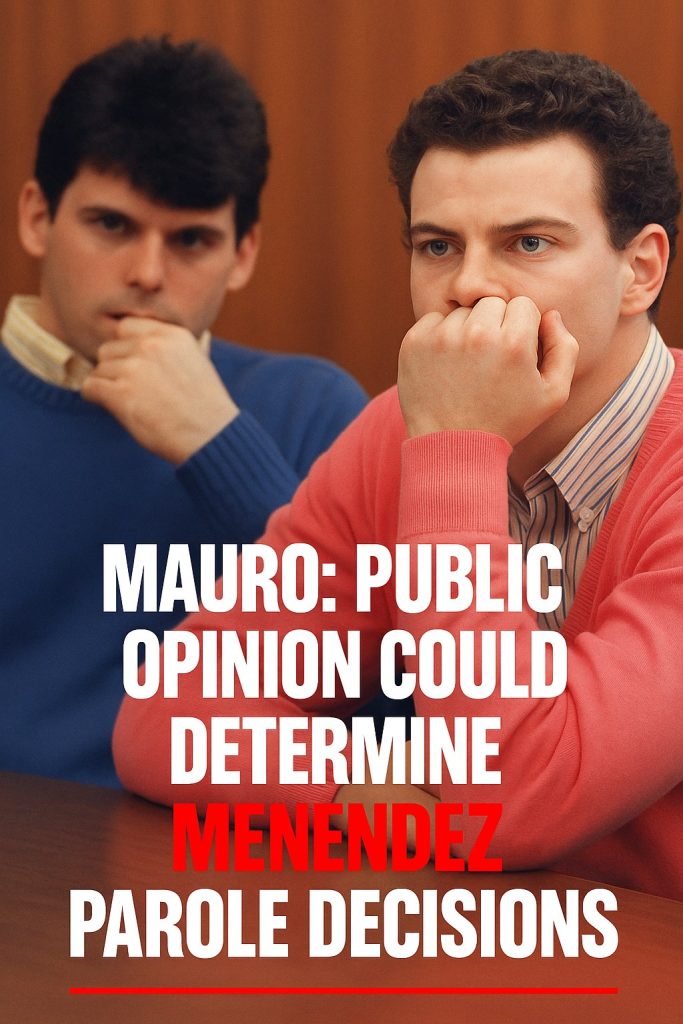
In a recent commentary that has sparked considerable discussion, retired NYPD Inspector and media contributor Paul Mauro offered his perspective on the possible parole of Lyle and Erik Menendez, the brothers convicted of murdering their parents in a high-profile 1990 case. According to Mauro, the parole decision might be influenced more by public sentiment than by the objective facts of the case.
The Menendez brothers’ case has been one of the most controversial criminal trials in American history, captivating the public with a complex narrative involving claims of abuse, financial motives, and sensationalized courtroom drama. After being convicted of first-degree murder, both brothers received life sentences without the possibility of parole. However, recent developments suggest the parole boards are reconsidering their decisions, reopening debate about justice, rehabilitation, and the lasting impact of public opinion on legal processes.
Mauro emphasizes that while parole boards are tasked with evaluating inmates based on their behavior in prison, rehabilitation progress, and the severity of their crimes, public opinion often slips into the equation, especially in cases as notorious as the Menendez brothers’. “The public’s emotional response and media portrayal can skew the neutral facts that should guide parole decisions,” Mauro explained. He suggests that the decision-making process may be swayed by shifting social attitudes over time, including evolving views on domestic abuse claims and mental health considerations presented during the original trial.
Critics of the original sentencing have long argued that the brothers were victims of sustained abuse, a narrative that gained sympathy and has been revisited in recent years. Supporters of parole argue that the brothers have served substantial time and demonstrated remorse and transformation, which parole boards often weigh heavily. Conversely, others believe the severity of their crime and the betrayal involved warrant continued incarceration regardless of outside opinions.
Mauro’s insights invite a deeper look at how parole boards balance legal facts with societal pressures. He points out that ideally, parole decisions should strictly reflect facts verified through investigations and inmate behavior rather than fluctuating public sentiment fueled by media coverage or social media discourse. “When a case becomes a cultural touchstone,” he noted, “the risk is that decisions reflect collective emotion instead of judicial fairness.”
The possibility of parole for the Menendez brothers opens broader questions about the criminal justice system’s handling of infamous cases and whether justice is truly blind in the face of public scrutiny. Mauro’s viewpoint urges the public and legal authorities to consider the difference between sentiment and substantiated evidence in making decisions that profoundly impact victims’ families, the accused, and society at large.
As the parole review process continues, this debate underscores the ongoing tension between law enforcement principles, victim advocacy, rehabilitation promises, and the court of public opinion. Regardless of the outcome, the discussion remains a poignant reminder of the challenges inherent in balancing justice with humanity in complex criminal cases.