
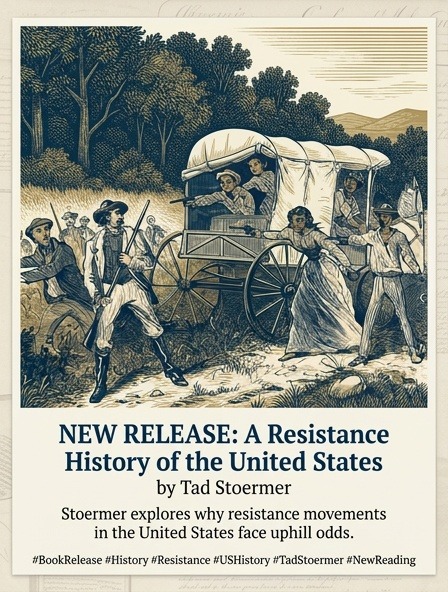
In his compelling new book, A Resistance History of the United States, historian and writer Tad Stoermer delves into the complex and often perilous landscape faced by grassroots movements fighting for change across the nation. At a time when activism and protests dominate headlines, Stoermer unpacks why resistance efforts in America frequently encounter uphill battles, both historically and in the present day.
Stoermer’s investigation highlights a recurring theme: despite the strength of conviction among activists, structural barriers and institutional resistance often impede their progress. From the abolitionist movements of the 19th century to recent protests for racial justice and climate action, resistance efforts have consistently met with formidable opposition from governmental, corporate, and societal interests that prefer the status quo.
One key insight from the book is the role of institutional inertia and entrenched power structures. Resistance movements challenge core interests, threatening the economic and political foundations of those in power. This leads to pushback in the form of propaganda campaigns, legal hurdles, and even violence, all designed to suppress dissent and maintain dominance.
Additionally, Stoermer discusses the psychological toll resistance takes on activists. The book examines historical instances where fear, fatigue, and disillusionment have sapped the momentum of grassroots campaigns. Despite these challenges, his narrative emphasizes resilience and strategic perseverance, illustrating how some movements have persisted and even achieved significant victories over time.
Interestingly, the book also explores how the American political landscape often complicates resistance efforts. Bipartisan gridlock, partisan media, and voter suppression tactics create further obstacles for those seeking reform. Stoermer argues that understanding this systemic resistance is crucial for anyone committed to social change, as it provides insight into how campaigns can be better strategized to overcome entrenched opposition.
With meticulous research and compelling storytelling, Stoermer offers both a historical perspective and practical analysis. His work underscores that although resistance movements in the United States face uphill battles, they are an essential part of the nation’s ongoing struggle to expand rights and justice. The book ultimately serves as both a cautionary tale and a source of inspiration for future activists.
As protests and social movements continue to shape the political landscape of 2026, Stoermer’s insights remind us that enduring change often requires extraordinary perseverance. His historical perspective encourages advocates to learn from the past, recognizing both the obstacles and the resilience that define America’s fight for justice.
Where to Learn More
- The Power of Resistance: A New Look at America’s Activist Movements – The New York Times
- Understanding Social Movements in the U.S. – BBC News
- Civil Rights Movements and Their Modern Echoes – History.com
- How Resistance Shapes American Democracy – NPR