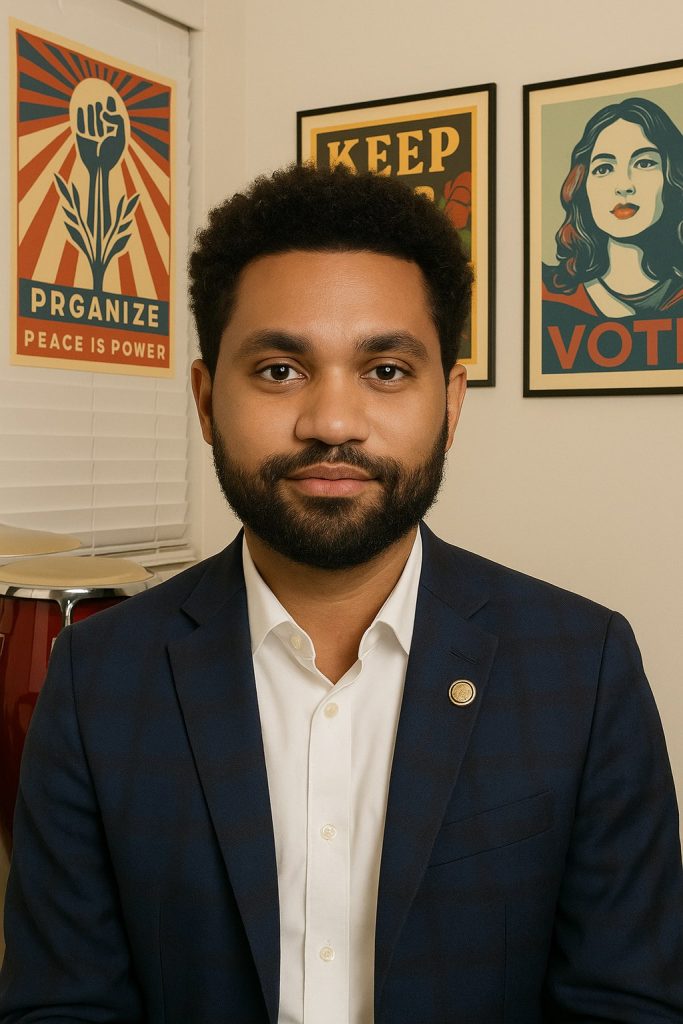
As the clock ticks down towards a potential government shutdown, Rep. Maxwell Frost (D-FL) has become a voice of clarity and urgency, ramping up discussions on Capitol Hill about the dire consequences of Republican tactics. His recent statements showcase a dramatic shift in the narrative, illustrating not only the pitfalls of the current Republican strategy but also how vulnerable they are to public scrutiny.
In a matter of minutes during a recent media appearance, Frost demonstrated why the Republican Party appears trapped as the deadline looms. With various factions within the GOP squabbling over budget cuts and spending priorities, Frost’s remarks cast a spotlight on internal discord while aligning himself with public concerns. “The American people are tired of political games,” Frost declared emphatically. “We need to put aside theatrics and work towards bipartisanship and real solutions.”
Frost’s analysis hinges on the realization that while Republicans dig in their heels on fiscal austerity, they risk alienating key voting blocs. His advocacy for government funding that prioritizes essential services resonated strongly with constituents who fear the adverse effects of a shutdown. “We are not just talking about numbers in a budget,” he emphasized. “We are talking about health care, education, and the livelihoods of everyday Americans.”
This particular statement struck a chord on social media platforms, where clips of his interview quickly went viral. Users shared his insights, often highlighting his ability to condense a complex situation into relatable commentary. The overwhelming social media engagement suggests that Frost’s message is not just heard; it’s actively supported and echoed by many who view the GOP’s current maneuvers as reckless.
Moreover, Frost’s mention of the ‘theatrics’ and ‘political games’ set a tone that challenges the narrative Republicans seem to maintain—that they are solely protecting taxpayers from wasteful spending. As the backlash from the last major shutdown in 2019 still lingers, many Americans vividly remember the disruption it caused in federal services and the economy. This time around, Frost and the Democrats appear poised to shift blame onto their opponents, making the case that GOP in-fighting is the real issue at hand.
Political analysts suggest that Frost’s comments may very well signal the beginning of a strategic pivot for the Democratic Party. By focusing on the tangible impacts of a shutdown and emphasizing bipartisanship, Frost and his colleagues might be able to rally public support and pressure Republicans into a more cooperative stance. Some commentators even predict that Frost’s approach could spell trouble for incumbent Republicans in upcoming elections, where voter sentiment could sway dramatically if they perceive the party as responsible for governmental dysfunction.
As the negotiation deadline approaches, all eyes will be on Washington to see if Frost’s predictions about Republican vulnerability will come true. The stakes are high, and with public sentiment coalescing around issues rather than partisan loyalty, the potential fallout from a shutdown might prove to be far-reaching for the GOP. The coming days will reveal whether transformative leadership like Frost’s will catalyze a new deal or whether the political games will continue.