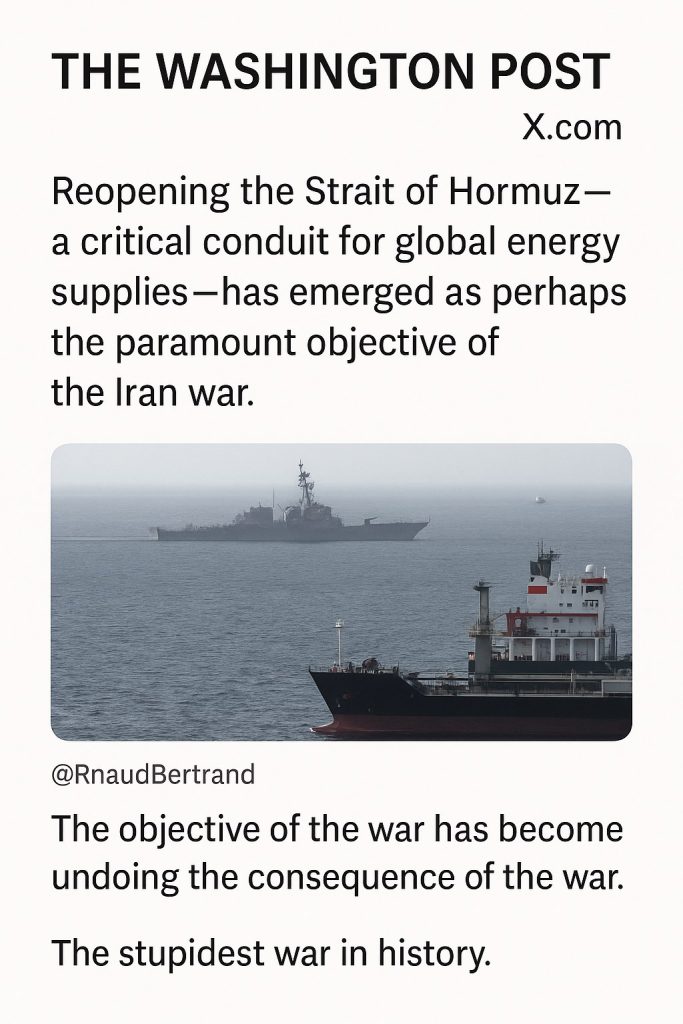
The Strait of Hormuz, a narrow but vital waterway nestled between Oman and Iran, has once again captured global attention amid escalating tensions in the Middle East. Recent discussions highlighted by The Washington Post and shared widely across social media platforms, including X.com, underscore the strait’s significance as a critical conduit for international energy supplies and its emerging role as a paramount objective in the ongoing conflict involving Iran.
The Strait of Hormuz serves as a maritime chokepoint through which approximately 20% of the world’s petroleum passes, making its security a matter of urgent global concern. The strait connects major oil-producing nations in the Persian Gulf with markets worldwide, and any disruption can send shockwaves through energy markets, impacting everything from gasoline prices to global economic stability.
Recent clashes and heightened military activity around the Strait have intensified fears of disruption. Analysts and policymakers now regard reopening and securing the Strait of Hormuz not just as a tactical necessity but as a strategic imperative in the broader Iran conflict. Control over this passage is seen as a powerful lever capable of influencing diplomatic negotiations, economic sanctions, and military options.
The international community is closely watching how the strait’s status will affect the trajectory of the Iran war. Diplomatic efforts are ramping up to ensure safe passage and prevent any escalation that could lead to a blockade or an attack on commercial vessels. However, Iran’s strategic positioning and statements suggest that control over the Strait is a key bargaining chip and a symbol of sovereignty that Tehran is unwilling to relinquish.
For global energy markets, the reopening and stability of the Strait are paramount. A prolonged closure or conflict escalation could cripple oil shipments, trigger price spikes, and exacerbate global inflationary pressures already heightened by other geopolitical uncertainties. Countries dependent on Gulf oil have a vested interest in the conflict resolution that guarantees navigational freedom in these waters.
The situation remains fluid, and geopolitical experts emphasize the need for vigilance and diplomacy. Intelligence reports and military deployments reveal the high stakes involved in control of the Strait. Both regional and global powers are weighing their responses carefully to avoid a disruption that could spiral into a wider conflict with far-reaching consequences.
As this critical issue continues to unfold, it is clear that the Strait of Hormuz is more than a geographic bottleneck—it is a pivotal fulcrum upon which the stability of the Iran conflict and global energy security balance.
Where to Learn More
- Reopening the Strait of Hormuz: Strategic Implications for the Iran War – The Washington Post
- Why the Strait of Hormuz is so important – BBC News
- Why the Strait of Hormuz Matters to Global Energy – Council on Foreign Relations
- Middle East Tensions and Oil Supply Risks – Reuters