
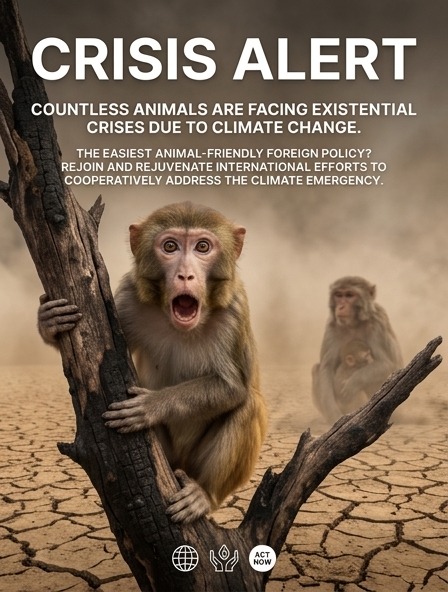
As climate change accelerates at an alarming pace, countless animal species are facing what many are calling *existential crises*. Rising temperatures, habitat destruction, and unpredictable weather patterns threaten the very survival of numerous wildlife populations around the world. In this urgent context, experts and activists alike emphasize that the most straightforward, impactful foreign policy move the United States can make is to re-engage with international climate agreements and initiatives.
Since leaving the Paris Agreement in 2017, the U.S. has missed critical opportunities to collaborate globally on climate action. Now, under President Donald Trump’s administration, there is renewed interest in reversing course and leading by example. Rejoining and actively rejuvenating international efforts to combat climate change would send a clear signal of commitment — not only to curb global emissions but also to protect the world’s biodiversity.
Why is this so crucial for animals? The link is straightforward: climate change is a primary driver of habitat loss, food insecurity, and migration disruptions for countless species. For example, rising ocean temperatures threaten coral reefs, vital habitats for marine life, while shrinking ice caps jeopardize polar bears and Arctic seals. Terrestrial animals like elephants and tigers face habitat fragmentation, forcing them into closer contact with humans and increasing conflict. Without global collective action, many of these species risk extinction in the coming decades.
Furthermore, international cooperation can unlock a cascade of benefits for animal conservation. Collaborative efforts—ranging from protecting endangered habitats to establishing wildlife corridors across borders—are most effective when nations work together. Revitalizing these efforts ensures that policies are synchronized and resources pooled, multiplying their effectiveness.
There’s a pragmatic political angle as well. Demonstrating leadership in climate action can foster stronger diplomatic relations, enhance the U.S.’s image as a global leader in environmental stewardship, and align domestic policies with a broader international moral responsibility. These measures, in turn, create a ripple effect—encouraging other nations to ramp up their own commitments, ultimately providing a better future for our planet and its inhabitants.
Wildlife advocates argue that embracing a more environmentally conscious foreign policy isn’t just ethical—it’s strategic. Protecting biodiversity preserves the health of ecosystems that humans depend on for clean air, water, and food. It’s a win-win scenario: a better planet for animals likely means a healthier, more stable Earth for all living beings, including people.
In the end, the easiest and most effective animal-friendly foreign policy change might be the simplest: rejoin international climate efforts with urgency, determination, and genuine commitment. As countless species face the brink, it’s high time to recognize that climate action is animal action, and that cooperation on this front is a moral and practical imperative for global stability and biodiversity preservation.