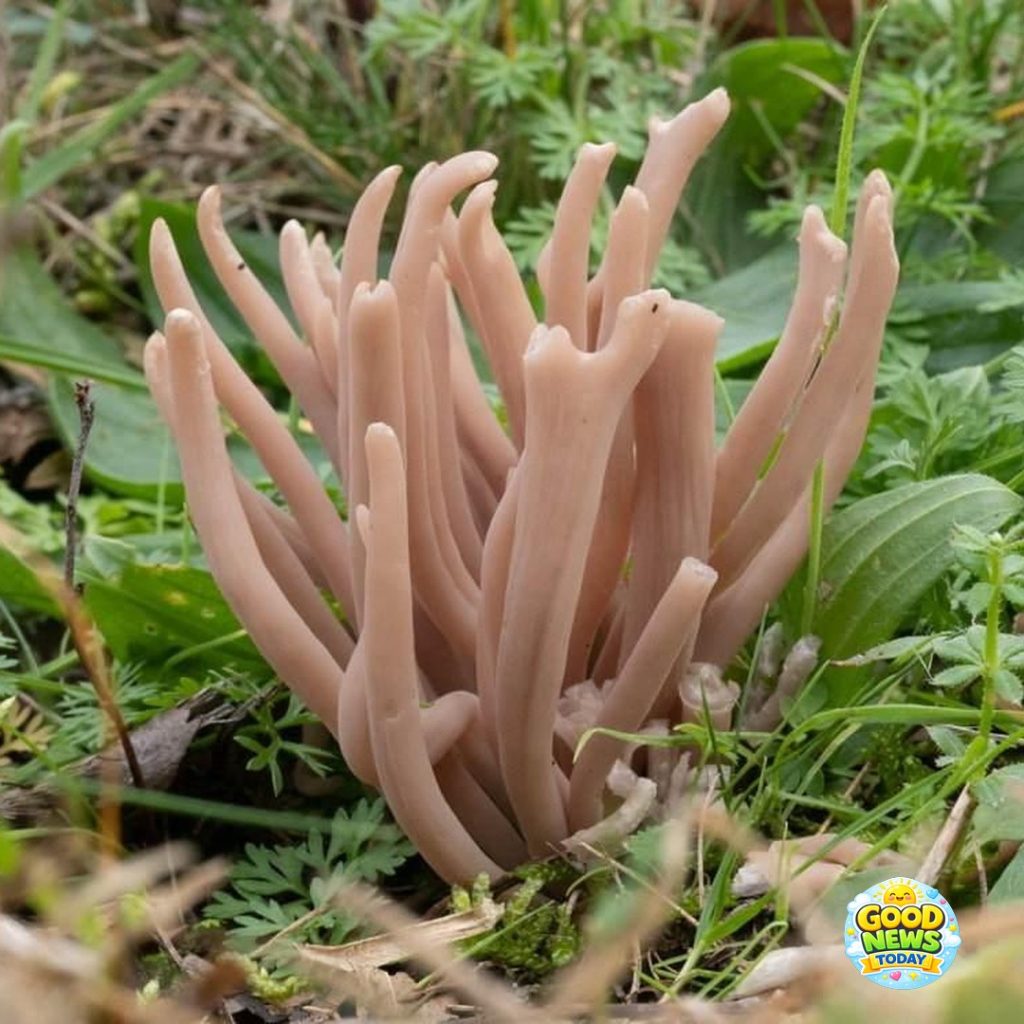
A delightful discovery has been made in England, where a rare pale pink fungus, known as the fairy club, was spotted for the very first time in Great Britain during a mushroom survey last autumn. This enchanting fungus, native to Italy, resembles a tennis ball in size and has been verified through DNA testing to distinguish it from other similar species.
The remarkable find was made by a dedicated group of Naturewatch volunteers from Somer Valley Rediscovered, located in the picturesque southwest of England. DNA extraction took place in Scotland before being sent to the University of Aberystwyth in Wales for sequencing, showcasing a wonderful collaborative effort across the UK.
According to Dan Nicholas, a local mushroom enthusiast who led the survey, “This discovery further demonstrates that the South West is home to some of the most spectacular and diverse examples of unique grassland fungi communities anywhere on the planet. We are truly blessed to have such a colorful spectacle of nature’s calendar right on our doorstep, something we need to cherish and protect at all costs.”
The fairy club, scientifically named Clavaria calabrica, belongs to an informal group of fungi known as fairy clubs or coral fungi. Identified by scientists in Italy in 2017, its name reflects the Latin word for “club” and pays homage to the Italian region of Calabria. Typically found in well-managed grasslands that are rich in biodiversity, this species has previously been documented in Northern Ireland, but this marks its debut on mainland Britain.
This magical find occurred as part of the Somer Valley Rediscovered project, which aims to enhance biodiversity while fostering a deeper connection between communities and their local green spaces and landscapes.
Residents in the region are enthusiastically encouraged to participate in the West of England Wildlife Index, a citizen science initiative that tracks wildlife across 20 sites in West England, contributing valuable data for the region’s State of Nature report. Volunteers can help count bees, butterflies, plants, and wetland birds, supported by the project’s ecologist and established national monitoring programs.
Helen Godwin, the Mayor of the West of England, expressed pride in this extraordinary discovery, stating, “Finding a species never before recorded in Great Britain here in the West is something we can all be proud of. This shows again just how rich and unique landscapes across our region can be.” She further emphasized the importance of the West of England Nature Partnership’s efforts to understand and protect these habitats, encouraging everyone to get involved in the West of England Wildlife Index to help safeguard the nature that makes the region so special.