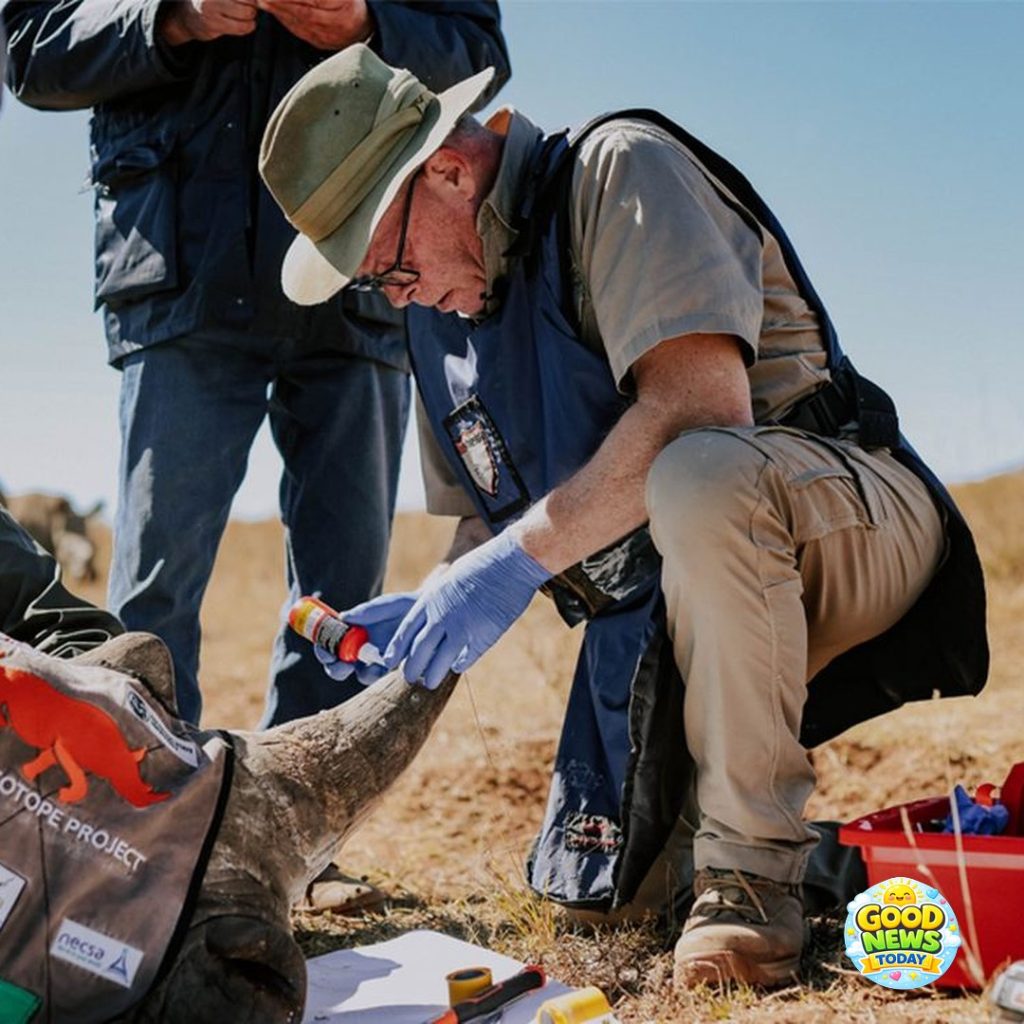
In South Africa, an innovative approach to combat rhino poaching is now being put into action, showcasing a blend of creativity and determination developed over the past six years. This initiative, known as the Rhisotope Project, involves the remarkable strategy of embedding non-harmful radioactive isotopes into the horns of rhinos. This technique aims to deter poachers by making it virtually impossible to smuggle rhino horns across international borders, thanks to the existing security measures at seaports and airports designed to combat nuclear threats.
Even if poachers successfully extract the isotope, the residue left on the horn—and anything it comes into contact with—can still be detected. Field tests conducted by the University of Witwatersrand-Johannesburg have shown that the radioactivity from these isotopes can be identified, even if a single horn is concealed inside a standard, 40-foot steel shipping container.
The Rhisotope Project was initiated to address the alarming rates of illegal poaching that threaten South Africa’s rhino population. As the country is home to the largest number of rhinoceroses globally, it faces a critical challenge in preserving the dwindling populations of both the white rhino (Ceratotherium simum) and the black rhino (Diceros bicornis), which are classified as “Near Threatened” and “Critically Endangered” by the International Union for Conservation of Nature (IUCN).
“Our aim is to implement the Rhisotope technology on a large scale to help protect one of Africa’s most iconic and endangered species. In doing so, we also preserve a vital part of our natural heritage,” expressed Jessica Babich, CEO of the Rhisotope Project.
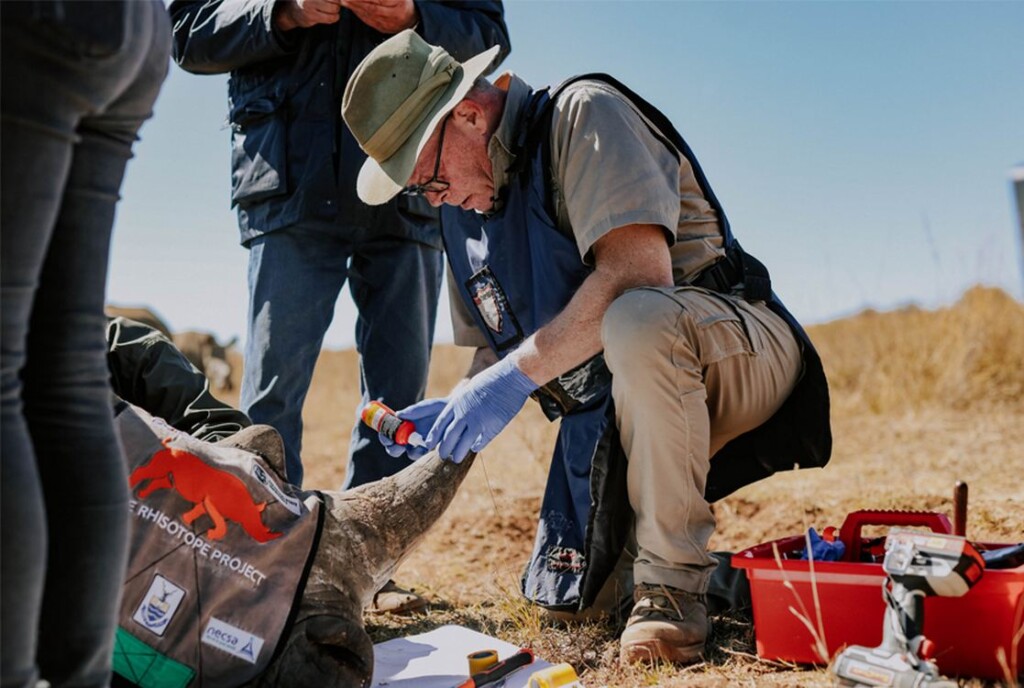
Across approximately 200 countries, around 11,000 machines equipped to detect radiation are strategically placed at points of entry, enabling staff to perform these detections with ease and minimal training. In contrast, few regions possess the necessary infrastructure or training programs to identify trafficked animal products.
Initially, there were concerns about the potential impact of radioactive materials on the rhinos. However, many conservationists have come to view this method as “a magical idea.”
Reflecting on past attempts, Babich noted that a previous effort in 2015/16 to utilize nuclear technology for rhino protection was abandoned due to its impracticality in the field. This led to a collaboration with Professor James Larkin, Chief Scientific Officer of the Rhisotope Project and an expert in radiology at Witwatersrand University, who proposed the innovative use of isotopes.
This pioneering project represents a hopeful step forward in the fight against rhino poaching, combining science and conservation in an extraordinary effort to protect these majestic creatures for future generations.