
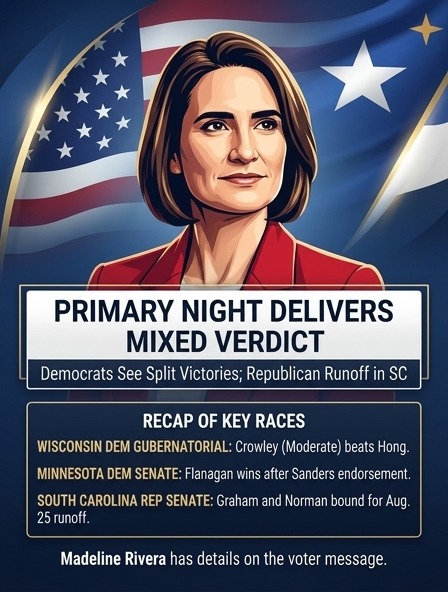
In a decisive night of primaries across the nation, political analysts are calling it a night of contrasts and escalating battles. The results reflect a divided Democratic Party and set the stage for an intense Republican showdown in South Carolina, as voters send clear messages about their preferences heading into the all-important midterm elections.
In Wisconsin, the Democratic gubernatorial race took an unconventional turn. Moderate David Crowley narrowly edges out Democratic socialist Francesca Hong, signaling a subtle but significant shift within the Democratic primary landscape. Crowley’s victory demonstrates that voters continue to lean towards pragmatic candidates who appeal to a broad electorate, even as progressive voices still hold considerable influence.
Meanwhile, in Minnesota, a different ideological battle unfolded in the Democratic Senate primary. Peggy Flanagan, the lieutenant governor and a fierce advocate for progressive policies, secures a decisive win after garnering an endorsement from Senator Bernie Sanders. Her victory underscores the continued strength of the progressive wing within the Democratic Party, especially as it aligns with grassroots movements and younger voters eager for bold change.
Across the political aisle, the Republican primary in South Carolina presents an entirely different picture. Incumbent Senator Lindsey Graham and Representative Ralph Norman both fail to secure the majority needed to avoid a runoff, igniting a fierce August 25th battle for the seat. This development highlights internal Republican debates about the direction of the party, with each candidate representing differing factions vying for control. The runoff is poised to be a pivotal contest, likely serving as a referendum on the party’s future path amid tensions between traditional conservatives and more populist segments.
Madeline Rivera, reporting on the primary night, notes that these results send a clear message: voters are energetic, diverse, and increasingly willing to challenge established candidates. The Democrats display a strategic divide between moderates and progressives, while the Republicans’ inability to consolidate support points to ongoing internal conflicts.
As the midterms approach, political observers suggest these primary outcomes could foreshadow broader trends. The Democrats’ reliance on a mixture of moderates and progressives could either unify or fracture their campaigns, while the South Carolina runoff is likely to energize local GOP supporters and influence the overall narrative heading into November.