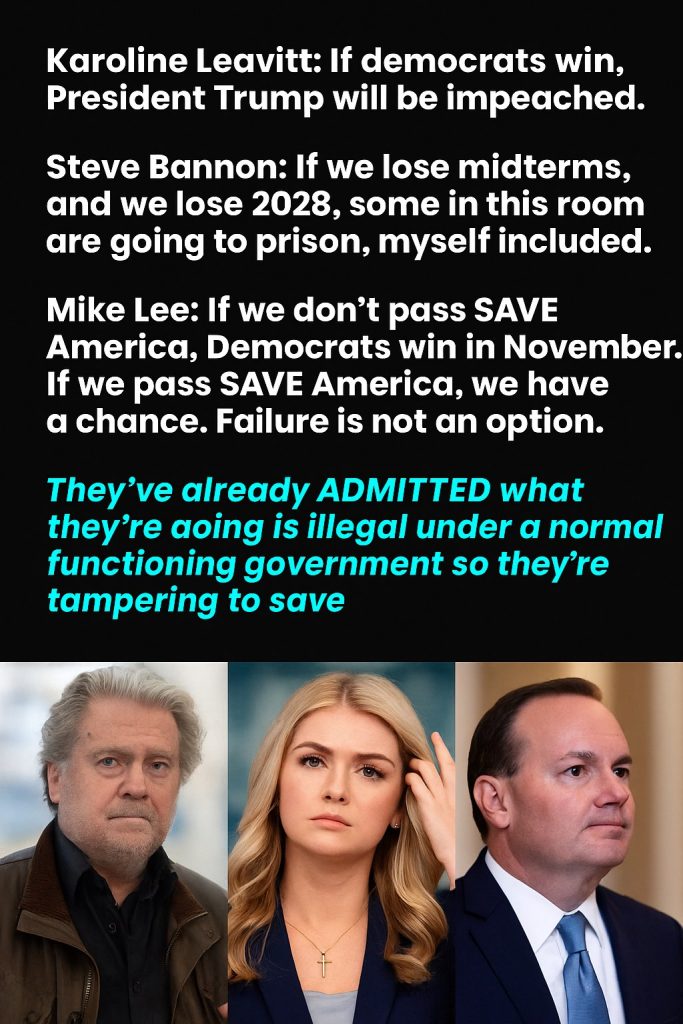
Political discourse has reached a fever pitch on social media after a viral post featuring remarks from political figures Karoline Leavitt and Steve Bannon sparked intense debate over the future of American politics. The post, which has circulated widely, summarizes sharp warnings related to potential outcomes of midterm and presidential elections, including President Trump’s possible impeachment and broader implications for both major political parties.
The crux of the viral message quotes Karoline Leavitt, a prominent conservative voice, saying, “If Democrats win, President Trump will be impeached.” This statement resonates deeply with Republican supporters who view impeachment as a politically motivated maneuver, while Democrats emphasize legitimate oversight and accountability. The timing of this assertion, amid closely contested congressional races, adds fuel to an already polarized political battleground.
Adding to the drama, Steve Bannon, a former White House strategist and influential figure on the far-right, is cited as warning: “If we lose midterms, and we lose 2028, some in this room are going to…” Although the message cuts off before completing his thought, the ominous tone suggests potential intra-party consequences or radical shifts if Republicans face significant electoral defeats. Bannon has historically been known for hawkish rhetoric toward party direction and conservative strategy, signaling that these midterms could be viewed as existential for GOP forces aligned with Trump’s vision.
This social media moment encapsulates the high stakes of this election cycle. The midterms traditionally serve as a critical barometer of presidential administration approval and determine the balance of power in Congress. With narrow margins in key districts, control of the House and Senate hinges on voter turnout and campaign effectiveness.
President Trump’s impeachment talk remains particularly charged. While Trump was impeached twice during his presidency by the House of Representatives, he was acquitted in the Senate on both occasions. Whether a new wave of impeachment efforts will emerge under a potential Democratic majority depends on legislative priorities and the political landscape post-election. The threat of impeachment remains a contentious issue galvanizing partisan bases and impacting campaign narratives.
Meanwhile, Bannon’s warning about losses in 2028 points toward the GOP’s long-term strategy, suggesting that the party’s identity and electoral viability could be at risk if key elections slip away. Speculation abounds about possible party realignments or leadership changes should Republicans fail to secure victories that many view as critical to maintaining their political agenda.
This intensifying rhetoric highlights the volatility of American politics amid rising polarization and voter anxiety. Social media continues to serve as a powerful amplifier of political messages, often shaping public opinion through brief, potent soundbites that condense complex political strategies into stark warnings.
As the nation approaches the midterm elections and looks ahead to the 2028 presidential race, these loaded statements from Leavitt and Bannon underscore the profound challenges and uncertainties facing both political parties. Voters and political analysts alike are monitoring these developments closely, recognizing that upcoming elections could define the trajectory of U.S. governance for years to come.
Where to Learn More
- The Future of Impeachment Talks Post-2024 Midterms – The New York Times
- Steve Bannon on GOP’s 2028 Outlook and Midterm Losses – Politico
- Analysis: Why the 2024 Midterms Matter – CNN Politics
- Impeachment in U.S. Politics: History and Current Issues – BBC News