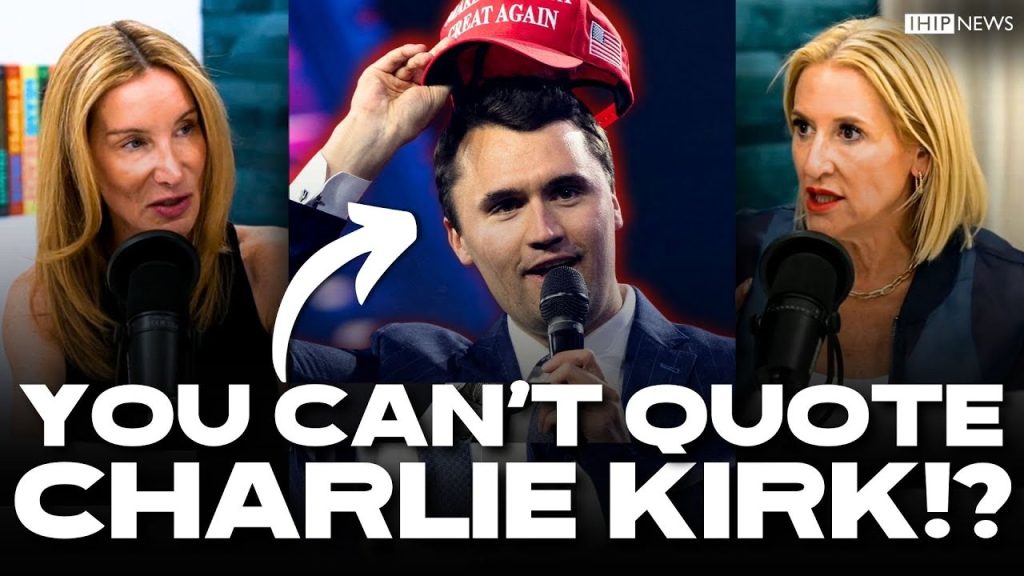
In the wake of a viral political video, the discourse surrounding Charlie Kirk, a prominent conservative voice and founder of Turning Point USA, has captivated social media and political analysts alike. The video, which features stark commentary on the reactions to Kirk’s statements and the media’s portrayal of him, highlights a growing divide in the conservative movement regarding how Kirk should be perceived.

Throughout the video, the narrator outlines a narrative suggesting that the Make America Great Again (MAGA) movement is attempting to reposition Charlie Kirk as a moderate figure in light of recent controversies surrounding his comments. This has led to significant backlash, with many insisting that censorship of his actual words is a tactic employed to dilute his brand of conservatism. The request to recognize Kirk’s views as more complex than the mainstream narrative suggests is a reaction to both his critics and supporters.
The video provocatively points out specific instances of media backlash, notably the firing of journalists who quoted Kirk’s remarks, raising questions about freedom of speech and the limits of acceptable discourse in today’s media landscape. It further explores the dichotomy of public perception, where supporters might blindly align with him simply because of his affiliation—“he’s a white guy. He’s a Republican. He’s a Christian. He’s my guy”—rather than any substantive engagement with his ideologies.
Recent events have added fuel to the fire, particularly following the violent events that seem to revisit Kirk’s rhetoric, notably in a discussion about gun violence. The narrator urges a more nuanced position, clarifying that opposing violence, regardless of the context or the victim, should be a nonpartisan stance. This appeal for moral clarity amidst prevailing polarizations provides a window into the complex nature of characterizing political figures in contemporary America.
Furthermore, the video makes a compelling case for accountability in journalism, calling out major news networks that, according to the speaker, have chosen sensationalism over factual representation of political figures like Kirk. As segments of mainstream media reportedly commemorate Kirk’s contributions via humor-infused slots (e.g., at the airing of late-night shows), the critique about the bifurcation of political narratives persists, stressing that the portrayal must align with the person’s real views and statements.
The ongoing debate around the interpretation and responsibility tied to political figures, especially in a polarized environment, showcases a microcosm of America’s broader ideological battles. As supporters rally for Kirk’s original words to be acknowledged and accurately conveyed, opponents argue for accountability for the contentious ideas he promotes. This clash could potentially redefine the boundaries of political speech within the conservative movement.
With Kirk’s rhetoric continuing to energize segments of the Republican base, especially younger voters, it remains crucial to analyze the accompanying media narratives. Since these dialogues shape public perception and policy-making, understanding the nuances behind figures like Charlie Kirk is paramount to grasping the future trajectory of American conservatism.
Where to Learn More
- Politico – In-depth political analysis and coverage of current events.
- NPR – Comprehensive reporting and discussions on the latest political news and trends.
- CNN – Detailed news reports on political matters, including media response and controversies.
- Fox News – Coverage of conservative viewpoints, including analysis of figures like Charlie Kirk.
- The New York Times – Complete coverage of opinion pieces and political narratives unfolding in the U.S.