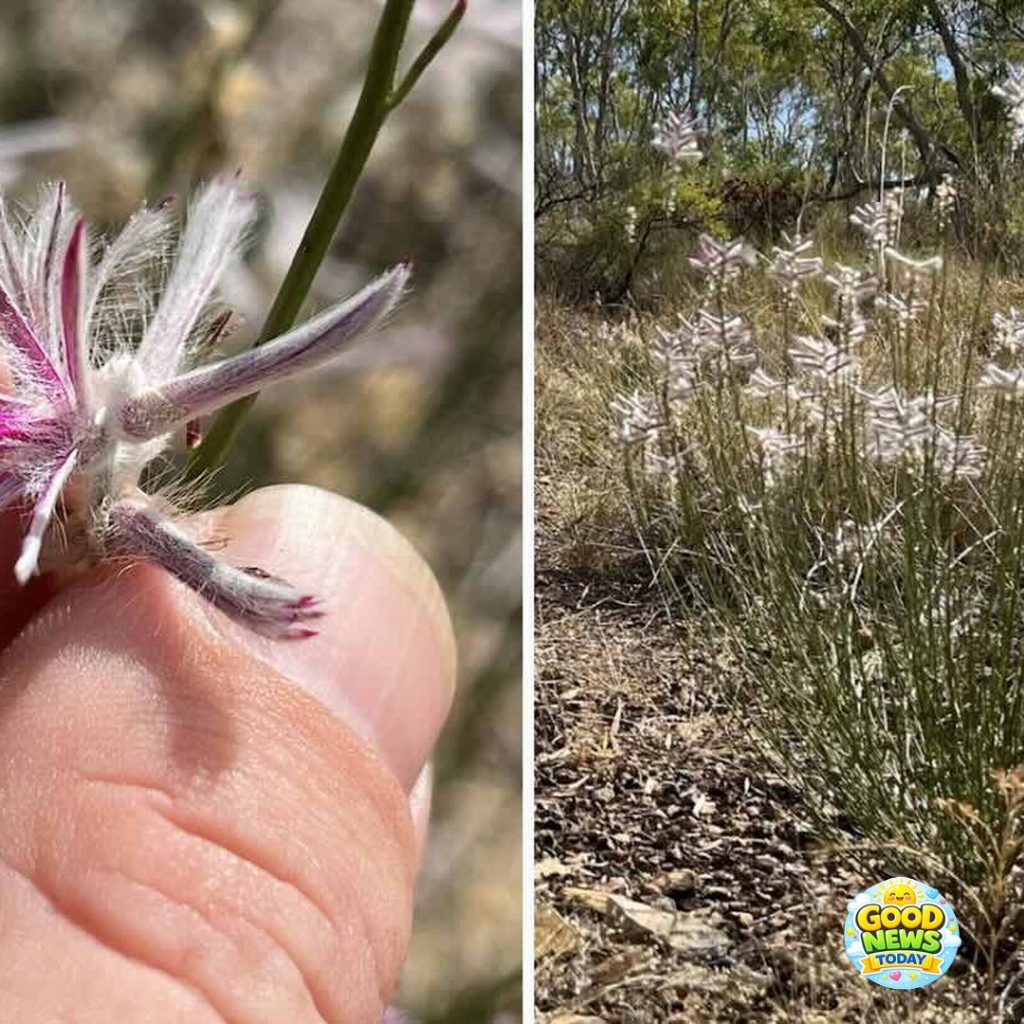
A passionate plant enthusiast recently made a remarkable discovery during a trip to the Outback, unknowingly proving that a shrub once thought to be extinct is very much alive. For over 60 years, scientists had not seen this plant, leading them to believe it had disappeared forever.
It is becoming increasingly evident to researchers in university ecology departments that platforms like iNaturalist play a pivotal role in facilitating significant new discoveries. These citizen science initiatives are proving to be invaluable to the scientific community.
For botanists like Thomas Mesaglio from the Queensland Herbarium, who face the challenge of covering vast and diverse terrains like Australia, these platforms empower dedicated nature enthusiasts and hikers to serve as their eyes and ears in the field.
Aaron Bean, a devoted nature lover and professional horticulturist, was working on a remote outback station in northern Queensland when he stumbled upon a captivating plant. Intrigued by its appearance, he took a few photographs and later uploaded them to iNaturalist, a vast database for citizen scientists.
iNaturalist boasts an impressive global community of four million users who have documented nearly 300 million observations of over 500,000 species, making it one of the largest citizen science platforms available.
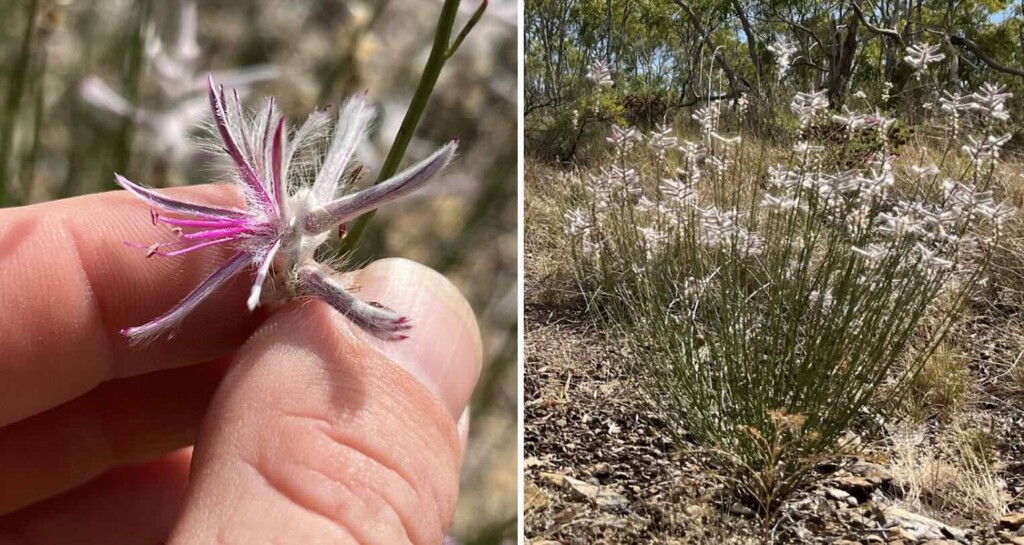
Once Aaron uploaded his photos, they caught the attention of another Bean—Anthony Bean, an expert botanist at the Queensland Herbarium. He immediately recognized the significance of the plant as a species that had been presumed extinct since the 1960s, one that he had described a decade earlier.
“It was a serendipitous moment,” shared Mesaglio from the UNSW School of Biological, Earth and Environmental Sciences, who has written about this exciting rediscovery in the Australian Journal of Botany.
The plant in question is Ptilotus senarius, a delicate shrub adorned with lovely purple-pink flowers resembling a colorful explosion of feathers. This species is native to a rugged region near the Gulf of Carpentaria and had not been documented since 1967, previously believed to be one of the approximately 900 plant species to have gone extinct since the 1750s.
Thanks to the keen observations of both Anthony and Aaron Bean, along with the cooperation of a landowner willing to collect a specimen, Ptilotus senarius has been confirmed to still exist. It has even recently been added to the critically endangered species list, allowing scientists and conservationists to focus their efforts on its preservation.
“This situation highlights how everything aligned perfectly, along with a touch of good fortune,” remarked Mesaglio.
This rediscovery exemplifies a growing trend in which citizen scientists capture images of plants and animals they encounter, upload their findings to platforms like iNaturalist, and ultimately contribute to significant scientific knowledge.