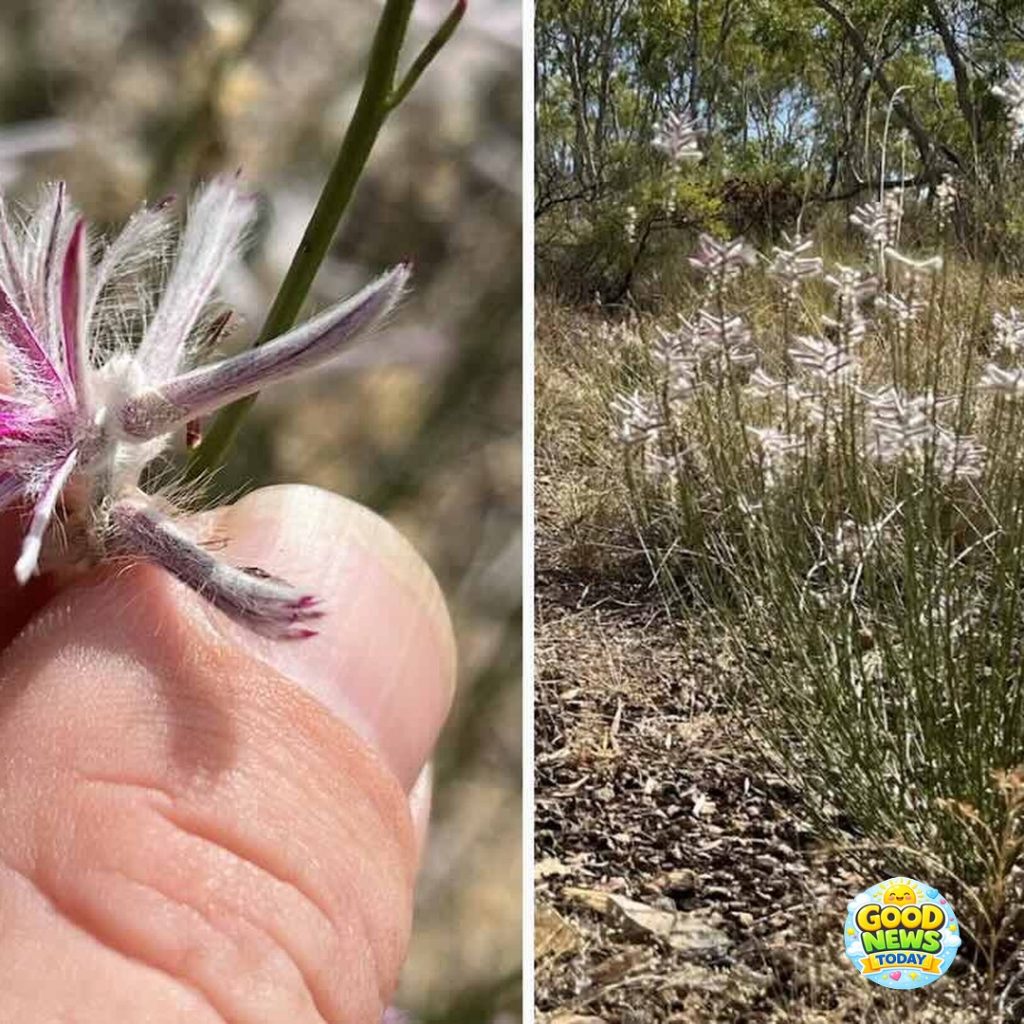
A passionate plant enthusiast recently made an exciting discovery in the Outback that has brought a long-lost shrub back into the spotlight. This plant, once believed to be extinct for 60 years, was rediscovered after a curious individual snapped a photo during a visit to the remote area.
For six decades, scientists had not confirmed any sightings of this particular plant, leading to its classification as extinct. However, the story took a remarkable turn, showcasing the power of citizen science through platforms like iNaturalist, which have become essential tools in ecological research.
Botanists like Thomas Mesaglio from the Queensland Herbarium greatly benefit from these platforms, especially in a vast and diverse country like Australia where it’s impossible to observe every corner. Thanks to enthusiastic hikers and nature lovers, they can gather invaluable data and observations from the field.
Aaron Bean, a dedicated nature lover and professional horticulturalist, was working on a bird banding project in northern Queensland when he stumbled upon a unique-looking plant. Captivated by its beauty, he took several photos and, once he regained phone service, shared his findings on the iNaturalist platform.
iNaturalist has become a global phenomenon, with four million users contributing nearly 300 million observations of over 500,000 species. This incredible database has transformed the way scientists engage with the natural world.
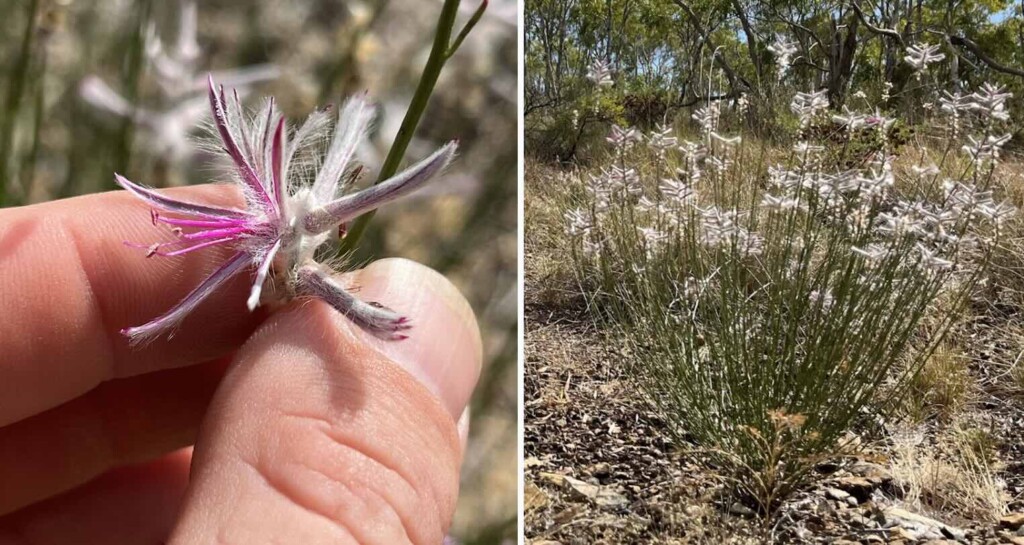
Upon uploading his images, Aaron’s work caught the attention of Anthony Bean, a knowledgeable botanist at the Queensland Herbarium. Anthony quickly recognized the plant as a significant find—one thought to be extinct since the 1960s, which he had previously described a decade earlier.
“It was very serendipitous,” noted Mesaglio from the UNSW School of Biological, Earth and Environmental Sciences, who documented this rediscovery in the Australian Journal of Botany. “Aaron Bean is an avid iNaturalist user who opportunistically took some photos of a few interesting plants on the property.”
The rediscovered plant, known as Ptilotus senarius, is a slender shrub adorned with charming purple-pink flowers resembling vibrant, feathery fireworks. It is native to a rugged area near the Gulf of Carpentaria and had not been seen since 1967, making it one of approximately 900 plant species thought to be extinct worldwide since the 1750s.
Thanks to the keen observations of both Aaron and Anthony Bean, along with a landowner willing to collect a specimen, Ptilotus senarius is now confirmed to still exist. It has recently been added to the critically endangered species list, allowing scientists and conservationists to focus on its preservation.