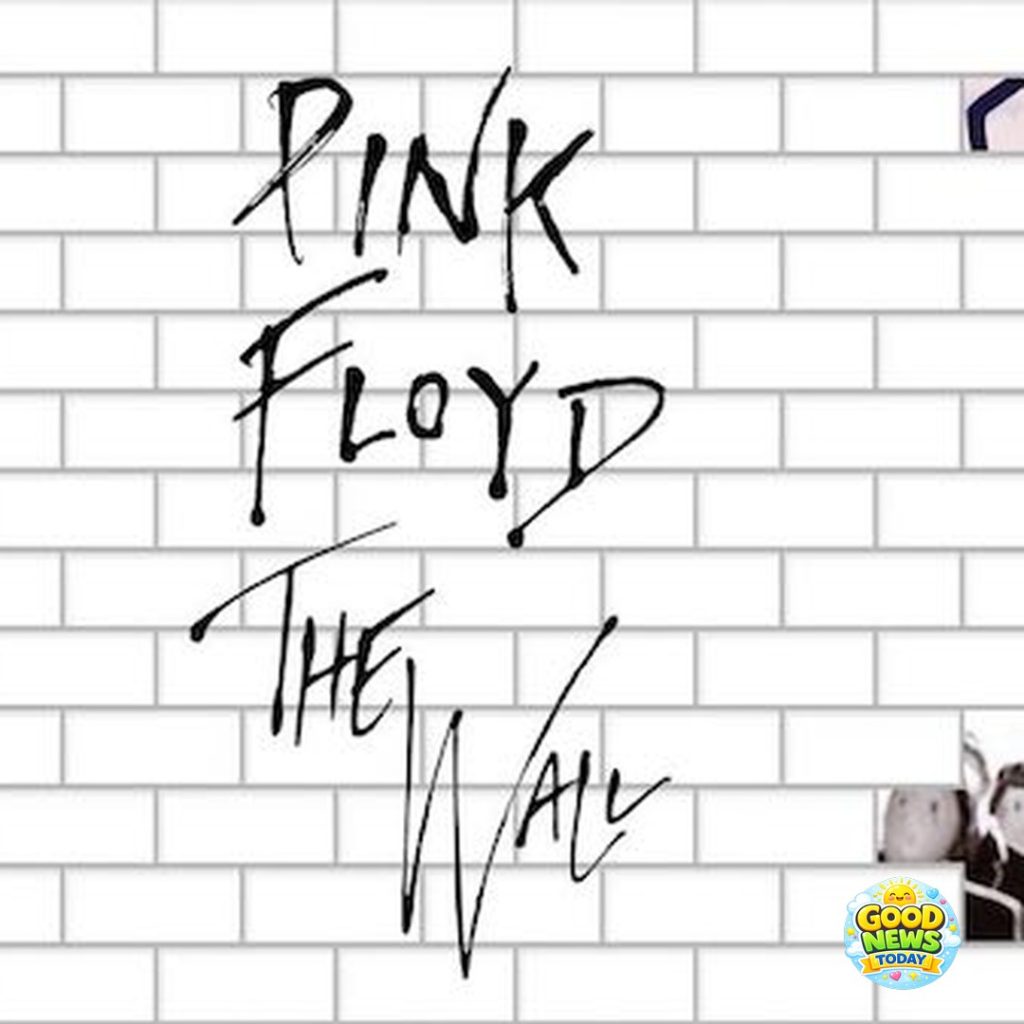
Today marks a significant milestone as Pink Floyd’s iconic single, “Another Brick in the Wall,” celebrates 46 years since it soared to No. 1 on the Billboard charts, kicking off an impressive 11-week reign at the top. This powerful track, part of their rock opera album “The Wall” and penned by bassist Roger Waters, serves as a bold protest against rigid educational systems and features a delightful local elementary school choir. Known as “Part 2,” this remarkable song became their sole No. 1 hit in both the US and UK, as well as in numerous other countries, selling over four million copies worldwide. Be sure to check out the band’s official animated music video from 1980!

The British band recorded the children’s choir at Islington Green School, conveniently located near Pink Floyd’s studio. Alun Renshaw, the head of music at the school, was thrilled about the opportunity and expressed his desire to make music more relevant for the kids, steering clear of traditional classical pieces. He found the lyrics inspiring, especially the lines, “We don’t need no education, we don’t need no thought control.” To ensure the project went ahead smoothly, Renshaw cleverly kept the lyrics from the headteacher, worried she might halt the recording. Under the guidance of producer Bob Ezrin, disco elements were also infused into the song, which even climbed to No. 57 on the disco charts!

The complete album, “The Wall,” also achieved incredible success, reaching No. 1 on the US album chart for an astonishing 15 weeks. This marked Pink Floyd’s third No. 1 album in the US, ultimately selling over 23 million copies in the country alone. Today, “The Wall” remains the third highest-grossing album in the US, following Michael Jackson’s “Thriller” and the Eagles’ “Greatest Hits.”
In addition to this musical milestone, today also commemorates a significant date in the Baháʼí faith. It was 182 years ago that the Bab began teaching the principles of this faith, marking it as both a Holy Day and the New Year’s Day on the Baháʼí calendar. This day is particularly important for Baháʼí followers, as the new year follows the Vernal Equinox based on its occurrence in Tehran, the birthplace of both the Bab and his successor, Baháʼu’lláh. The Baháʼí calendar uniquely divides the year into 19 months, each containing 19 days, establishing a harmonious relationship between weeks and the year that had never been achieved before.

Sociologist Eviatar Zerubavel, in his book “The Seven Day Circle,” notes that the Baháʼí calendar created a distinctive rhythm that enhances group solidarity, a significant goal for this world religion, which now boasts around 100,000 followers. The faith’s most revered figure, Baháʼu’lláh, challenged Islamic conventions by penning extensive works that elaborated on what he perceived as divine revelations—a vision of a global civilization that harmonizes both spiritual and material aspects of life, paving the way for unprecedented peace and serenity.