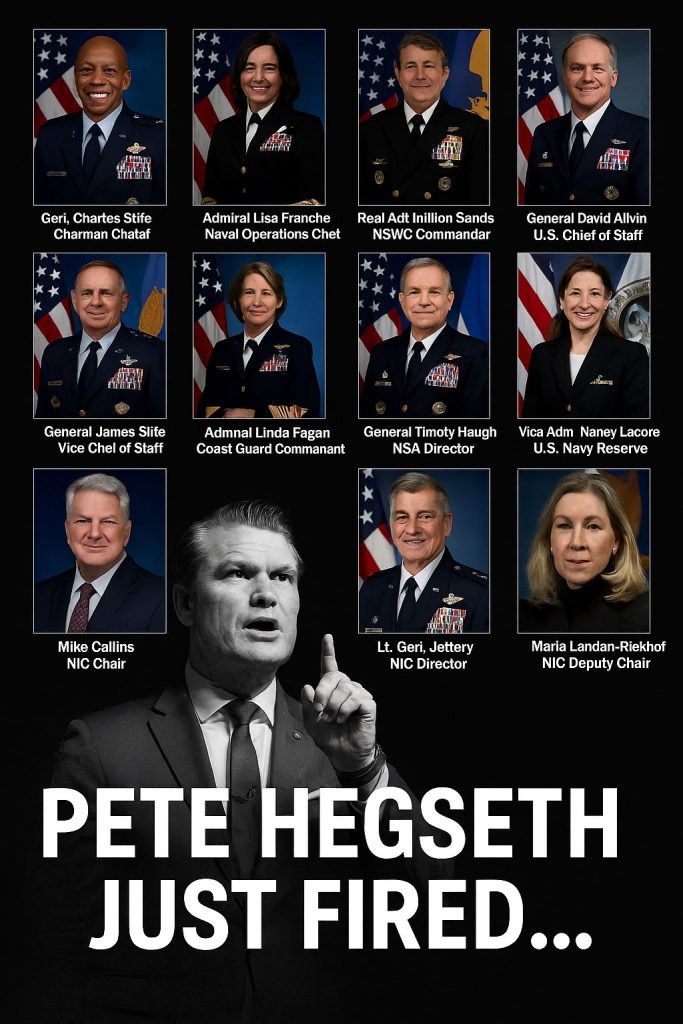
In a stunning and unsettling move, Pete Hegseth, a rising yet controversial figure within the Pentagon, has fired Army Chief of Staff Gen. Randy George along with two other senior generals on Thursday—marking the latest episode in a sweeping purge of high-ranking military officials.
Gen. Randy George is no ordinary officer. A decorated combat veteran who served bravely in Desert Storm, Iraq, and Afghanistan, George represented decades of institutional knowledge and frontline experience. His removal has sparked alarm both within defense circles and across the nation, especially considering the context: the United States is currently engaged in a shadow conflict with Iran.
However, Thursday’s firings are far from isolated. In recent months, Hegseth has ousted over a dozen senior leaders spanning every branch of the U.S. Armed Forces, including the Chairman of the Joint Chiefs of Staff, the Navy’s top admiral, and the head of the National Security Agency. Intriguingly, no official reason has been provided for these abrupt changes, leaving observers and analysts to speculate on the underlying causes.
Whispers from unnamed officials and outside analysts paint a darker picture: the real cause of Gen. George’s dismissal is believed to be his unwillingness to bow to political pressures. Sources suggest he candidly told Hegseth a hard truth nobody wanted to hear—that a ground invasion of Iran would be “too costly to launch and too destabilizing to sustain.” This frank assessment reportedly unsettled Hegseth, who appears intent on assembling a military leadership aligned unquestioningly with his own views.
The consequences of firing a top four-star general actively orchestrating troop deployments in the midst of conflict cannot be overstated. According to a senior U.S. official speaking to Axios, “Here is a four-star general who is actively working to get equipment and people into theater, and you fire him? In the middle of a war?” The parallel to 2003 is striking, when Gen. Eric Shinseki was marginalized after warning then-President Bush’s administration about the complexity and scale of the Iraq War—a warning that proved tragically prophetic.
Military experts worry this purge represents a systemic erosion of seasoned leadership in favor of sycophants willing to champion aggressive war plans without sober critique. Gen. George’s successor reportedly served as a former aide to Hegseth, noted less for military merit and more for personal loyalty—famously calling Donald Trump on inauguration night to offer congratulations.
Senator Chris Murphy captured the gravity of the situation bluntly: experienced generals are telling Hegseth that his Iran war plans are “unworkable, disastrous, and deadly.” Rather than heed these warnings, Hegseth is firing dissenters until he finds leaders who simply say “yes.”
Former Defense Secretaries including Jim Mattis have publicly condemned this growing pattern as reckless and dangerous. Yet, despite the clear warnings, Congress has remained largely silent, raising urgent questions about oversight and accountability during a time of escalating conflict with Iran.
What many fear is unfolding is not just a personnel reshuffle but a drastic, institutional shift where military experience and critical judgment are being cast aside for blind allegiance—at a time when America can least afford it.
Every American concerned with the integrity of national security and the lives of U.S. service members should be paying close attention to these developments. The stakes are nothing less than the country’s strategic future and the conduct of ongoing military operations in a volatile region.
Where to Learn More
- Pentagon Purge: The firing of top military leaders amid tensions with Iran – Axios
- Army Chief of Staff Gen. Randy George Retirement Announcement – U.S. Department of Defense
- Inside Pete Hegseth’s sweeping military leadership changes – Politico
- Generals Fired Amid Growing U.S. Tensions with Iran – The New York Times
- Senator Chris Murphy on military leadership changes – C-SPAN