
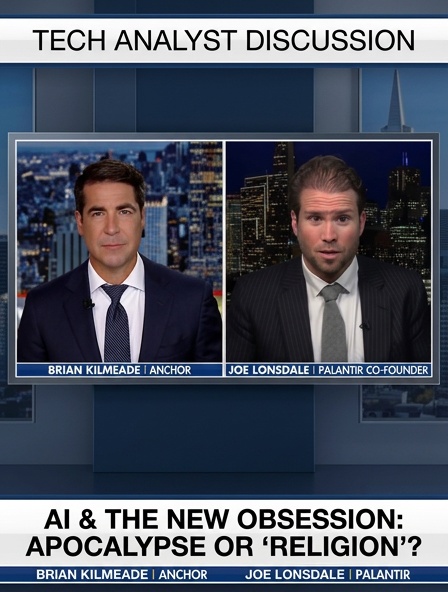
In a striking departure from typical Silicon Valley discourse, Palantir co-founder Joe Lonsdale has voiced a controversial critique of the current narrative surrounding artificial intelligence fears. During recent interviews and social media posts, Lonsdale connected the widespread anxiety about an AI apocalypse to something he characterizes as more than just technological dread — suggesting that certain segments of the effective altruism movement have transformed their fears into a kind of modern-day religion.
“This is their Messiah and this is their end of the world and this is their obsession,” Lonsdale stated in a recent online discussion. His comments resonate amid a broader debate over the increasingly alarmist warnings issued by researchers, tech experts, and advocacy groups about the existential risks posed by advanced artificial intelligence. While many scientists acknowledge the importance of careful oversight and ethical development, critics like Lonsdale argue that the anxiety has spiraled into religious fervor.
At the heart of Lonsdale’s critique is the observation that parts of the effective altruism movement — a philosophical and social movement that advocates for using evidence and reason to do the most good — have, according to him, shifted focus from pragmatic problem-solving to apocalyptic narratives. “They’ve turned AI from a scientific challenge into a moral crusade, often driven more by ideological zeal than grounded reasoning,” Lonsdale said.
This perspective echoes a growing sentiment among some Silicon Valley insiders, who believe that the relentless doom-mongering around AI risks could distract from practical innovation and responsible development. Lonsdale’s stance also raises questions about whether the current discourse on AI safety leans too heavily into speculative fears rather than balanced caution.
The debate intensifies as AI companies, researchers, and policymakers wrestle with crucial questions: How do we ensure AI’s safe development without stoking fear? Are some warnings being amplified for attention or ideological reasons? And does the apocalyptic framing, whether intentional or not, serve to hinder constructive progress?
While many experts acknowledge genuine risks and advocate for robust safety measures, critics like Lonsdale warn against turning the subject into a sort of secular religion, complete with messianic expectations of breakthroughs or catastrophic doomsday scenarios. “Fear of AI isn’t the same as understanding AI,” he explains. “We need to be vigilant, but we shouldn’t let these fears become a new faith.”
This controversial perspective contributes to a broader reflection within the tech community: are fears about artificial intelligence being weaponized or exaggerated? As AI continues to evolve, discussions around ethics, safety, and societal impact remain critical — but perhaps, as Lonsdale suggests, with a focus grounded more in science than in almost messianic zealotry.