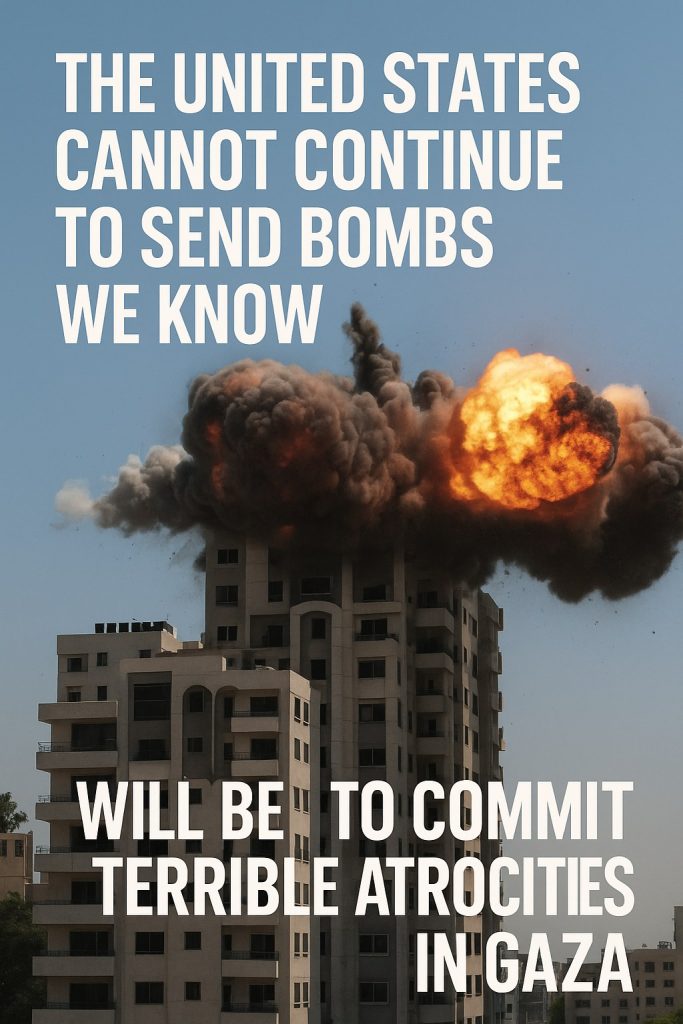
In the wake of continuing violence in Gaza, a contentious dialogue has erupted across social media platforms following a statement that has resonated deeply: “The United States cannot continue to send bombs we know will be used to commit terrible atrocities in Gaza.” This assertion encapsulates a growing concern among activists, policymakers, and everyday citizens about the implications of U.S. military support in the conflict.
The roots of this debate can be traced to recent escalations in hostilities in the region, where the humanitarian impacts have been devastating. Reports indicate that the use of advanced weaponry supplied by the United States has contributed to significant civilian casualties and destruction. As images of the devastation circulate widely, many are calling for a profound reevaluation of U.S. foreign policy.
Public Sentiment Shifts
The sentiment expressed has garnered widespread resonance, especially among younger demographics who utilize platforms such as Twitter, Instagram, and TikTok for advocacy. Many prominent figures, including celebrities and social media influencers, joined the conversation, amplifying calls for accountability and a cessation of arms shipments to regions affected by conflict.
This growing movement reflects a larger trend towards more humanitarian-focused foreign policy, with many advocates arguing that military solutions only perpetuate cycles of violence. The looming question remains: How responsible is the U.S. in deciding to supply arms to countries engaged in conflict? Some argue that it is in direct violation of human rights, while others assert that military support is a vital component of national security strategies.
The Human Cost
Independent reports from organizations like Human Rights Watch and Amnesty International have highlighted the troubling reality on the ground. Their findings indicate that numerous military operations utilizing U.S.-made munitions have led to excessive civilian harm, prompting accusations that the U.S. is complicit in these incidents. As bombs continue to drop in Gaza, the urgency for change is palpably felt among activists advocating for a shift from military support to diplomatic resolutions.
U.S.-based NGOs are mobilizing efforts to educate the public on the consequences of arms sales and the ethical implications involved. Campaigns for greater transparency surrounding military exports are gaining traction, with various groups pushing for legislative changes to ensure that arms are not being supplied to regimes known for committing atrocities against civilians.
Political Implications
The debate is becoming increasingly politically polarized. While some lawmakers continue to advocate for firm support of Israel’s right to defend itself, others within the same political party are pushing back, urging a reexamination of military aid in light of humanitarian concerns. The Democratic Party, in particular, faces internal dissent as members grapple with balancing national security interests against the moral imperatives of human rights.
As this dialogue evolves, advocates are hopeful that it will lead to meaningful changes in U.S. foreign policy regarding military support. The call to action is clear: citizens are empowering one another to influence their representatives to prioritize humanitarian considerations over military contracts.
These discussions reflect a seismic shift in public awareness and sentiment. With the digital age facilitating rapid information sharing, the voice of activism grows louder and more complex, advocating for justice and accountability in U.S. foreign involvement. Only time will tell whether this surge in advocacy will translate into legislative change or whether the cycle of military support continues to thrive at the expense of human lives.
Where to Learn More
- No Place Safe: The Human Cost of U.S. Arms in Gaza – Human Rights Watch
- Gaza: Civilian casualties and violations of International Law – Amnesty International
- US Arms Sales: Controversy Surrounding Support for Conflict – The Guardian
- Gaza Conflict: Explained – BBC News
- US Policy Towards Gaza: Time for a Revision? – Foreign Affairs