
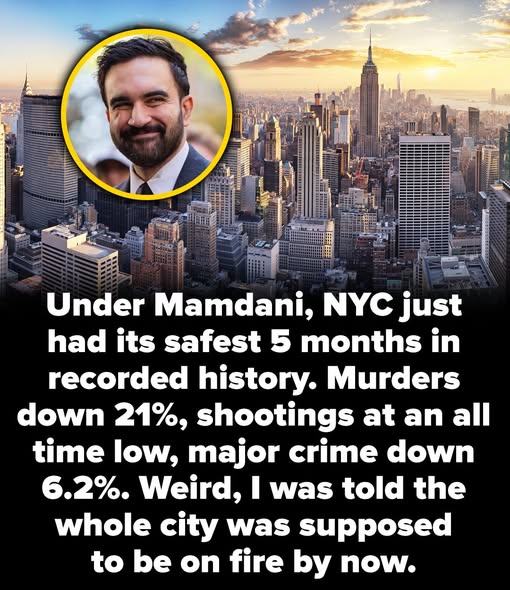
In an unexpected turn of events, New York City has experienced its safest five months in recorded history under Mayor Mamdani’s leadership, challenging long-standing narratives about urban safety and crime trends. A viral social media post highlighting this achievement has sparked widespread discussion, especially amid ongoing debates about public safety policies.
The data, summarized in a striking image circulating online, reports a dramatic decline in crime metrics across the city. Specifically, murders have dropped by 21%, shootings have reached an all-time low, and major crimes are down by 6.2%. These figures represent a significant departure from previous years, which often saw spikes in violence and concerns about urban safety.
Many residents and analysts are taking note of the positive trend, raising the question: what is Mamdani doing differently to achieve these results? Critics of previous administrations have long argued that aggressive policing and traditional crime-fighting strategies are insufficient. Mamdani’s approach — emphasizing community engagement, targeted violence reduction programs, and data-driven policing — appears to be paying off.
However, some sectors remain skeptical, recalling past promises of safety that did not materialize. The viral post referencing the statistics seems to serve as a reminder that, despite the challenges, progress is possible. It also underscores the importance of data transparency and leadership in shaping public perception and policy success.
The claim that NYC is safer than it has been in decades has led to spirited debates online, with supporters praising Mamdani’s leadership and opponents urging caution and continued vigilance. Yet, the numbers speak for themselves: fewer homicides, fewer shootings, and a notable drop in major crime. These developments have implications beyond statistics — impacting community wellbeing, city reputation, and future policy directions.
As the city continues to navigate issues related to crime and public safety, data-driven leadership like Mamdani’s offers a potential blueprint for other urban centers facing similar challenges. While some critics argue that such improvements are temporary, the current statistics suggest a promising trend worth monitoring.
Ultimately, whether these reductions will be sustained remains to be seen. For now, New Yorkers can take some reassurance in the numbers and the leadership steering their city toward a safer future.