
Today marks a remarkable 56 years since the Nuclear Non-Proliferation Treaty (NPT) came into force, following its ratification by 43 nations dedicated to curbing the spread of nuclear weapons. This groundbreaking treaty not only aims to prevent the proliferation of nuclear arms but also fosters collaboration in the peaceful applications of nuclear energy and encourages disarmament efforts worldwide. The NPT’s negotiation, which spanned three years, was conducted by a United Nations-sponsored committee comprised of 18 countries, including Canada, France, Great Britain, Italy, the United States, and several others.

As of 2016, an impressive 191 countries have embraced the NPT, making it the most widely supported arms limitation or disarmament agreement in history—a true testament to its importance. However, there are a few notable exceptions. North Korea withdrew from the treaty in 2003, and four UN member states—including three that possess nuclear weapons: India, Israel, and Pakistan—have never signed on. Additionally, South Sudan, which became an independent nation in 2011, has not yet joined the ranks of NPT members.

From its inception, the treaty recognized five nations as “nuclear-weapon states,” identifying those that had nuclear explosives prior to January 1967: the United States, United Kingdom, France, Russia, and China.
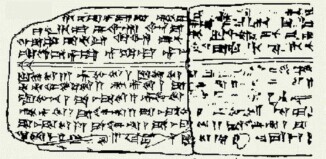
In other uplifting news from this date, we celebrate an extraordinary musical event that took place 52 years ago at Berkeley University. This performance featured the ancient “Hymn to Nikkal,” a cherished piece of Hurrian music that had not been heard in over 3,000 years. Dating back to the 14th-12th centuries BCE, this remarkable hymn was unearthed in the library of Ugarit, one of the earliest urban settlements located in present-day Syria.
Known as the ‘Hurrian Moonrise,’ this prayer song gained fame following its discovery in the early 1950s when archaeologists excavating the Royal Palace of Ugarit found it among 36 hymns inscribed on clay tablets. This particular hymn honors the Hurrian moon goddess, Nikkalu.
The musical notation is designed for a nine-stringed lyre and is based on a diatonic scale, with a tuning system documented on three Akkadian tablets from the Late and Old Babylonian periods. The Babylonian theory elaborates on musical intervals such as thirds, fourths, fifths, and sixths.
Anne Kilmer, a dedicated Assyriologist, spent years deciphering the musical principles behind this ancient song and others found in the Ugarit library. The version performed at Berkeley was a simplified rendition, closely resembling how it would have sounded in its original context, thanks to Kilmer’s extensive research. The talented Lorna Govier played the lyre during this historic performance.

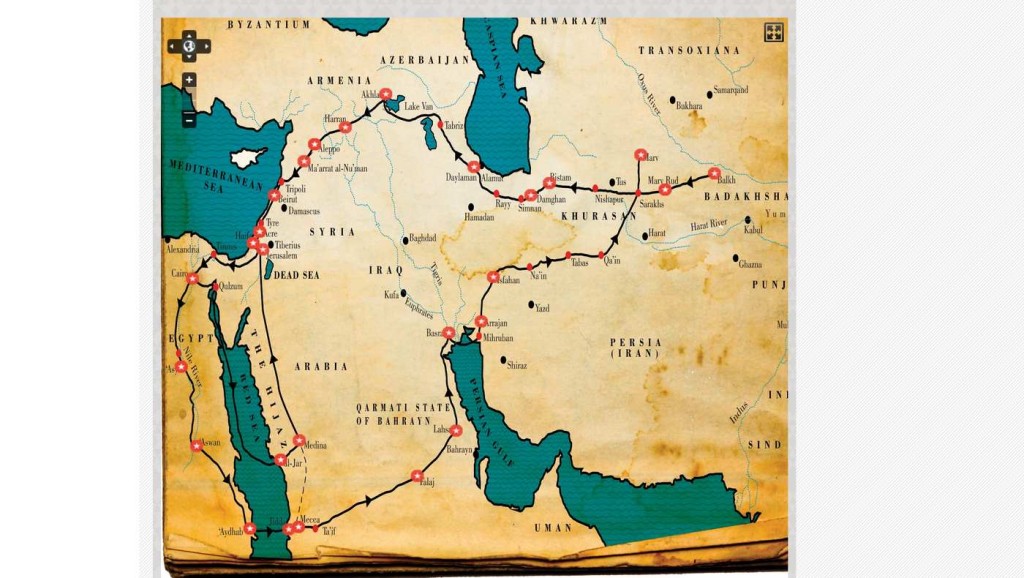
Additionally, we recognize an inspiring historical figure from 980 years ago today: Nasir Khusraw, who embarked on a transformative seven-year journey across the Islamic World. A poet, philosopher, and Isma’ili scholar, Khusraw is celebrated as one of the greatest contributors to Persian literature, hailing from Bactria, in modern-day Tajikistan.