The shadow of Jeffrey Epstein’s dark legacy continues to loom large years after his controversial death, as new developments have recently emerged that reignite public interest in one of the most notorious criminal cases of the decade. Newly released images of Ghislaine Maxwell in prison have surfaced, accompanied by a government memo that affirms Epstein’s death was a suicide and discloses that the broader scope of the abuse involved over 1,000 victims.
Photos of Maxwell Behind Bars
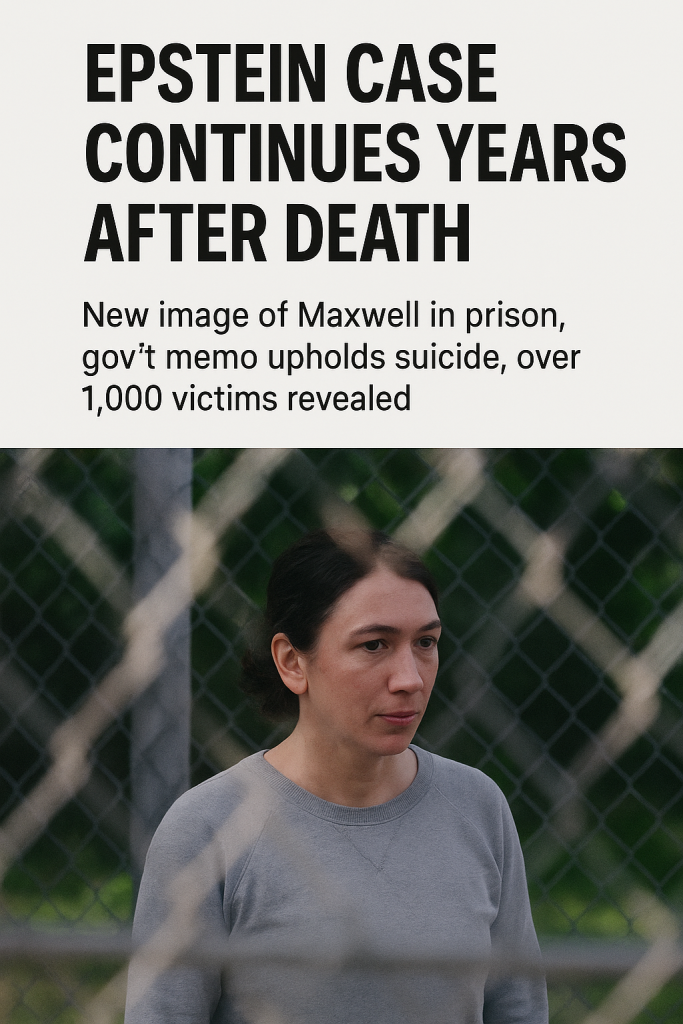
The recent circulation of images shows Ghislaine Maxwell, Epstein’s longtime confidante and convicted sex trafficker, inside the confines of a high-security detention facility. These snapshots provide a rare glimpse of Maxwell’s current status as she serves a prison sentence related to her role in recruiting and grooming underage girls for Epstein and his associates. The images depict a subdued and hardened figure, a stark contrast to her previously glamorous public persona linked with powerful social circles.
The photographs have sparked renewed conversations online and in legal circles about the justice served and the potential for further investigations into Maxwell’s and Epstein’s network. Maxwell’s conviction in late 2021 marked a significant moment in holding enablers accountable, yet the case’s reverberations continue, reflecting the extensive nature of the crimes.
Government Memo Reaffirms Epstein’s Death Circumstances
Parallel to the release of Maxwell’s prison photos, a recently declassified government memo reiterates that Jeffrey Epstein’s death in August 2019 was ruled a suicide by hanging. This document also tackles long-standing conspiracy theories by providing official confirmation from investigative authorities. It acknowledges systemic failures at the correctional facility that may have contributed to the conditions under which Epstein took his life, including lapses in monitoring and procedural breaches.
Shocking Revelation: Over 1,000 Victims Identified
One of the most startling revelations in the memo is the disclosure that more than 1,000 victims were linked to Epstein’s abuse network, a figure that far exceeds previous public estimates. This extensive victim count underscores the widespread and organized nature of the exploitation, encompassing numerous geographical locations and implicating multiple high-profile individuals who remain under scrutiny or investigation.
The expanded number of victims has galvanized advocacy groups and legal teams who continue to push for comprehensive justice and reparations for survivors. Many calls have arisen for continued transparency and further examination of Epstein’s connections, aiming to dismantle any residual networks that facilitated the criminal enterprise.
Ongoing Impact and Public Dialogue
The renewed attention to Jeffrey Epstein’s case in 2024 signals the persistence of public demand for accountability, even years after the central figure’s death. Ghislaine Maxwell’s incarceration and the flood of new details highlighted in the government memo contribute to a broader understanding of the scope and severity of the crimes committed.
As the case remains a focal point of legal and social inquiry, its implications continue to resonate across conversations about power, privilege, and justice. The intersecting revelations of Maxwell’s imprisonment and the official confirmation of the victim toll serve as a grim reminder of the enduring need to confront and address systemic abuse at all levels.