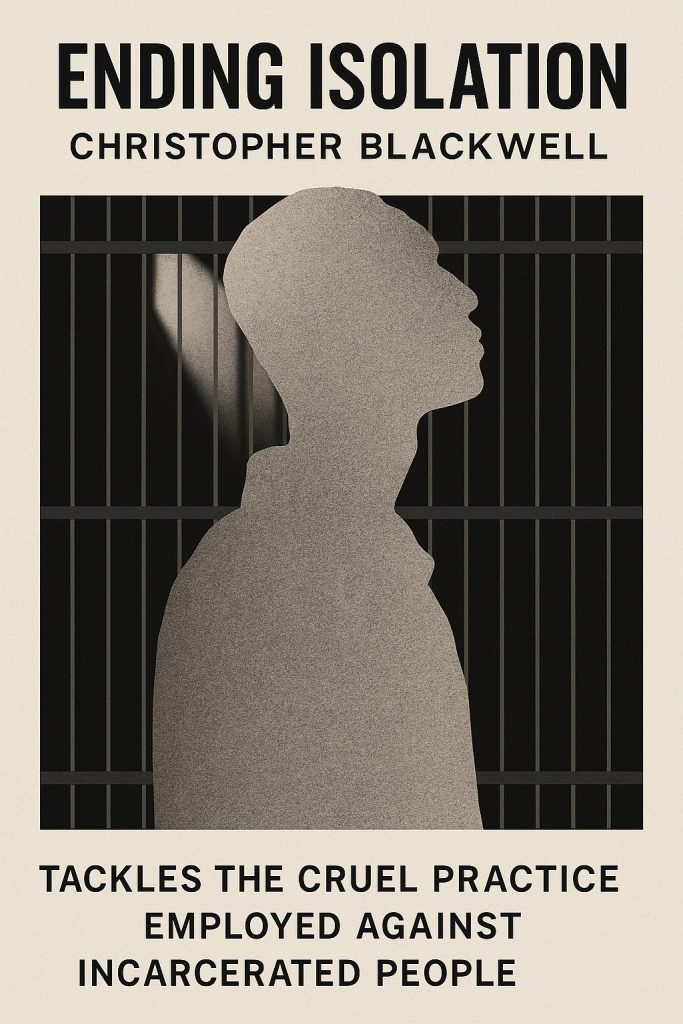
In a bold move that has ignited discussions on the treatment of incarcerated individuals, correctional advocate Christopher Blackwell has unveiled his latest book, “Ending Isolation.” In this gripping exposé, Blackwell delves into the grim reality of solitary confinement—a practice employed in prisons across the United States that many argue is both inhumane and counterproductive.
With over 10 million people cycling through the U.S. jail and prison system annually, solitary confinement remains a prevalent, albeit controversial, disciplinary tactic. Blackwell’s book meticulously dissects the impacts of isolation not only on inmates but on society at large. Drawing from extensive research, interviews with former inmates, and direct observations, Blackwell provides a compelling narrative that calls for a reevaluation of how correctional systems operate.
Blackwell, who spent years advocating for prison reform, argues that solitary confinement exacerbates mental health issues rather than correcting behavior. “When individuals are kept in isolation, their humanity is stripped away,” Blackwell remarked in a recent interview. “This book is not just about ending isolation; it’s about honoring the dignity of all individuals, regardless of their past actions.”
The book outlines real-life stories of men and women who have faced the devastating realities of solitary confinement. Blackwell shares anecdotes that highlight the severe psychological toll this practice can impose, leading to depression, anxiety, and even suicidal thoughts. Furthermore, he emphasizes that the impacts extend beyond prison walls, affecting families and communities.
Among the eye-opening revelations within the pages of “Ending Isolation” is the statistic that nearly one in five inmates in U.S. prisons have experienced solitary confinement, often for extended periods. Drawing on a wealth of data, Blackwell questions how a system designed ostensibly for rehabilitation can lead to such stark outcomes. He also points to international models where solitary confinement is severely restricted or entirely abolished, advocating for a more humane approach.
Blackwell’s timing couldn’t be more pertinent. Amid rising public awareness about prison reform and mental health advocacy, “Ending Isolation” serves as a rallying cry for activists, lawmakers, and citizens alike. The book not only highlights the urgent need for reform but also suggests actionable steps that can be taken. For instance, he calls for increased transparency in correctional facilities, improved mental health care, and alternative disciplinary measures that prioritize rehabilitation over punishment.
The release of “Ending Isolation” has already sparked conversations on social media platforms, where advocates and supporters are sharing their experiences and hopes for a more just penal system. Blackwell’s unique blend of research, personal testimony, and passion for reform resonates deeply with readers, making the book a vital contribution to the ongoing dialogue surrounding criminal justice reform in America.
As discussions continue to evolve, it remains clear that Blackwell’s work is a critical step towards fostering compassion in a system often marked by despair and isolation. With offerings from a variety of voices—both former prisoners and experts in the field—“Ending Isolation” is set to become a cornerstone in both literature and advocacy.
Where to Learn More
- The Impact of Solitary Confinement – ACLU
- Is Solitary Confinement Actually Necessary? – NPR
- Solitary Confinement in U.S. Prisons and Jails – Human Rights Watch
- What Solitary Confinement Does to Mental Health – NBC News
- The Case Against Solitary Confinement – Prison Policy Initiative