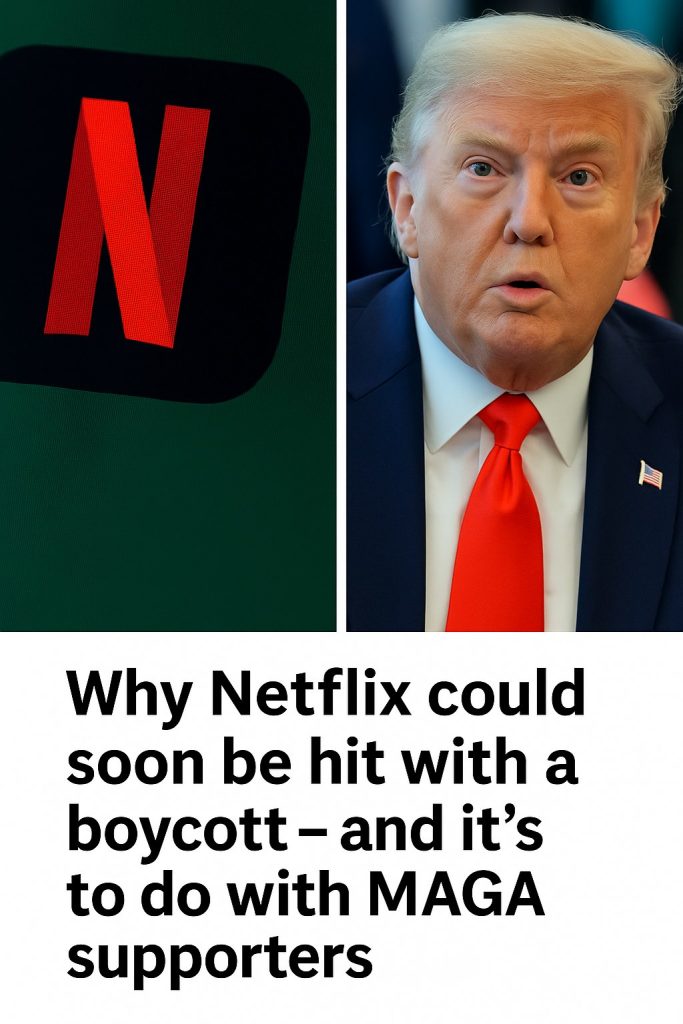
Netflix may soon encounter a significant backlash from MAGA supporters following news that one of its co-founders made a political donation to a prominent rival of former President Donald Trump.
The development emerged this week after reports surfaced that Reed Hastings, co-founder of Netflix, contributed financially to a campaign aligned with Trump’s 2024 opponent. Although Netflix as a company has not officially taken a partisan political stance, Hastings’ personal donation has ignited calls among MAGA supporters for a boycott of the streaming giant’s services.
The news quickly stirred conversations across social media platforms where proponents of the Make America Great Again (MAGA) movement urged their followers to cancel Netflix subscriptions and seek alternative entertainment options. The movement’s leaders argue that ongoing political disagreements are increasingly influencing consumer behavior, particularly in the entertainment sector, which many perceive as leaning left politically.
This is not the first time the political affiliations of high-profile tech executives have impacted public sentiment toward their companies, but the Netflix situation illustrates how personal acts of political involvement can ripple outward, affecting a company’s public image and revenue.
Industry analysts note that while Hastings’ donation is a personal act, it connects him — and by extension, Netflix — to broader political debates in the United States. A boycott led by MAGA supporters could affect Netflix’s subscriber base, especially since some studies indicate a considerable portion of conservative viewers feel alienated by perceived political messaging in popular media.
Netflix, a global streaming powerhouse with over 230 million subscribers worldwide, has faced viewer scrutiny and backlash over its programming choices before. However, this scenario is distinct because the controversy centers on the political donations of its leadership rather than the content it produces or distributes.
So far, Netflix representatives have not made a direct statement regarding Hastings’ donation or the calls for a boycott. The company maintains a focus on curating a diverse content library, emphasizing inclusivity and entertainment variety for its global audience.
Experts in corporate social responsibility highlight how companies, especially those led by influential founders, must carefully navigate the intersection of personal political expression and corporate identity. These situations test the balance between individual freedom and brand protection.
For MAGA supporters, Netflix has become symbolic of perceived progressive cultural dominance, and Hastings’ action only fuels that narrative. Whether the boycott will translate into significant subscriber losses remains to be seen, but it underscores how deeply political polarization is influencing consumer choices in the entertainment industry.
As the 2024 election cycle intensifies, corporate leaders’ political engagements remain under scrutiny, drawing attention not only to their personal beliefs but also to how those beliefs might shape consumer loyalty and business outcomes.
In summary, the potential Netflix boycott reflects growing tensions between political activism by influential figures in the tech world and the diverse customer base these companies serve. How Netflix responds, and how subscribers react, could serve as an important case study in the evolving relationship between politics and business.