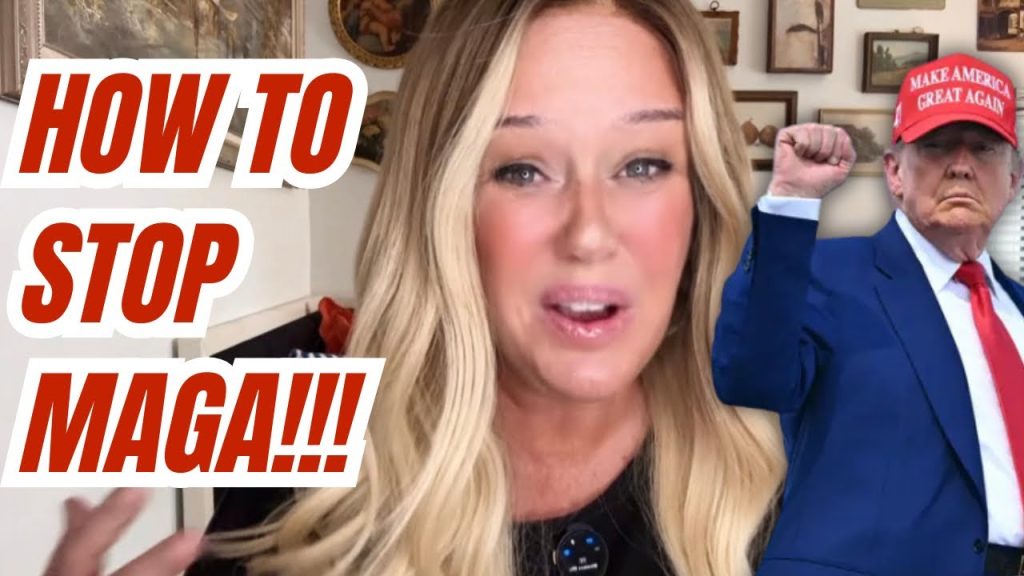
The title “De-Cult Your MAGA Friends!” suggests a provocative exploration of the deep divisions that have arisen in the United States due to the political rhetoric surrounding former President Donald Trump’s “Make America Great Again” (MAGA) movement. It implies a confrontational yet necessary approach to understanding and addressing the ideological fervor that has led many individuals to passionately support, or even “cult-like” follow, political figures and movements.

The term “cult” in a political context often evokes strong imagery. It indicates a situation where loyalty to a leader or ideology overshadows rational discourse, critical thinking, and mutual understanding. As the nation faces significant challenges—from a heated partisan climate to discussions about race, economics, and healthcare—these “cult-like” sentiments can strain relationships among friends and family members, leading to uncomfortable social dynamics.
Political polarization has reached new heights in recent years. Surveys indicate that Americans are increasingly likely to perceive people from the opposing party as threats, which can severely hinder constructive dialogue. This context underscores the importance of finding ways to engage with friends who may hold divergent views. Understanding the underlying motivations of MAGA supporters—including economic disenfranchisement, cultural anxiety, and a desire for community—can help in navigating these complex relationships.
While some may call for total disengagement from individuals with opposing views, others argue for tolerance and dialogue. Initiatives aimed at bridging divides often emphasize techniques such as active listening, empathy, and shared experiences. Encouraging moderate discussions rather than confrontations can create an opportunity for mutual understanding and possibly shift perspectives over time.
Ultimately, the journey of “de-culting” friends from entrenched political beliefs invites a deeper reckoning with how individuals relate to one another amid discord. Navigating these interactions could pave the way for a more cohesive society, where dialogue outweighs division.
Where to Learn More
- The New York Times – Comprehensive coverage of political trends and societal impacts.
- Politico – In-depth articles and analysis on current political issues and partisan dynamics.
- Pew Research Center – Data-driven insights into political polarization and public opinion.
- Brookings Institution – Thought leadership on governance, community, and social cohesion.
- FactCheck.org – Nonpartisan oversight of political rhetoric and misinformation.