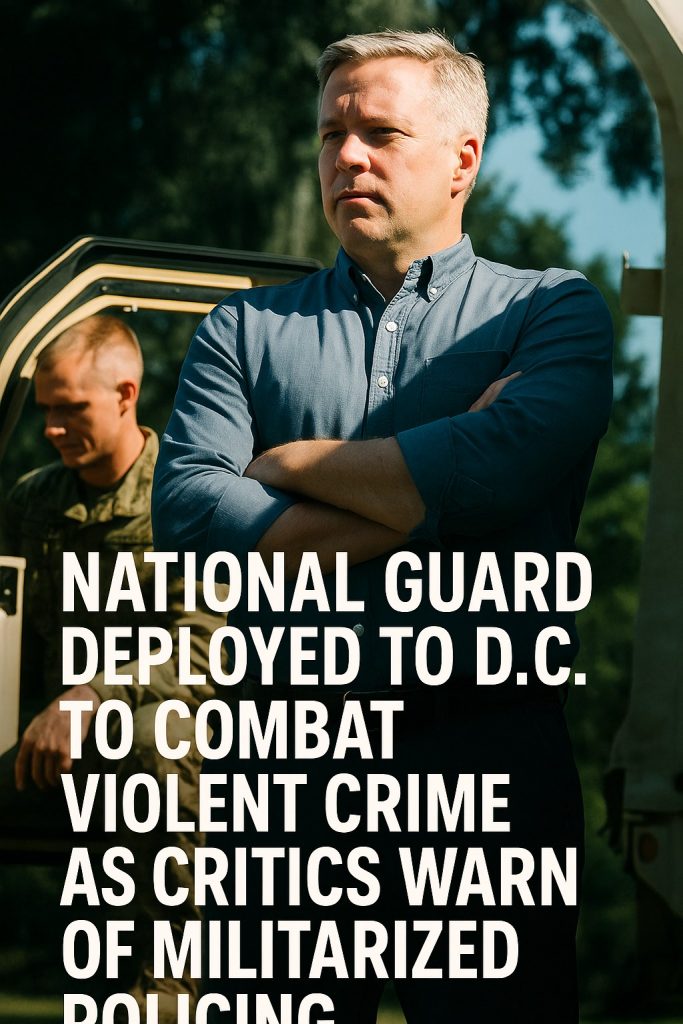
In a significant move aimed at addressing an alarming rise in violent crime, National Guard troops from seven states have been deployed to Washington D.C. This measure is part of an expanded effort to support local law enforcement and restore order in the nation’s capital. However, the deployment has reignited heated debate surrounding the militarization of police forces and the broader implications for civil liberties.
Authorities in Washington D.C. report a marked increase in violent crimes, including homicides, armed robberies, and assaults, prompting officials to seek additional security resources. The National Guard units, drawn from states including Maryland, Virginia, Pennsylvania, New York, and others, arrived equipped to provide logistical and operational support to overwhelmed local police departments.
The deployment’s stated goal is to assist in enhancing public safety through patrols, rapid response to incidents, and intelligence-sharing, thereby allowing regular law enforcement personnel to focus on investigative and community policing efforts. The District’s leadership emphasized this was a temporary measure crafted to prevent further deterioration of public security while more sustainable crime-fighting strategies are implemented.
Despite the stated intentions, critics and civil rights advocates voice serious concerns about the potential consequences of involving military-trained personnel in routine policing. Opponents argue that heightened military presence risks normalizing a culture of aggressive enforcement tactics and erodes trust between communities and law enforcement agencies. This “slippery slope” argument highlights fears that the presence of armed guards could escalate tensions rather than calm them, potentially leading to disproportionate force against civilians.
The debate over the use of National Guard troops in civilian settings is not new, but it has gained renewed attention amid national conversations on police reform, systemic racism, and community safety. Critics highlight historical instances where military involvement in domestic policing led to violent confrontations and civil rights violations.
Local officials maintain that the troops will operate under strict rules of engagement, focusing exclusively on support roles rather than direct law enforcement actions such as arrests. This delineation, they insist, seeks to strike a balance between the need for enhanced security and protecting citizens’ rights.
Meanwhile, residents across the city express mixed reactions. Some welcome the additional manpower as a vital step toward addressing the crime wave that has left many feeling unsafe, especially in neighborhoods hit hardest by violence. Others worry about increased surveillance and the potential for militarized tactics to alienate communities already wary of police practices.
Law enforcement experts note that while National Guard involvement can provide immediate relief during crisis periods, long-term solutions require investment in community-based programs, social services, and comprehensive policing reforms. These approaches aim to tackle the root causes of crime rather than rely solely on heightened show of force.
As this deployment unfolds, Washington D.C. stands at a crossroads, balancing urgent safety concerns against preserving the delicate fabric of civil rights and community trust. Observers nationwide are watching closely, recognizing that decisions made here could set precedents for other cities grappling with similar challenges in an increasingly complex security landscape.