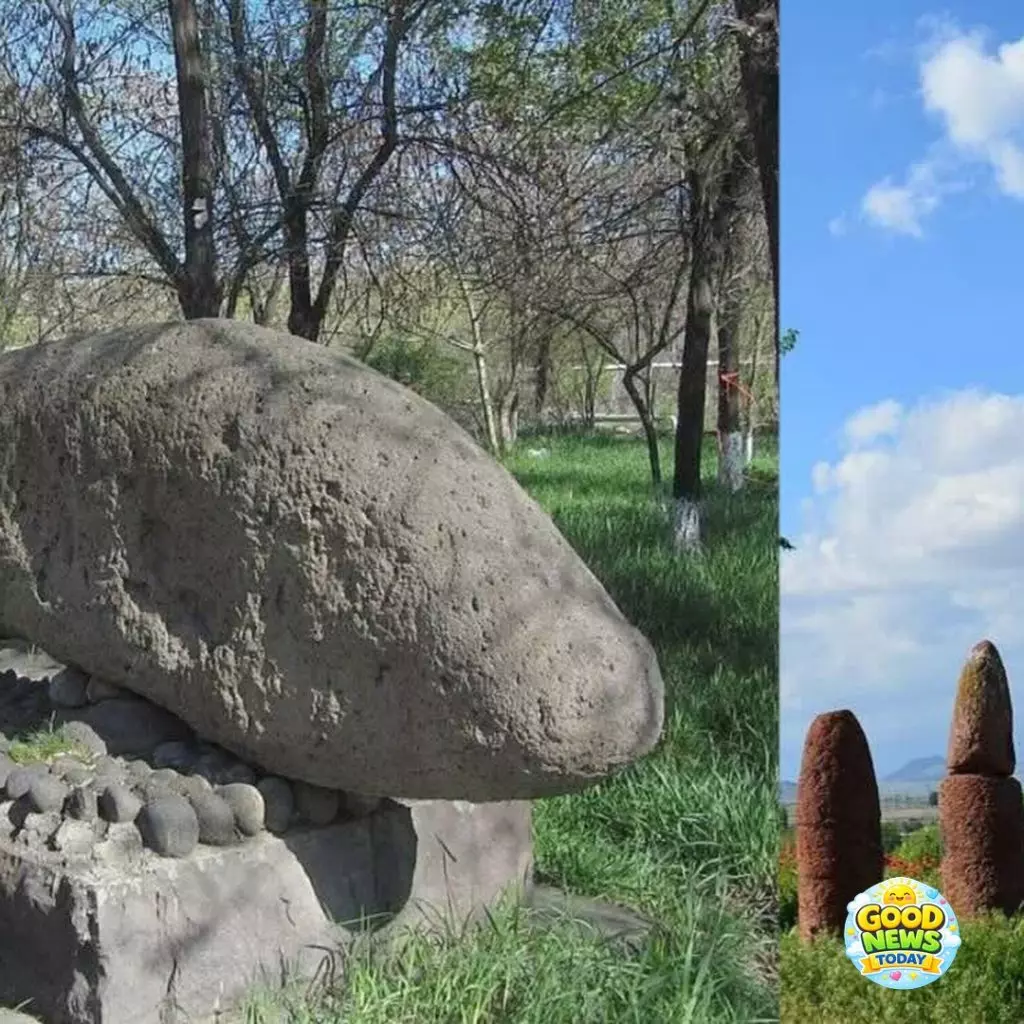
Exciting developments have emerged in the exploration of Armenia’s fascinating “dragon stones,” known locally as vishaps, as researchers have conducted a thorough analysis for the first time in history. These intriguing Neolithic monuments, believed to have been erected between 4200 and 4000 BCE, share a timeline with the renowned megaliths of Stonehenge.
The vishaps, which translate to “dragons,” vary in weight from 3 to 8 tons and can be found scattered across the picturesque highland regions of Armenia, often adorned with carved images of fish or stretched cowhide. Despite numerous discoveries, the sheer number of these stones and their seemingly random distribution had previously stumped experts in understanding their significance in ancient Armenian culture.
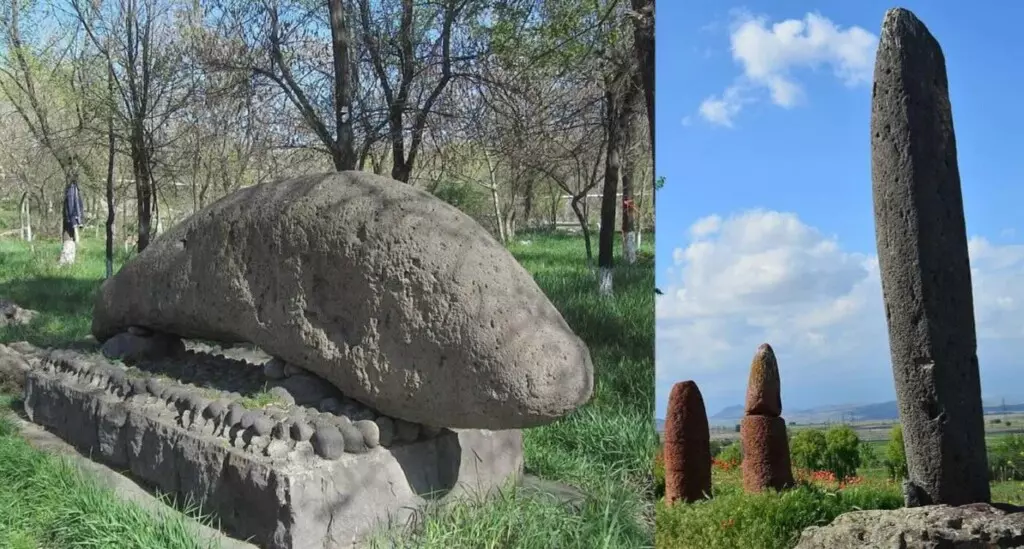
However, a recent survey and analysis led by the Yerevan State University Institute of Archaeology and Ethnography has brought new insights into these enigmatic monuments, overcoming a few challenges along the way. Concentrated primarily in the mountainous western areas of the Caucasus, 43 vishaps are located in the Geghema Mountains, 36 on the slopes of Mount Aragats, and 17 in the Vardenis Mountains. While additional stones have been discovered beyond this north-south axis, the builders of the vishaps predominantly focused their efforts in these regions.
The elevation of the stones adds another layer of intrigue. The researchers noted that constructing larger vishaps would require significant processing time, especially in high-altitude areas where the snow-free period is shorter. One would expect to find smaller stones at greater elevations if size and location were not crucial for their creators. However, the findings contradicted this expectation, revealing that there were towering stones, over 9 feet tall and weighing more than 7 tons, positioned as high as 9,000 feet. This elevation presents unique challenges, including limited food and shelter, and a snowy landscape from October through May.
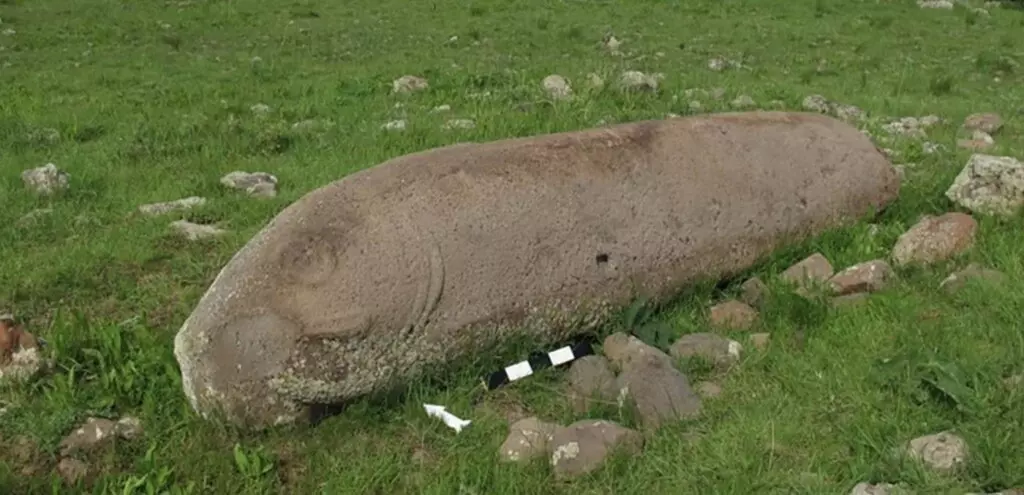
The research team proposes that these remarkable stones are likely associated with an ancient water cult, as many vishaps are found near springs and often feature fish motifs. Interestingly, the cowhide-designed stones tend to cluster in lower valleys, potentially marking ancient irrigation channels where livestock may have grazed. Notably, classical and medieval settlements, including churches and remote fortresses, align with these irrigation paths, indicating that the abundant snowmelt could have sustained communities for millennia following the era of the vishap builders.
In any exploration of ancient monuments, a compelling question arises: what could have driven such significant labor to create these impressive structures? The journey to uncovering the mysteries of these dragon stones continues, promising to reveal even more about Armenia’s rich cultural heritage.