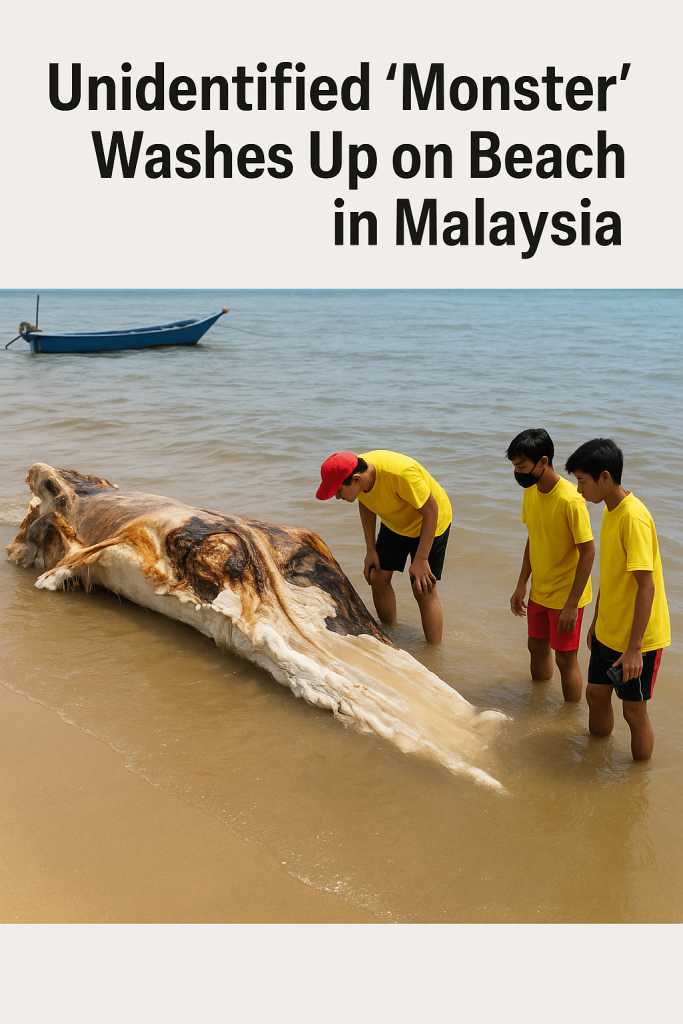
In a startling and eerie discovery, an unidentified sea creature, described by eyewitnesses as a “monster,” was found washed up on a beach in Malaysia earlier this month. The strange carcass, which appeared bloated and distorted, immediately captured the attention of local residents and social media users, sparking widespread speculation and curiosity about its origins and species.
The creature was discovered on a remote stretch of coastline in the northern state of Penang, where beachgoers reported encountering its enormous size and unusual features. According to descriptions, the carcass was approximately 10 feet long, with a thick, fleshy body covered in what appeared to be mangled skin and some protruding skeletal elements. Its exact shape was difficult to discern due to decomposition and exposure to the elements, fueling numerous theories.
Initial confusion and viral sensations
Social media was awash with images and videos of the enigmatic form, where many dubbed it a “sea monster” or “unknown marine beast.” The creature’s identity quickly became the subject of heated online debate, with some insisting it was a deep-sea giant, while others speculated on it being an alien or mythical sea creature. The viral frenzy compelled local authorities to step in and carry out an official investigation.
Expert analysis and scientific investigations
Marine biologists from nearby research institutions were called to examine the specimen. Preliminary assessments suggested the carcass might belong to a whale, possibly a fetal or juvenile specimen, that had undergone extensive decomposition and scavenging by other marine animals. A decomposing whale can lose many of its recognizable features, leading to the distorted and monstrous appearance seen here.
Further analysis is ongoing, including DNA testing and radiographic imaging, to conclusively identify the species and provide insight into how the carcass ended up so badly mutilated on the shore. Early indications point away from any exotic or unknown species and more likely to common marine mammals native to the region, such as Bryde’s whales or pilot whales.
Context of mysterious beach finds worldwide
Strange marine carcasses washing ashore are not uncommon worldwide, often drawing significant media attention and public curiosity. These “globsters” or unidentified masses frequently puzzle observers due to their distorted appearance caused by decomposition, scavenger activity, and natural decay processes. Malaysia’s recent encounter fits this global pattern, wherein natural phenomena sometimes inspire myths and legends about sea monsters and cryptids.
What remains an important takeaway is the value of scientific inquiry to demystify such occurrences, to better understand marine life and the challenges they face.
Community reactions and precautions
Meanwhile, locals are advised not to approach or touch such carcasses due to potential health hazards, including bacterial contamination and toxins from decomposition. Environmental agencies have urged responsible reporting and cooperation with authorities during such events.
The mysterious “monster” on the Malaysian beach stands as a compelling reminder of the ocean’s vast mysteries and the importance of blending curiosity with science to unravel them. As authorities continue their analyses, the public awaits confirmation of what the strange creature truly was — a cryptic marine enigma brought ashore by the tides of nature.