
For many years, the mining and refining sectors in Europe and North America have faced challenges due to a lack of investment, creating a dilemma for the manufacturing industry. However, a group of innovative scientists has proposed a unique solution that involves mushrooms instead of traditional excavators.
You’ve likely heard the buzz surrounding terms like “critical minerals” and “rare earth elements” lately. These essential components—such as nickel and gallium—are increasingly vital for the development of cutting-edge technologies, ranging from long-lasting batteries in electric vehicles to advanced AI data centers and spacecraft.
Historically, these minerals have been extracted through mining operations. Yet, every gram that enters the supply chain eventually results in waste. Researchers from Austria believe that mushrooms could play a significant role in recovering valuable minerals from this industrial waste, potentially making a positive impact on the global economy.
Contrary to what the name suggests, rare earth elements aren’t actually rare; they can be found in many places, albeit in low concentrations. Mining these elements can be inefficient, often resulting in their collection as byproducts from other mineral extractions.
Alexander Bismarck and Michael Jones from the University of Vienna have coined the term “mycomining” to describe this innovative approach. They propose utilizing fungi’s remarkable ability to thrive in contaminated environments to extract rare earth elements from industrial waste, such as mine tailings, slime dams, or even coal ash.
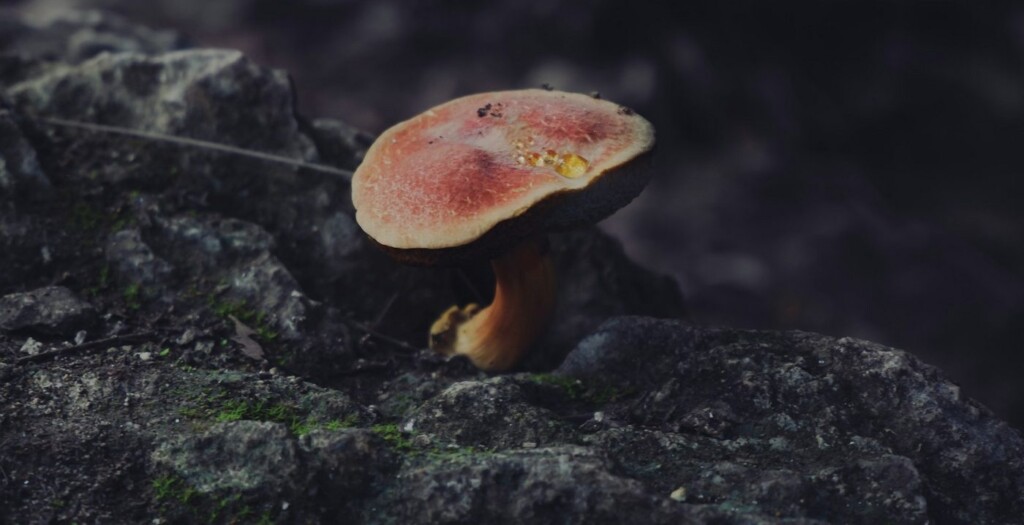
“We could really implement this on a large scale and easily gather the mushrooms using existing agricultural machinery,” Jones shared with enthusiasm.
Below the familiar mushroom cap lies a vast network of filaments known as mycelia, which constitutes over 95% of the fungus’s total biomass. These mycelia spread out, reaching into every crevice, and are significantly finer than the roots of trees, which tend to widen over time.
Mycelia not only absorb essential nutrients for both the fungi and surrounding plants, but they also have an impressive ability to take in various substances. Research has shown that fungi can absorb nuclear radiation, toxic heavy metals like lead and mercury, and rare earth elements that are crucial for producing everyday devices like smartphones.
While Jones and Bismarck acknowledge that the concentrations of rare earth elements in fungi may be lower—potentially just one-tenth of what is found in dissolved electronic waste—the benefits are substantial. Unlike traditional methods that require energy-intensive processes like using a flash joule heater to dissolve e-waste, fungi can thrive in contaminated areas that may be hazardous for humans to work in.
In addition to their work, researchers at the University of Arizona are also exploring this fascinating concept. Professor Oona Snoeyenbos-West plans to establish a startup focused on sourcing fungi that are already thriving in contaminated environments, further enhancing the potential of this innovative approach.