
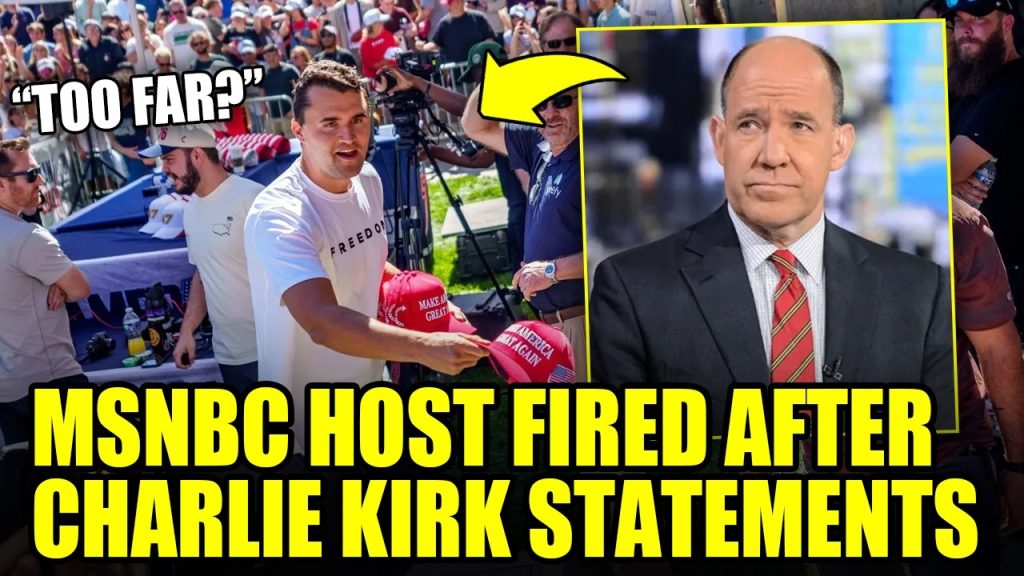
In a surprising turn of events, MSNBC has terminated its political analyst Matthew Dow following controversial remarks made during the network’s coverage of a tragedy involving right-wing commentator Charlie Kirk. Dow’s comments sparked outrage, leading MSNBC’s administration to classify them as “inappropriate,” “insensitive,” and “unacceptable.”

The incident occurred during a live segment where Dow discussed the divisive figure of Charlie Kirk, asserting that Kirk often perpetuates a narrative that incites hatred against various groups. Dow emphasized that “hateful thoughts lead to hateful words, which in turn lead to hateful actions,” attempting to contextualize the current political climate riddled with extreme rhetoric. His comments were received with a mix of support and backlash, particularly among viewers who believe he crossed a line while discussing a sensitive issue.
MSNBC’s president, Rebecca Cutler, publicly issued an apology for Dow’s remarks, highlighting the network’s commitment to upholding responsible discourse. In her statement, she referenced how Dow’s words did not align with the network’s values, especially in the wake of a tragic incident involving Kirk. Dow later took to social media platform X (formerly Twitter) to express his condolences to Kirk’s family and friends while also apologizing for the tone he took during the discussion. He remarked, “I apologize for my tone and words,” indicating remorse over the impact of his statements.
This firing marks a significant moment in the ongoing debates surrounding free speech and media responsibility in political discourse. Dow’s termination raises questions about the boundaries of political commentary, especially when such discussions relate to individuals who have been involved in contentious public incidents. Critics of Dow’s axing argue that such a move stifles open debate, while supporters believe it reinforces the need for accountability in the media.
Matthew Dow, a veteran political analyst, has oftentimes been viewed as a polarizing figure in contemporary political discussions. His remarks about Charlie Kirk came against a backdrop of heightened tensions and division within American society—tensions exacerbated by the current political climate and its evaluation of free speech. High-profile personalities like Kirk have been accused of propagating hate-filled narratives, which many argue contribute to a culture of intolerance and violence.
As the political landscape continues to evolve, the repercussions of Dow’s dismissal are likely to echo through media and political circles. This incident not only reignites the discourse surrounding media ethics but also invites deeper reflection on the implications of words and actions in an environment marked by escalating rhetoric. Observers and commentators on both sides of the aisle are now expected to debate the fine line between free expression and responsible communication.
Where to Learn More
- The Guardian – Coverage of media ethics and political discourse trends.
- Politico – Insightful analysis on political commentary and its implications in current events.
- NPR – Discusses contemporary issues around media responsibility and political reporting.
- CNN – Engaging reports about political media and controversies surrounding public figures.
- Axios – Explores political narratives and the public’s response to controversial commentary.