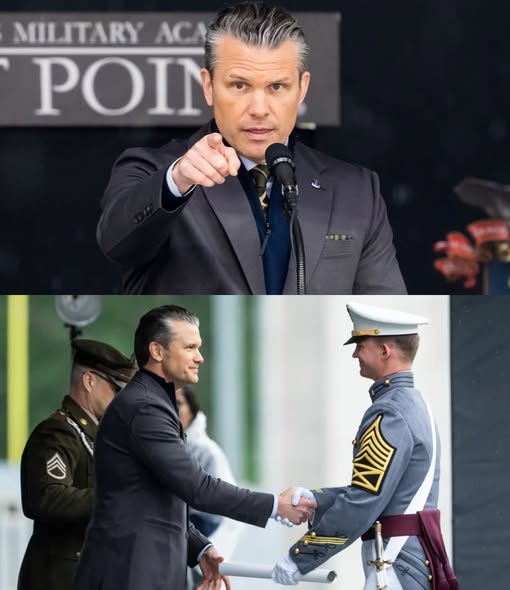
During a recent commencement address at West Point, Pete Hegseth, a prominent military commentator and former Army officer, delivered a speech that has sparked widespread debate and concern across military and political circles. In what many are calling a provocative and troubling speech, Hegseth urged graduating cadets to “forget pronouns” and focus on the belief that their “hands are untied,” signaling a clear message about the future of military discipline and legal oversight.
Hegseth’s rhetoric veered into the realm of the controversial when he dismissed current diversity, equity, and inclusion (DEI) initiatives, describing them as part of a “foolish and feckless” trend. The speech criticized efforts to make West Point resemble more progressive institutions, with Hegseth sneering at what he called the school’s “woke Princeton” identity. Despite the skepticism, he also celebrated the reinstallation of statues and the revival of traditional symbolic displays, framing them as signs of a renewed, disciplined military.
In a tone that some interpret as combative and dismissive of legal safeguards, Hegseth told the cadets, “Your hands are untied.” This phrase, he explained, was a metaphor for the removal of legal and bureaucratic obstacles, promising that commanders will now operate with fewer restrictions. He emphasized that “lawyers don’t run battalions, commanders do,” implying that the military legal system and its protections have been gutted, leaving officers with maximum latitude—and, critics argue, increased risk of atrocities and unlawful acts.
Adding fuel to the controversy, Hegseth referenced prominent conservative commentator Charlie Kirk, quoting him during his speech—an unusual choice for a military commencement address. The phrase, “This too shall pass,” was offered as battlefield wisdom, equating activism and political turbulence with military resilience. Such moments led many to question whether the speech’s tone was more grievance than guidance, potentially undermining the values of accountability and rule of law that are core to military leadership.
What is most alarming about Hegseth’s message, critics say, is the implication that armed officers are now authorized and encouraged to operate without the traditional constraints designed to prevent war crimes and protect civilians. Since the speech, reports have emerged of the military dismantling legal offices, firing top Judge Advocates, and signaling a shift toward a more permissive command environment. This comes at a turbulent time, as recent military operations—such as strikes in the Caribbean and Pacific—have raised concerns over legal oversights, with some civilian casualties occurring without proper trials or oversight.
The context deepens when recalling the reactions of Democratic lawmakers, particularly combat veterans, who criticized the former president for encouraging service members to refuse illegal orders and describing such insubordination as “sedition” punishable by death. The legal and ethical fabric of military obedience and accountability is being tested like never before, with some warning that the current trajectory could lead to abuses and chaos within the ranks.
In the end, critics argue that Hegseth’s call to “forget pronouns” and open the gates for unfettered command is not an act of strength but of danger. It signals a move toward a military where legality and morality are secondary to raw power and political loyalty. As the military community wrestles with these developments, one thing remains clear: the rule of law and ethical discipline are essential protections that should never be sacrificed in the name of “strength.”