Imagine opening a world map and pinpointing a location where endangered species could thrive, far away from human habitats. The Arabian Peninsula stands out as a prime candidate, with its vast uninhabited expanses due to most of the population residing along the coast or near oases. This unique landscape is being leveraged by the Saudi Wildlife Authority for an exciting rewilding initiative.
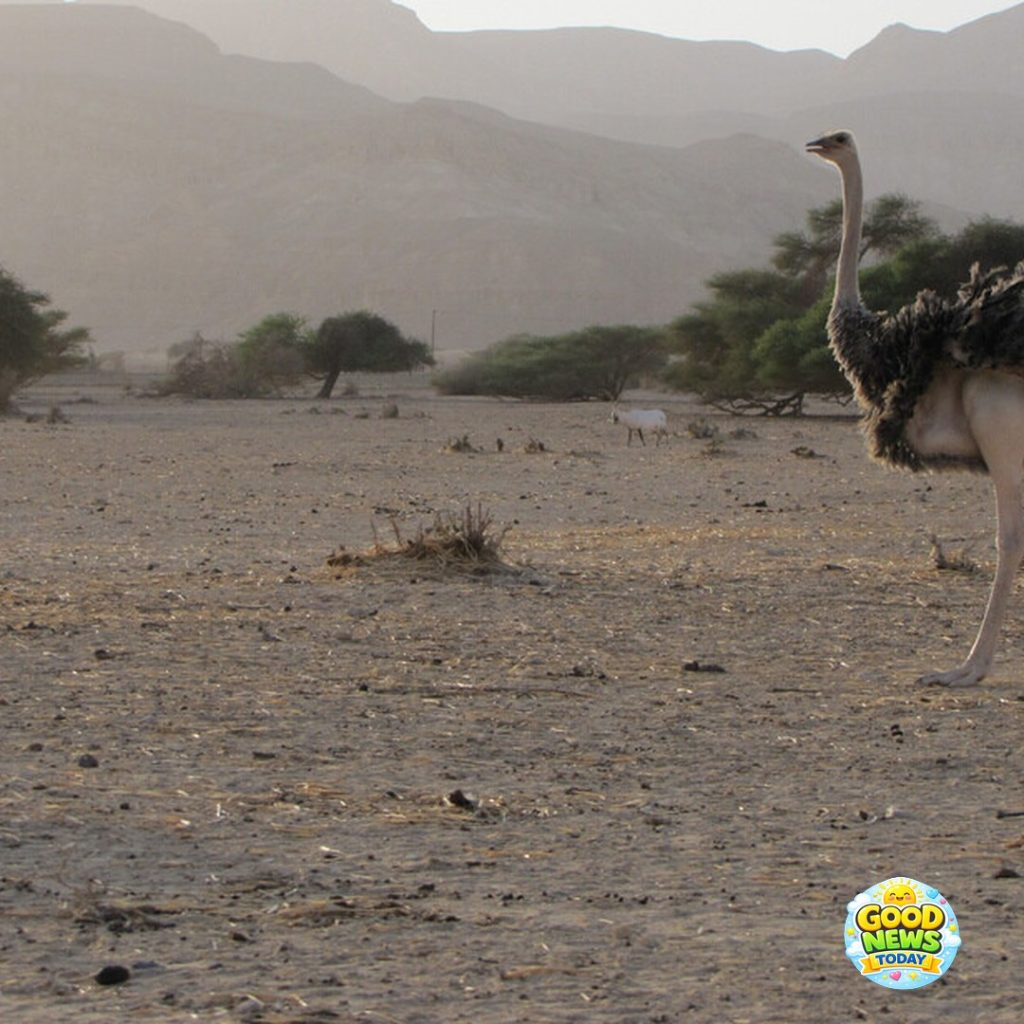
Enter the red-necked ostrich, historically referred to as the “camel bird.” This remarkable bird has made a triumphant return to Saudi Arabia’s third-largest nature reserve, after being absent from the wild on the peninsula for a century. Once celebrated by Arab poets and Roman scholars, the red-necked ostrich is classified as Critically Endangered.
As part of the ambitious ReWild Arabia program, ecologists identified the red-necked ostrich as the closest living relative of the extinct Arabian ostrich, which is also known as the Syrian ostrich. This species is particularly suited to thrive in the harsh desert environment.
A total of five red-necked ostriches were released into the expansive 6-million-acre Prince Mohammed Bin Salman Royal Reserve, marking a significant milestone in this rewilding effort. This release makes the ostrich the 12th species to be reintroduced, as part of a broader goal to reestablish 23 native megafauna species, which includes leopards, cheetahs, and the Arabian oryx.
“Bringing back such an iconic desert species after nearly a century is deeply meaningful on emotional, ecological, and cultural levels,” stated Andrew Zaloumis, CEO of the Prince Mohammed bin Salman Royal Reserve. He also noted that this initiative continues the legacy of the reserve, which recently welcomed back the Persian onager, or Asiatic wild ass, after its own 100-year absence.
Both the ostrich and the onager had vanished from the region for generations. As symbols of strength, endurance, and speed, they have long been revered in Arab poetry and storytelling. Zaloumis emphasized that the reintroduction of the ostrich is crucial for restoring ecological balance and functionality within its habitat.
Globally, only about 1,000 red-necked ostriches survive in Africa’s Sahel region, making them Critically Endangered. The remote Arabian desert, shielded from poaching threats, provides an ideal sanctuary for these birds to flourish until conditions improve in their native regions.
In return for this safe haven, the ostriches will play a vital role as seed-dispersal agents. Their natural nomadic behavior allows them to travel great distances, effectively spreading seeds far from their parent plants, which enhances plant regeneration and promotes genetic diversity across arid landscapes.
With such promising developments in rewilding efforts, the future looks bright for the red-necked ostrich and other native species, working together to restore the ecological richness of the Arabian Peninsula.