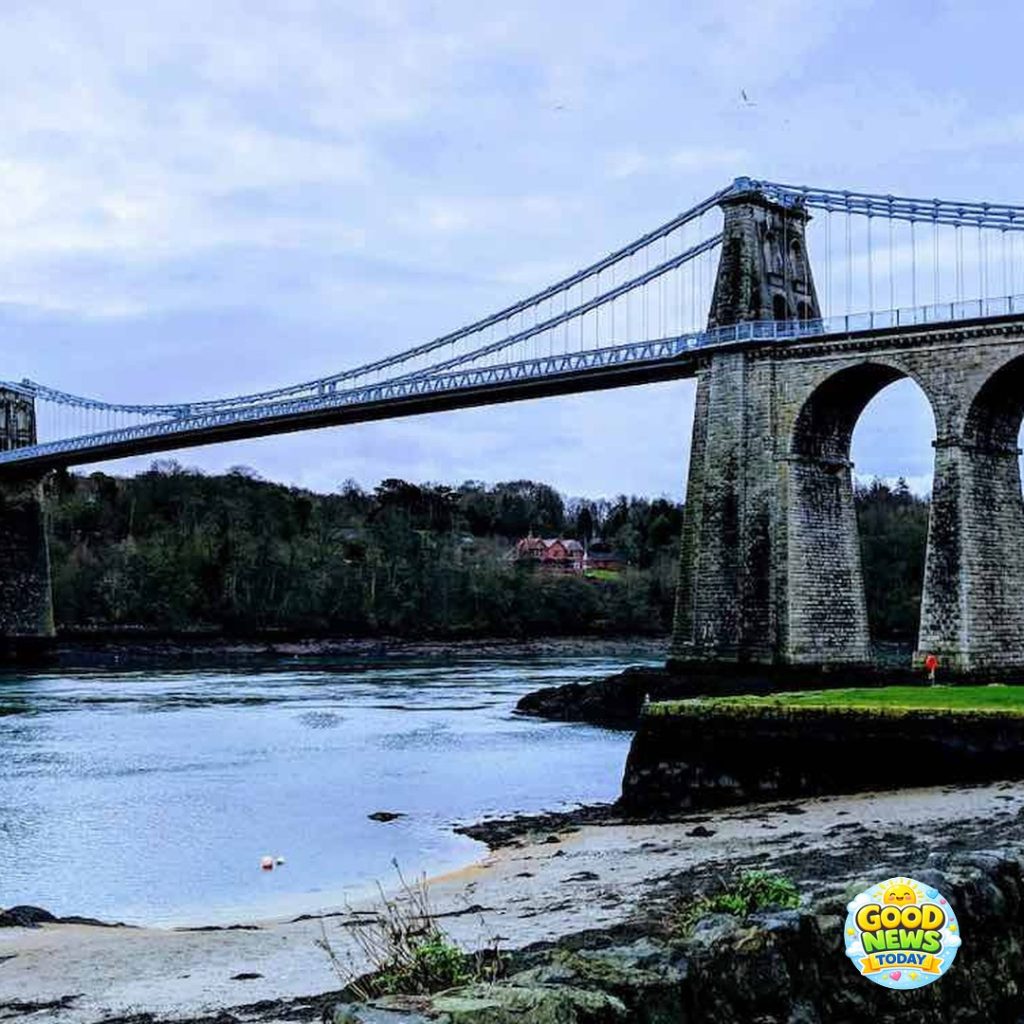
Two centuries ago, a remarkable feat of civil engineering was unveiled—the magnificent Menai Bridge. This iconic structure dramatically reduced the travel time between Wales and London by an impressive nine hours. Designed and engineered by the brilliant Thomas Telford, it stood as the largest suspension bridge in the world during its time. Supported by sixteen enormous chains, the bridge stretches 579 feet across, providing a generous 100 feet of clearance for tall ships navigating the waters below.
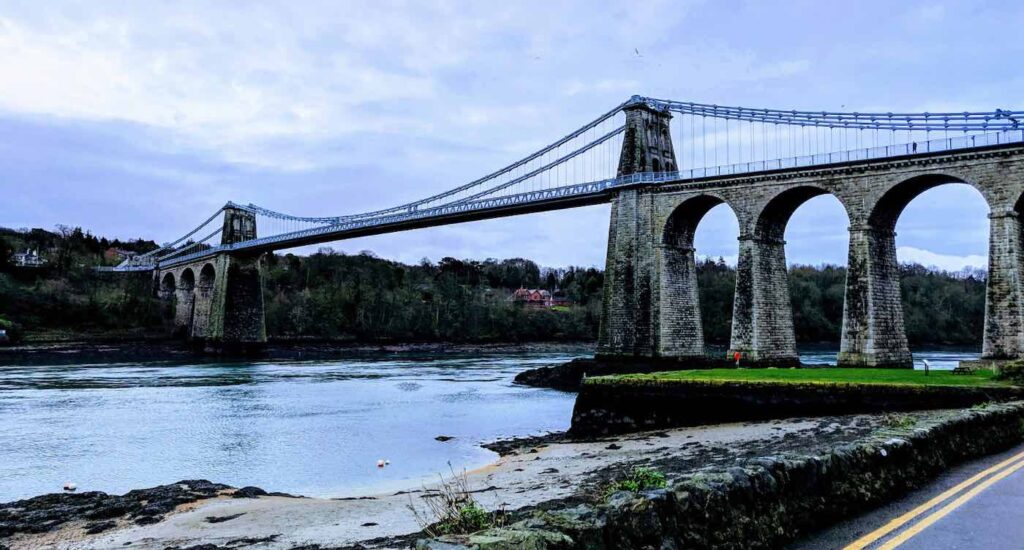
With a length equivalent to nearly six football fields, or 520 meters, the Menai Bridge spans the perilous Menai Strait, linking the island of Anglesey to the mainland of Wales. It was only the second suspension bridge ever designed to accommodate vehicular traffic, primarily horse-drawn carriages.
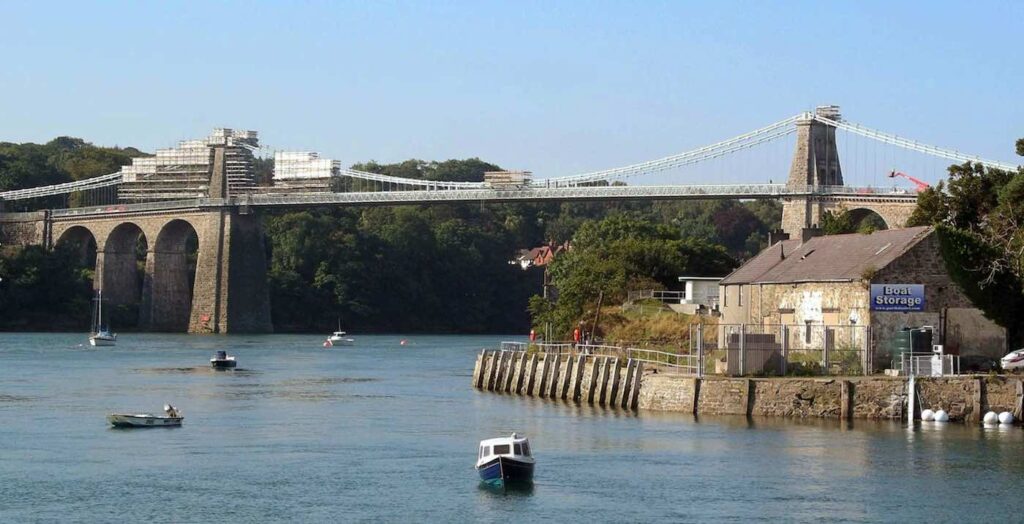
The construction of this architectural marvel commenced in 1819, starting with the towers on either side of the strait built from Penmon limestone. These towers were ingeniously designed to be hollow, featuring internal cross-walls. The next monumental task involved installing the 16 massive chain cables that would support the bridge deck. These chains, organized into four groups of four, were meticulously assembled by dedicated workers and held in place by scaffolding. Each segment consisted of a single wrought iron bar alongside four interlinked components.

Each chain measured an astonishing 522.3 meters (1,714 feet) and weighed a hefty 123 tons. To ensure stability, the chains were threaded through three tunnels on either side of the strait and securely anchored into rock chambers using cast-iron bolts that stretched nine feet long.

It’s fascinating to note that the Menai Bridge was constructed during the early days of bridge-building technology, marking the dawn of large suspension bridges worldwide. The use of chains was a common practice at the time, but they would soon be replaced by cables, and iron would give way to steel with the construction of the Brooklyn Bridge sixty years later. Interestingly, about a century after its completion, the Menai Bridge underwent similar upgrades. Initially, it lacked stiffening trusses, making it vulnerable to strong winds.

In 1840, the bridge deck received reinforcement from engineer W. A. Provis, and in 1893, its original wooden surface was replaced with a steel deck designed by Sir Benjamin Baker. Since then, the Menai Bridge has become a beloved symbol of Welsh heritage, inspiring the poet David Owen (1784–1841) to commemorate it in verse:
High fortress above the sea – the world drives
Its carriages across it;
And you, all you ships of the sea,
Pass beneath its chains.

In addition to this historic milestone, today also marks another significant event: 51 years ago, Hungarian sculptor and architecture professor Ernő Rubik applied for a patent for his innovative “Magic Cube” in Hungary. The first Rubik’s Cubes appeared in Budapest toy shops two years later. Between 1971 and 1979, Rubik taught architecture at the Budapest College of Applied Arts, where he sought to create a stimulating challenge for his students. His original creation was crafted using blocks of wood and rubber bands, a testament to his creativity and resourcefulness.