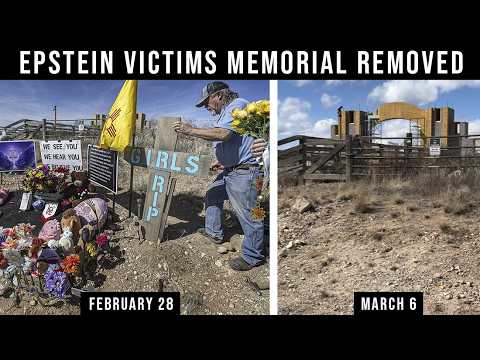
The recent removal of a memorial dedicated to the victims of Jeffrey Epstein from outside the gates of the former Zorro Ranch in New Mexico has sparked renewed discussion about the evolving legacy of the infamous property. According to reports, the Zorro Ranch, once owned by Epstein, was purchased by the family of Don Huffines—a Texas businessman and former Republican state senator—prompting the removal of this public tribute.

Jeffrey Epstein’s Zorro Ranch was one of several high-profile properties linked to his criminal enterprise. The ranch garnered significant attention during investigations into Epstein’s extensive sex trafficking operation, symbolizing both a physical location and a representation of the broader social and legal reckoning surrounding his crimes. Memorials established near such sites serve not only as places of remembrance but also as public markers of accountability and awareness for victims’ rights.
The change in ownership to the Huffines family introduces a complex layer of political and social considerations. Don Huffines, with his political background and influence within Texas Republican circles, may be viewed by some as a figure capable of redefining the narrative surrounding the ranch’s history. The removal of the memorial could be interpreted in varied ways—ranging from an effort to dissociate the property from its dysfunctional past to concerns about the appropriateness of memorial placement on private land.
Community advocates and survivors of Epstein’s abuse have historically emphasized the importance of maintaining such memorials to honor victims and keep public attention focused on justice. Conversely, new private owners may seek to manage the property according to different priorities. The intersection of private property rights and public commemoration remains a sensitive topic in political and social discourse, especially when it involves sites with such profound associations with criminal activity and victimhood.
This development raises questions about how communities and governments address sites linked to notoriety and trauma, balancing respect for survivors with property ownership rights and political interests. As conversations continue, the broader implications surrounding the Zorro Ranch and related public memorials will likely remain a focal point of both local and national attention.
Where to Learn More
- The New York Times – Comprehensive coverage of the Epstein case and its aftermath
- The Washington Post – In-depth political analysis and investigative reporting
- BBC News – International perspective on Epstein’s legacy and related issues
- American Civil Liberties Union (ACLU) – Information on victims’ rights and advocacy
- PBS NewsHour – Detailed documentaries and expert discussions on political and social impacts