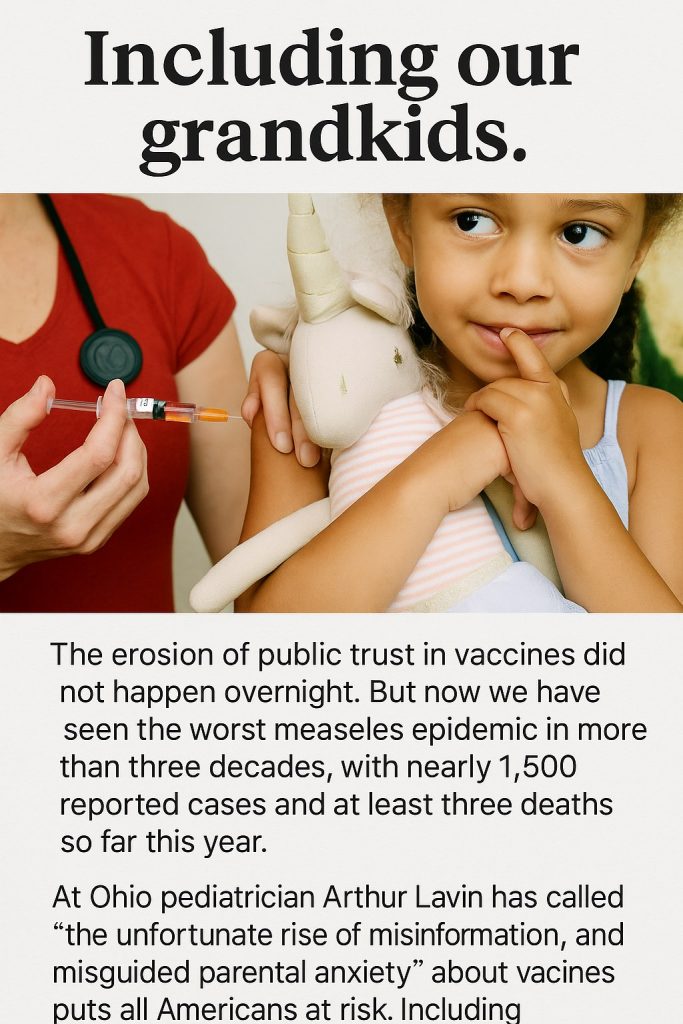
In a troubling turn of events, the United States is confronting its worst measles epidemic in over three decades, with nearly 1,500 reported cases and at least three deaths this year alone. The resurgence of this highly contagious disease has rekindled fervent discussions around vaccination—a topic that has seen an alarming erosion of public trust fuelled by misinformation, disinformation, and misguided anxieties surrounding vaccines.
Ohio pediatrician Dr. Arthur Lavin has pointedly addressed this rising tide of vaccine skepticism. He attributes it to a combination of factors that have progressively chipped away at societal confidence in immunization programs. “The unfortunate rise of misinformation and misguided parental anxiety about vaccines puts all Americans at risk, including our grandkids,” he states.
The current measles crisis starkly underscores the consequences of failing to vaccination rates, which have plummeted simultaneously with the spread of dubious claims about vaccine safety. Social media platforms, while capable of disseminating valuable information, have become breeding grounds for anti-vaccine sentiments, often prioritizing sensationalism over facts.
Measles is not just a childhood disease; it is a preventable illness that can lead to severe health complications, including pneumonia and encephalitis. The recent epidemic has served as a wake-up call, illustrating that public health is inherently interconnected. When a segment of the population opts out of vaccination, it creates pathways for vaccine-preventable diseases to proliferate, endangering entire communities.
The Centers for Disease Control and Prevention (CDC) notes that measles is among the most contagious diseases on Earth, with anyone unvaccinated being at high risk of infection when exposed. Vaccination rates have seen gradual declines, particularly in areas where misinformation is rampant. In certain communities, vaccine hesitancy has led to rates dipping below herd immunity thresholds, thus allowing outbreaks like the current one to flourish.
Experts argue that the path toward rebuilding public trust in vaccines lies in effective communication. Vaccination campaigns must not only debunk myths surrounding vaccines but also foster open dialogues between healthcare providers and the families they serve. Trust is built through transparency and education, not simply through mandates.
Public health officials are urging families to stay informed about vaccines and their benefits. Health professionals emphasize that vaccinating children against measles and other preventable diseases is a communal responsibility—a line of defense protecting vulnerable populations, including infants and those with compromised immune systems.
The ongoing measles epidemic invites a broader examination of health communication strategies. To counter misinformation, it is crucial that both public and private health organizations collaborate with social media companies to ensure that their platforms become reliable sources of information rather than hotbeds of misunderstanding.
As the nation grapples with this resurgence, it’s clear that the fight against misinformation requires a collective effort. Educating parents, engaging communities, and promoting vaccine acceptance are vital steps toward safeguarding the health of current and future generations.
Where to Learn More
- Measles (Rubella) Vaccine Information – Centers for Disease Control and Prevention
- Measles Fact Sheet – World Health Organization
- Measles Outbreak Study: The Impact of Vaccine Hesitancy – National Institute of Allergy and Infectious Diseases
- Understanding Vaccine Hesitancy and the Anti-Vaccine Movement – Healthline
- How Social Media Hastens the Spread of Anti-Vaccine Misinformation – Scientific American