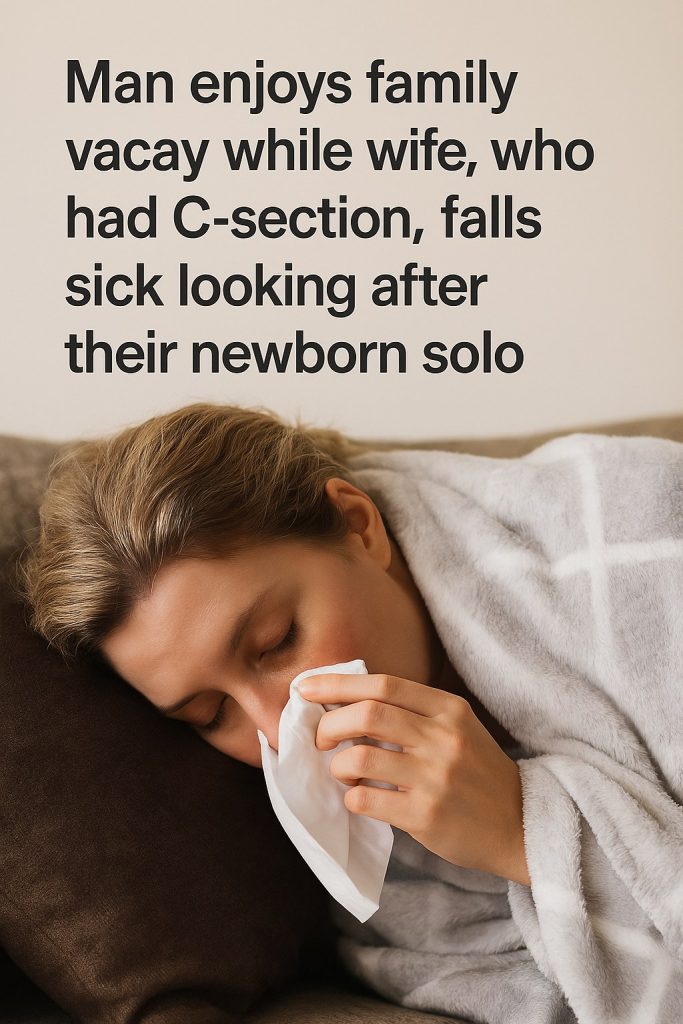
A poignant story unfolding on social media has ignited a heated debate about family responsibilities and support during the postpartum period. A man’s decision to enjoy a family vacation while his wife, who recently underwent a cesarean section (C-section), was left at home caring for their newborn alone and fell seriously ill has drawn widespread concern and condemnation online.
The Story in Brief
According to posts and comments circulating on various social media platforms, the wife, who had delivered their first child via C-section just weeks prior, was left to manage the demanding care of their newborn without the physical and emotional support she desperately needed. During this critical recovery phase — known to be physically challenging and requiring ample rest and assistance — she reportedly fell ill with severe body aches and exhaustion, as her husband embarked on a family getaway with other relatives.
“I ended up getting sick, my body aching all over, trying to do everything alone,” the wife shared in an emotional post that has since resonated with many new mothers who experience similar struggles silently.
Health Challenges After a Cesarean Delivery
Medical experts emphasize that recovery from a C-section is significantly more complex than a vaginal birth. Women face restrictions on physical activity to allow healing of the abdominal incision, increased risk of infection, and the need for intensive support in daily tasks and newborn care. Postpartum care specialists often recommend that partners actively participate in caregiving and household duties during this time to prevent complications and promote emotional well-being.
The wife’s reported illness — body aches and fatigue — are common symptoms exacerbated by overexertion and stress, especially when managing newborn care solo immediately post-surgery.
Social Media Outrage and Public Discussion
This incident has sparked a broader conversation online about the expectations placed on new fathers and the societal understanding of postpartum recovery. Many users condemned the husband’s apparent prioritization of leisure over responsibilities. Comments described the situation as “disheartening,” “irresponsible,” and a painful example of the lack of adequate support new mothers often face.
Others reflected on the silent sacrifices many postpartum women make and urged families to cultivate better communication and teamwork, especially during such vulnerable times.
The Importance of Family Support Postpartum
This story serves as a stark reminder of the crucial role family members play in the first weeks after childbirth. Providing both physical assistance and emotional support can significantly impact the mother’s recovery trajectory and overall family dynamics. Experts recommend that partners postpone vacations and busy commitments until after the initial healing period or ensure alternate caregiving help is arranged.
Looking Ahead
The couple’s experience has resonated deeply with many parents and advocates highlighting postpartum mental and physical health. It underscores a growing need for public awareness campaigns about postpartum care and paternal involvement.
As family structures and roles evolve, stories like this shed light on challenges that remain invisible to many — and catalyze dialogue aimed at fostering more compassionate and responsible parenting partnerships.