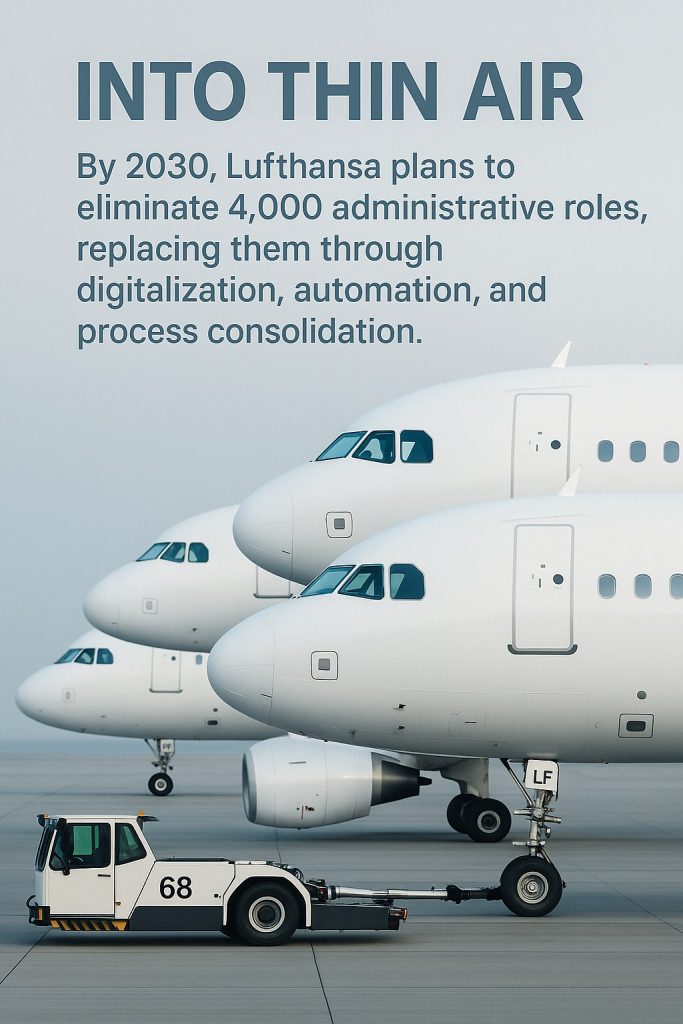
In a move that has sent ripples through the aviation industry and beyond, Germany’s flagship airline, Lufthansa, announced plans to eliminate 4,000 administrative positions by 2030. This decision, driven by an aggressive strategy to embrace digitalization, automation, and process consolidation, raises alarming questions about the future of work in a sector already grappling with unprecedented changes.
The airline’s decision reflects a growing trend among major corporations worldwide to harness technology in order to streamline operations and cut costs. As industries continue to adapt to a post-pandemic economy, Lufthansa’s approach underscores the pressing need to redefine traditional roles in an increasingly automated world.
What Does This Mean for Employees?
According to a company spokesperson, the restructuring is part of a broader initiative to modernize its operations and enhance efficiency. The company aims to consolidate processes and optimize workflows, resulting in a leaner organization better equipped to respond to changing market dynamics. However, the move raises concerns about job security among employees, particularly in an industry already suffering from labor shortages post-COVID-19.
“While automation offers significant benefits, it also poses a risk to thousands of jobs,” says Dr. Anna Weber, a labor market expert at the Institute for Economic Research. “Lufthansa’s plan highlights the urgency for workers to adapt and learn new skills in order to remain relevant in the evolving employment landscape.”
As the company embraces automation technology, roles traditionally centered around administrative tasks may no longer be necessary, foreshadowing a significant shift in the workforce structure at Lufthansa. Employees and labor unions are raising concerns about the potential job losses, with calls for the airline to focus on retraining and reskilling those affected.
Responses from Airline Executives
Lufthansa’s CEO, Carsten Spohr, addressed employee concerns in a recent internal memo, emphasizing that the decision is not a reflection of the workforce’s performance but rather a necessary response to evolving market conditions. “We face a rapidly changing environment where operational efficiency is paramount,” Spohr said. “Our goal is to remain competitive while supporting our employees throughout this transition.”
However, critics argue that the management should prioritize preserving jobs over pursuing digitalization at the expense of human resources. The balance between innovation and employment is a contentious topic, and Lufthansa’s plan is likely to fuel debate within the aviation sector and other industries contemplating similar shifts.
The Bigger Picture
Lufthansa is not alone in taking such measures. Companies across the globe are increasingly integrating advanced technologies to streamline operations, and many are weighing the trade-offs between technology and human labor. The broader implications of these trends could reshape how entire sectors function, potentially leading to a destabilized workforce in the long run.
For passengers, these changes may lead to improved service efficiency and potentially lower operational costs. However, as automation becomes commonplace, the challenge will be to find a humane balance between operational advancements and job preservation. As we move into a future defined by technology, the socio-economic impact of these changes will require serious consideration from both corporations and policymakers alike.