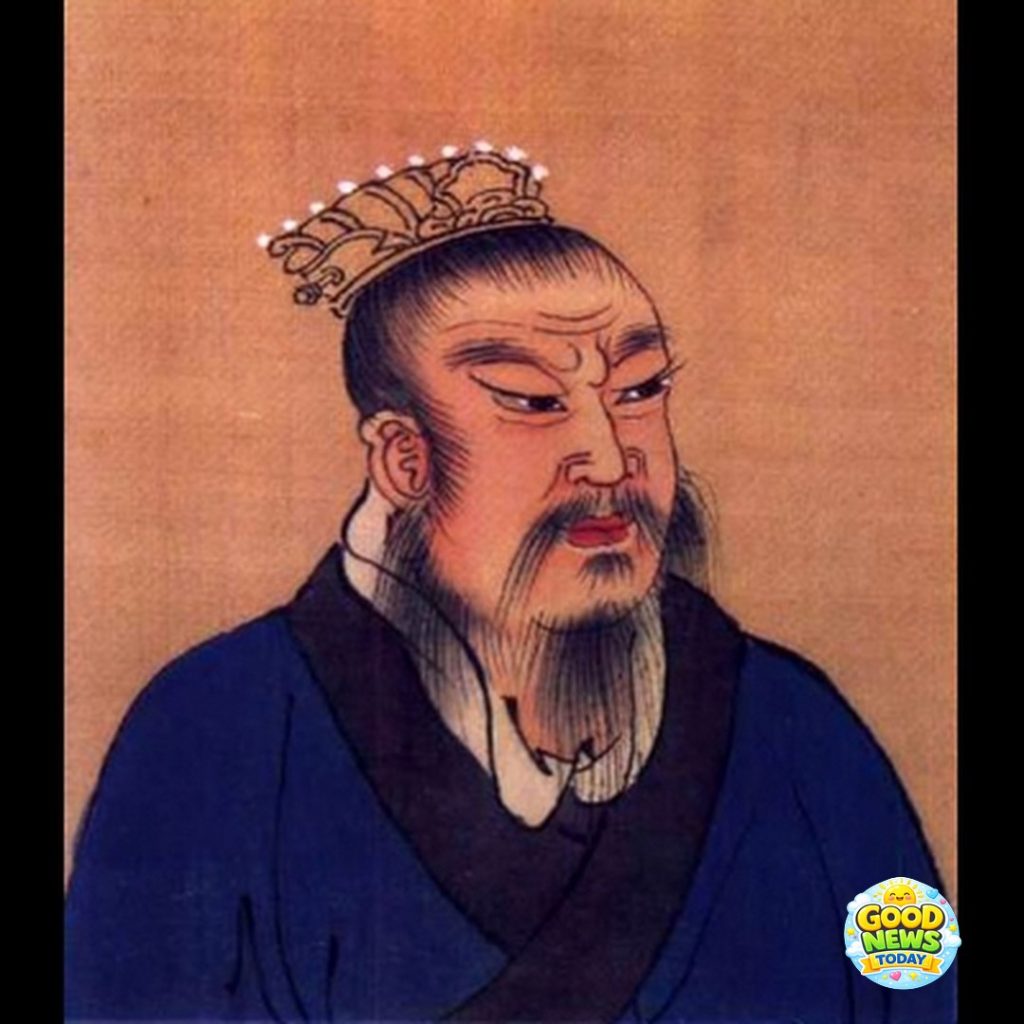
On this day, 2,228 years ago, the Gaozu Emperor, known as Liu Bang, boldly claimed the Mandate of Heaven and laid the foundation for the Han Dynasty, which would become one of the three pivotal dynasties in the history of a unified Imperial China. Remarkably, Liu Bang emerged from humble beginnings, being one of the few emperors born into a peasant family. Although his reign lasted only seven years, he made a lasting impact by initiating what is referred to in the West as the first Pax Sinica, spanning from the southern Pearl River to the northern Mongolian steppes, and stretching west to Xinjiang. In the latter part of his rule, he introduced significant reforms, including privatized coinage and reduced taxation.
Today, the principal ethnic group in China identifies as the Han, and they trace the roots of their cultural identity back to the era of the Gaozu Emperor. A key aspect of this cultural evolution was the transition from Legalism, which had been the state ideology, to the teachings of Confucianism.

Raised in the state of Chu, Liu Bang started his career as a mid-level bureaucrat before rising up to lead a rebellion against Qin Shi Huang, the first emperor of a unified China, whose tomb is famously guarded by the Terracotta Army. The Qin Dynasty, characterized by its harsh rule, was short-lived. Qin Shi Huang replaced Taoism with Legalism, believing that the common people required strict laws with rewards for compliance and severe punishments for violations. This atheistic system dominated the moral landscape during the Qin Dynasty.

Following Liu Bang’s successful rebellion, he decisively abolished Legalism, which was deeply unpopular due to its brutal punishments. By introducing Confucianism, he laid the groundwork for future Chinese civilization, promoting a more benevolent and ethical approach to governance.
Furthermore, Liu Bang established his capital at Chang’an, present-day Xi’an, marking the birth of one of the greatest cities in the ancient world. While still commanding his armies in the aftermath of the rebellion against Emperor Qin, he cleverly relocated his bannermen to Chang’an to maintain close oversight and ensure stability. This strategic move also helped to temporarily halt incursions from northern nomadic tribes, the Xiongnu, with whom he ultimately achieved peace through diplomatic efforts.
In addition to this historical milestone, it’s also worth noting that 35 years ago today, the first Gulf War concluded, just a day after coalition forces liberated Kuwait from Iraqi occupation. This military effort, led by the United States and supported by a coalition of 35 nations, was orchestrated by UK Prime Minister Margaret Thatcher and US President George H. W. Bush, marking a significant moment in international cooperation and military strategy.