The world of late-night television has been rattled recently as comedian Jimmy Kimmel finds himself at the center of a heated debate online. Following his comments regarding a mass shooting incident, many viewers expressed outrage, prompting discussions about accountability and freedom of speech in the media.
In his monologue, Kimmel addressed the violence that has plagued American communities, during which he made a remark that some interpreted as implying the shooter had MAGA ties. Social media erupted with mixed reactions, drawing criticism from both sides of the political spectrum. The heart of the controversy lies in whether Kimmel’s statements accurately portrayed the shooter’s affiliations, or if it was merely a misguided attempt at humor addressing serious issues.
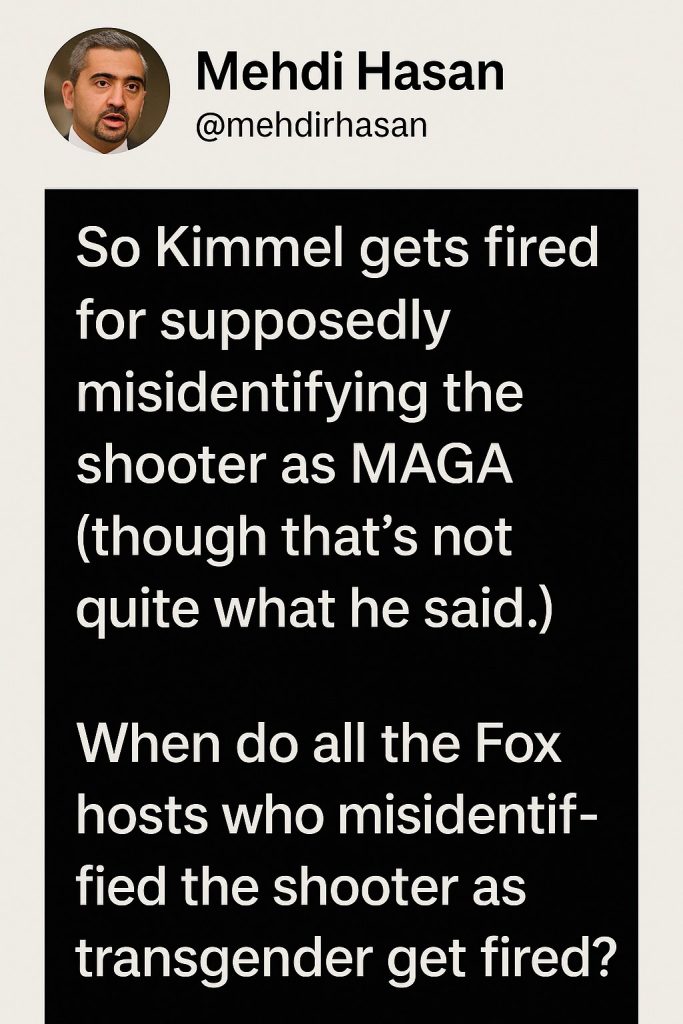
Political commentator Mehdi Hasan weighed in, asserting, “So Kimmel gets fired for supposedly misidentifying the shooter as MAGA (though that’s not quite what he said).” His tweet encapsulated the bewilderment many felt about the backlash against Kimmel, considering the precarious balance comics must strike when discussing sensitive topics.
This incident highlights how comedians navigate their roles in a politically charged environment, where anything they say can quickly go viral. The question arises: when do humor and political commentary cross the line into misinformation or irresponsibility? Kimmel’s approach reflects a deeper challenge faced by many public figures—how to voice opinions on critical issues without losing credibility or facing social media backlash.
The firing of Kimmel, as some speculate, could set a dangerous precedent. In an era where discussions of freedom and political correctness are more charged than ever, this situation raises broader questions about the boundaries of comedy. Activists argue that comedians should maintain the right to speak freely on the complexities of social issues, while critics insist on the need for accuracy, especially in framing topics of violence and hate.
On the other hand, this episode shows the lengths to which social media can amplify outrage. The viral image of Hasan’s tweet has been circulated widely, prompting both support for the comedian and calls for accountability. The rapid-fire dynamics of social media mean that Kimmel’s career might hinge on public opinion, shifting the focus from the content of his show to the commentary he makes off-screen.
This situation isn’t unique to Kimmel; media personalities across platforms are increasingly scrutinized for their comments. The rise of cancel culture and the immediacy of online feedback has made it difficult for comedians to navigate topics like gun violence without the threat of backlash. As a figure like Kimmel grapples with these challenges, he represents a larger conversation about the responsibilities of public figures in addressing contentious issues.
As Kimmel fans and critics continue to discuss the implications of the incident, one thing is clear: comedians are more than just entertainers. They are often seen as cultural commentators, and how they handle politically sensitive subjects will likely remain a contentious issue moving forward.