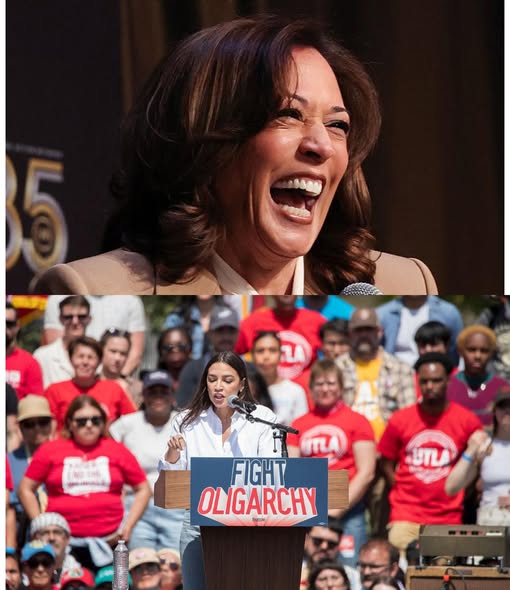
Once again invoking her interest in the future, Vice President Kamala Harris has signaled she may run for president in 2028, despite a series of setbacks and skepticism from much of the Democratic Party. Her recent appearances, including a speech at the National Action Network convention, have showcased her determination — but also raised questions about whether she has the support necessary to secure a second shot at the presidency.
At the convention last month, Reverend Al Sharpton directly asked Harris whether she planned to run again, to which she responded three times with the same ambiguous answer: “I am thinking about it.” Despite receiving the only standing ovation of the event and the crowd chanting “run again,” her political reality on Capitol Hill paints a very different picture. When asked outside the convention about her 2028 plans, many Democratic lawmakers were notably silent or evasive.
Senior figures like Rep. Adam Schiff and Senator Elizabeth Warren declined to endorse, reflecting a cautious or indifferent stance toward Harris’s potential campaign. Others, like Louisiana Democrat Troy Carter—an early supporter—admitted, “I can’t support anybody right now. It’s way too early.” Meanwhile, whispers circle about whether Harris might have been better off pursuing a gubernatorial race in California rather than sticking with a national bid that has struggled to resonate.
Adding to the critique, business mogul Mark Cuban, who endorsed Harris in 2024, recently declared that her time had passed — pointing to her recent loss in the Texas Senate primary as evidence that the strategy of triangulation and middle-of-the-road messaging no longer works in a polarized America. The pattern is clear: in key battlegrounds and primaries, Democratic primary voters are choosing fighters, leaders with fire, and candidates willing to challenge the status quo.
Robust, energetic figures from across the Democratic spectrum are rising as the new faces of the party’s future. Names like Graham Platner (41), Alexandria Ocasio-Cortez (36), Jasmine Crockett (45), Pete Buttigieg (44), Wes Moore (47), and Maxwell Frost (29) exemplify a new generation eager to fight and connect with voters. These candidates are not only running but winning, pulling crowds that Harris’s previous campaigns could only dream of.
Although Harris possesses impressive credentials—being a seasoned lawyer, and highly intelligent—these qualities did not translate into victories in 2024. Many analysts argue that her political style, rooted in moderation and calculated messaging, failed to inspire the Democratic base when it mattered most. The lesson, some say, is clear: in 2028, strategies that emphasize fighters and authentic voices will outperform the tired approach of triangulation and cautious campaigning.
While Harris remains qualified and intelligent, her previous campaign’s shortcomings—coupled with a rapidly evolving political landscape—highlight the importance of a candidate willing to engage in battles that energize voters. The Democratic base is signaling loud and clear: they want leaders who fight, who show up, and who resonate with their aspirations. The old guard’s reluctance to accept this reality risks sidelining the party’s chances in a crucial election that will determine the country’s future.
The question now isn’t simply whether Harris will run again; it’s whether the Democratic establishment will finally listen to the growing chorus of activists, voters, and emerging leaders demanding a shift toward boldness and authenticity in 2028.
Where to Learn More
- Analysis of Harris’s 2024 Campaign and Future Prospects – The New York Times
- Democratic Voters Favor Fighters Over Moderates – The Washington Post
- The New Faces of Democratic Leadership – Politico
- What the Next Generation of Democrats Looks Like – CNN