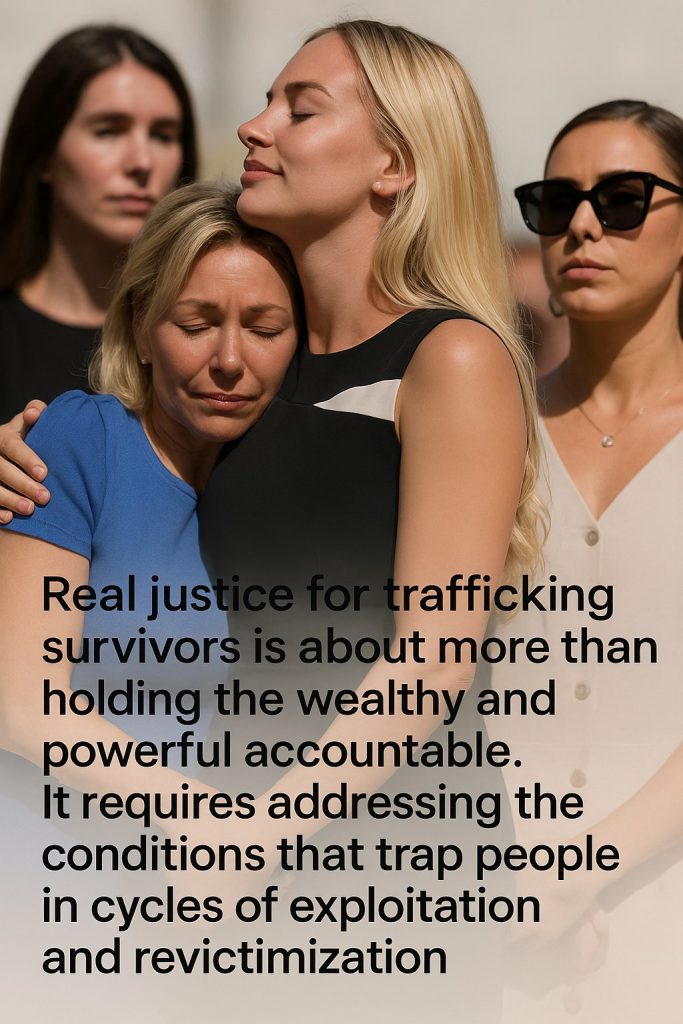
In a world increasingly aware of the horrifying realities of human trafficking, the conversation has evolved from simply holding the wealthy and powerful accountable to a more nuanced understanding of what true justice entails. Survivors of trafficking often find themselves trapped in a relentless cycle of exploitation and revictimization, a reality that demands comprehensive solutions beyond punitive measures.
While high-profile cases involving wealthy traffickers capture headlines and fuel public outrage, advocates argue that real justice must address the systemic issues that enable trafficking to flourish. These issues include economic disparity, lack of education, and limited access to healthcare, all of which can trap vulnerable individuals in dangerous situations.
“It’s not just about locking up the bad guys,” says Dr. Christine Ahn, a leading expert on human trafficking. “We need to create a societal infrastructure that protects individuals from being exploited in the first place. This means addressing poverty, providing educational opportunities, and ensuring access to mental health and social services.”
The U.S. State Department’s annual Trafficking in Persons Report noted a disturbing trend: increasing numbers of survivors are revictimized due to inadequate support systems. The report highlights that without proper resources, victims often return to environments where they are at risk of trafficking again. This frustrating cycle can often dissuade survivors from seeking help at all.
Organizations like Polaris and the National Human Trafficking Hotline are crucial in assisting survivors, but they, too, face challenges. As calls for help increase, funding and resources have not kept pace, leaving many victims without the support they desperately need. Grassroots movements are now advocating not just for more funding, but for a paradigm shift in how society views trafficking—a shift from punishment to prevention.
Bipartisan legislation is also emerging to tackle these systemic issues, with lawmakers recognizing that addressing trafficking requires a comprehensive approach. Initiatives focused on economic empowerment, education, and rehabilitation are being prioritized, reflecting a growing acknowledgment that it takes a village to keep individuals safe from exploitation.
Engagement from the public is crucial. Social media campaigns have played a vital role in raising awareness about these issues, sparking conversations, and prompting community action. Survivors are sharing their stories online, emphasizing the importance of narratives that center their healing and autonomy.
Experts encourage everyone to engage in this issue, whether by supporting local organizations that assist survivors, advocating for policy changes, or simply educating themselves and their communities about the realities of trafficking. Only by addressing the root causes can we hope to forge a sustainable path toward justice for trafficking survivors.
The fight against human trafficking is complex and ongoing, but as conversations deepen and broader awareness spreads, there is hope that real change will come—not only in holding perpetrators accountable but in addressing the systems that contribute to exploitation. In doing so, we honor the resilience of survivors and work towards a world free from trafficking cycles.
Where to Learn More
- 2023 Trafficking in Persons Report – U.S. State Department
- Polaris: The Anti-Trafficking Organization – Polaris
- National Human Trafficking Hotline – National Human Trafficking Hotline
- End Slavery Now – End Slavery Now
- Human Trafficking: UNODC – United Nations Office on Drugs and Crime