
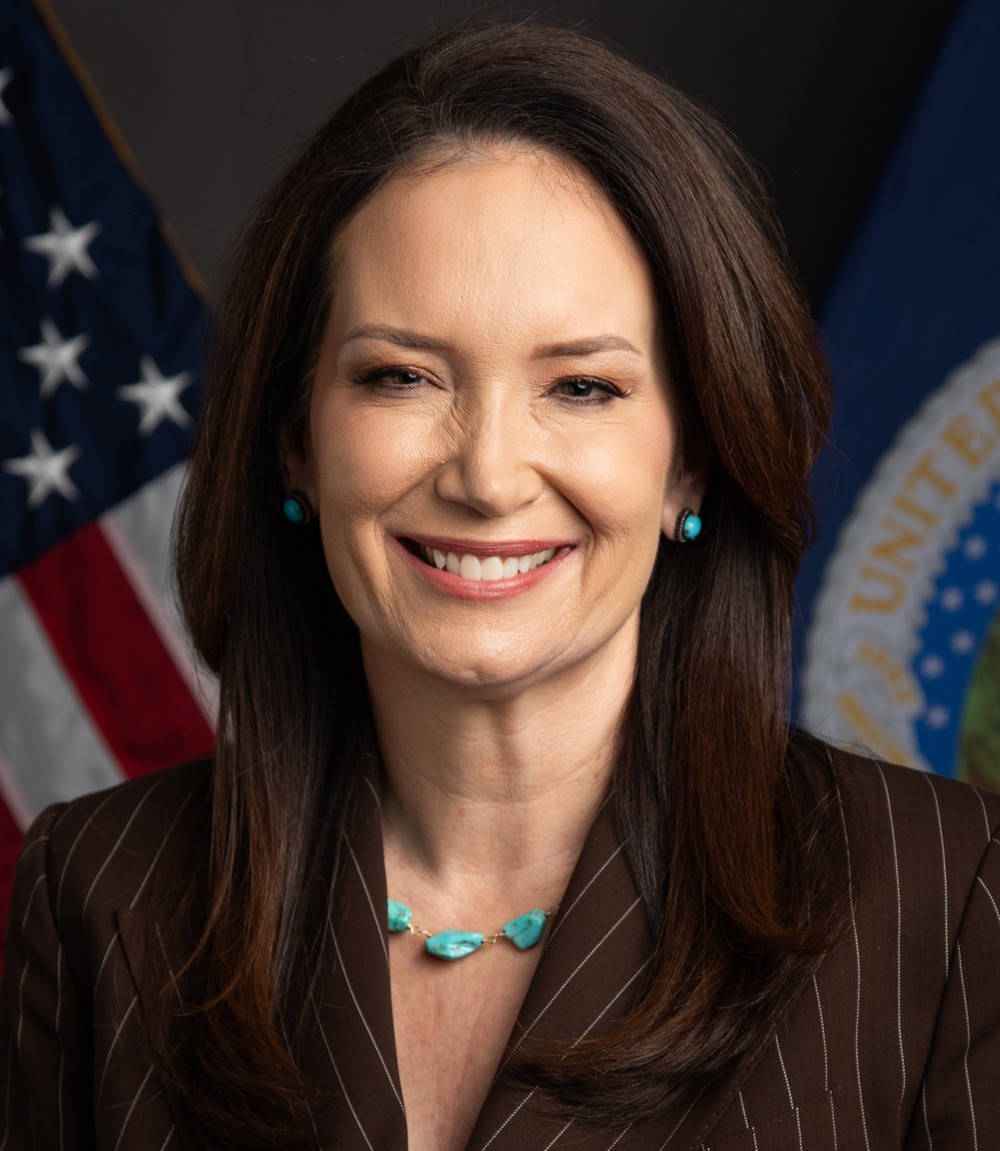
A federal judge has ruled that Agriculture Secretary Brooke Rollins crossed a constitutional line with the Christian messages she emailed to the entire U.S. Department of Agriculture workforce, an agency of roughly 100,000 employees. In an order issued Thursday, Nov. 19, U.S. District Judge Trina L. Thompson of the Northern District of California wrote that two of the messages “go too far” and ordered Rollins to “recognize certain boundaries” when sending religious content to employees while the lawsuit continues.
The ruling found that the emails likely violated the First Amendment’s Establishment Clause, which bars the government from establishing or favoring a religion. The Associated Press reported that the judge said Rollins “must be careful to avoid proselytizing when communicating with workers.”
The emails at the center of the case
According to the court’s order, the messages were sent from Rollins’ official email account to all USDA employees:
- July 4, 2025: An Independence Day message that ended, “May God continue to protect the United States of America and may His favor shine over all her land.”
- Nov. 26, 2025: A Thanksgiving message attributing the first Thanksgiving in part to “gratitude towards a loving God.”
- Dec. 23, 2025: A Christmas video in which Rollins said the spirit of generosity “flows from the very first Christmas when God gave us the greatest gift possible, the gift of his Son and our Savior Jesus Christ, who came to free us from our sins and open the door to eternal life. This is the reason for the season.”
- April 5, 2026: An Easter email to “All USDA Employees” that opened “Happy Easter – He is Risen indeed!”, called Easter “the greatest story ever told, the foundation of our faith,” and urged employees to be “like the very first disciples to encounter our risen Lord.” It was topped with an illustration of the stone rolled away from Jesus’ tomb under the words “Christ is Risen.”
The plaintiffs said Rollins has not sent comparable messages for other religions’ holidays. Judge Thompson singled out the Christmas and Easter messages: “The April 5, 2026, and December 23, 2025, messages go too far. They suggest acquiescence that amounts to coercive pressure; a pressure of conformity sufficient to raise an Establishment Clause violation.”
‘I’ll never stop talking about Jesus’
The judge pointed to three factors in finding the conduct coercive: Rollins’ position of authority over the entire department, her use of official email to reach every employee, and language that assumed everyone shared her faith. Her use of “we,” “us” and “our,” the order said, “expresses a culture and environment within the USDA which ostensibly universally conforms with the Secretary’s beliefs.”
By comparing federal employees to the first disciples and calling on them to carry out “the mission each of us has been called for,” Thompson wrote, “the Secretary is portraying the agency’s work as a mission to serve her particular Christian views.”
The order also quoted Rollins’ own public remarks, filed as an exhibit in the case:
I do use this platform [as the Secretary of Agriculture]. I believe in making disciples of all nations. . . . I have been sued a couple of times for, they say, talking about Jesus too much, but I’ll never stop talking about Jesus.
“The Secretary’s goals are no secret,” the judge wrote.
Her own rulebook, turned back on her
Rather than barring religious expression outright, Thompson ordered Rollins to follow the USDA’s own religious-expression guidance, issued on Nov. 20, 2025 (Secretary’s Memorandum 1078-019). Under the order, Rollins:
- “Must stop if a colleague asks [her] to stop”
- “Cannot create a hostile work environment through persistent unwelcome advances”
- “Cannot use official authority to pressure subordinates”
The order notes that under that same guidance she may still discuss her beliefs with interested colleagues, share why her faith matters to her, politely invite coworkers to religious events and express religious views “during appropriate conversations.” The court said it “expresses no view whatsoever” on what Rollins can do in her personal capacity.
Thompson stressed that the case is not about faith itself. “This Court’s judgment says nothing about the value of prayer or those who believe in its power,” she wrote, citing James Madison: “The Religion . . . of every man must be left to the conviction and conscience of every man.”
Who sued, and why
The lawsuit was filed May 13, 2026, by the National Federation of Federal Employees, which represents about 110,000 federal workers, including more than 19,000 at USDA, along with six individual USDA employees. They are represented by Americans United for Separation of Church and State, Democracy Forward and Bryan Schwartz Law.
The employees said the messages made them feel excluded and pressured to hide their own beliefs, and that supervisors warned objections would mean “trouble,” according to the complaint as summarized in the order. One plaintiff said she no longer feels safe discussing a Buddhist holiday she celebrates; another, an atheist, said they feel silenced; a third, who is Pagan, said she feels pressure to appear Christian to get ahead at work.
“It was quite scary to come forward, but I am proud that we did so, knowing this will help everyone across USDA,” plaintiff Ashley Miller said, according to USA Today. Union president Randy Erwin called the ruling an “important victory for the First Amendment.”
Americans United president Rachel Laser said the decision “should send a message to the Trump administration that it cannot misuse taxpayer resources to preach, hold government-sponsored prayer services during work time, and broadcast Christian Nationalism over official communication channels. Not on our watch.”
What happens next
The judge did side with the government on one point, dismissing the plaintiffs’ claims under the Administrative Procedure Act after finding the emails were not an official agency rule or order. But she denied the administration’s bid to throw out the constitutional claim, so the case moves forward. A case management conference is set for Dec. 17, 2026.
When the lawsuit was filed, a USDA spokesperson told USA Today the department would not comment on pending litigation but would “keep the plaintiffs in our prayers during this process.”