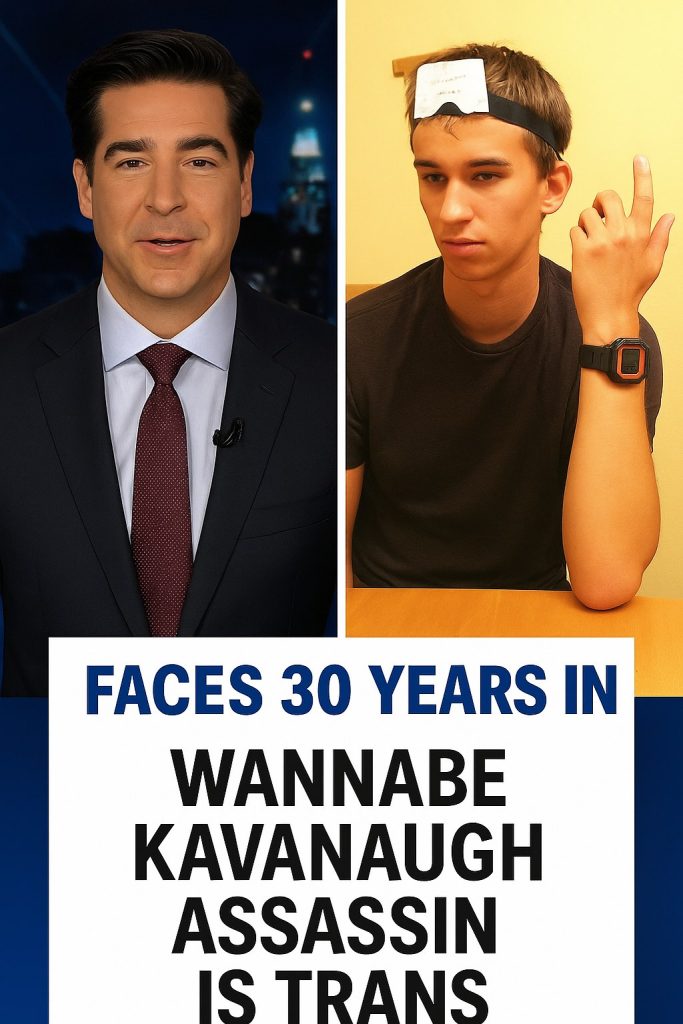
In a recent segment on Fox News, host Jesse Watters ignited a firestorm of debate after making a controversial statement regarding the recent attempt on Justice Brett Kavanaugh’s life. Watters claimed that the individual arrested in connection with the incident was “not a man” but rather trans, a remark that has prompted backlash from various corners of the social media landscape and beyond.
The statements were made following the arrest of a man identified as Nicholas John Roske, who reportedly traveled from California to Maryland with plans to assassinate Kavanaugh in response to the Supreme Court’s handling of abortion rights and gun control. Roske is charged with attempted murder, carrying firearms, and other related offenses.
During the segment, Watters asserted that Roske’s actions and identity should be categorized based on his gender identity rather than his criminal behavior. “The man who attempted to kill Brett Kavanaugh isn’t a man. He’s trans,” Watters declared, positioning his comments within a broader cultural critique of transgender identities and societal norms.
While some applauded Watters for his steadfast views on the matter, others condemned his remarks as flippant and damaging to the ongoing discourse about gender identity and public safety. Critics argue that attributing violent actions to a person’s gender identity risks stigmatizing the entire transgender community and misrepresenting the motivations behind violent acts.
Transgender voices have been particularly vocal, emphasizing that the actions of one individual do not represent a community of millions. “This is yet another example of how media figures can distort narratives to fit their agenda, often at the expense of vulnerable populations,” stated Jasmine Tyler, a prominent activist for LGBTQ+ rights. “Linking violence to transgender identities perpetuates harmful stereotypes and ignores the complexities of mental health and societal pressures.”
The debate has sparked discussions about the responsibility of media figures when discussing sensitive topics, particularly involving marginalized communities. Social media platforms were flooded with reactions, both supporting Watters’ stance and calling for accountability in how such narratives are presented. Hashtags like #StopTransHate and #TransRightsAreHumanRights gained traction as individuals sought to counteract perceived misinformation.
In the wake of this incident, organizations dedicated to LGBTQ+ rights have urged journalists and commentators to exercise caution and sensitivity in their language, as incendiary comments can exacerbate public misconceptions and increase hostility towards already marginalized communities.
As the conversation continues to evolve, it raises crucial questions about the responsible representation of identity in the media and the ongoing struggle against prejudice. With the backdrop of heightened political tensions and societal unrest, these discussions are more vital than ever in fostering understanding and compassion across all spectrums of identity.