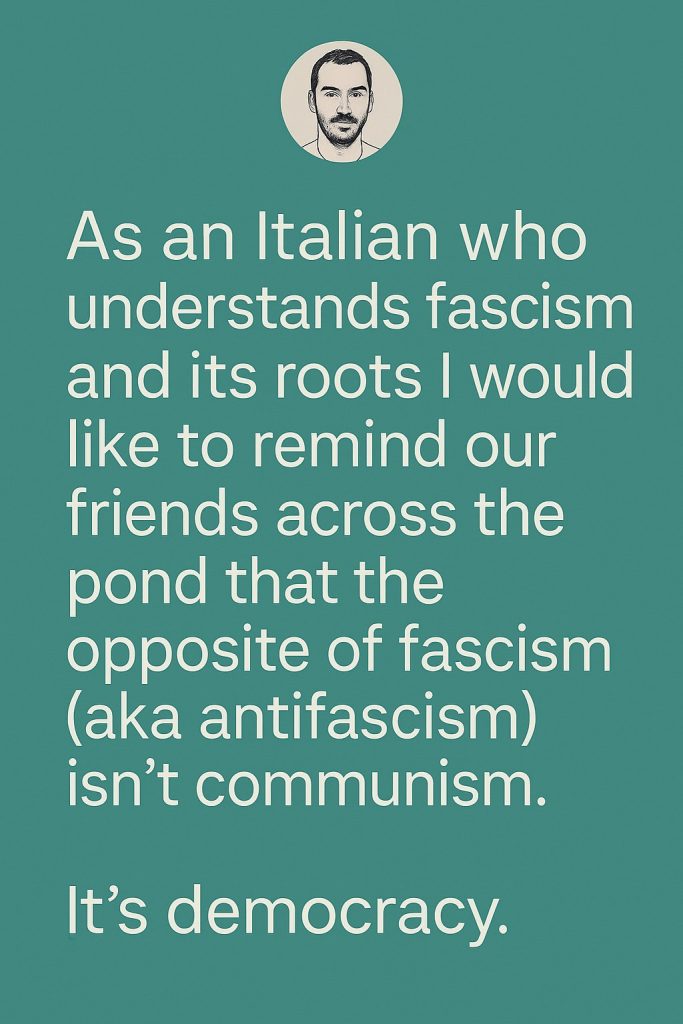
A post by user The Transformed Hubby on the social media platform Threads has ignited a fiery discussion about the historical context of fascism, particularly its Italian origins. The user, who identifies as an Italian, offered a critique to friends across the Atlantic, aiming to elucidate the nuances of fascism and its resurgence in contemporary society.
In the viral post, the user stated, “As an Italian who understands fascism and its roots, I would like to remind our friends across the pond that…” followed by a provocative analysis of the philosophical underpinnings of fascism. The statement seems to draw from a concern about how the term ‘fascism’ is often weaponized in political discourse, occasionally detached from its historical realities. This poignant call to acknowledge the complexities underlying such terms has resonated with many, propelling it into widespread discussion.
Users on social media quickly joined the conversation, some praising the post for its educational value, while others expressed skepticism regarding its intent. Discussions ranged from the importance of historical awareness to the ways in which labels such as ‘fascist’ are applied in today’s polarized political landscape. Enthusiastic participants highlighted parallels between the past and present, citing the rise of populism and the alarming correlations with authoritarian practices observed in various global contexts.
Many social media users expressed gratitude for an Italian perspective on fascism, acknowledging that such insights provide depth beyond the often binary interpretations prevalent in the American discourse. “Coming from a cultural background that directly witnessed fascism, it’s refreshing to see someone bring historical context into a discussion habitually dominated by modern-day interpretations,” one user noted.
However, not all returned the sentiment. Critics pointed out that while historical knowledge is essential, it shouldn’t overshadow the real concerns surrounding the resurfacing of authoritarian ideologies worldwide. “We cannot ignore the implications of fascism as it manifests today. Understanding history is vital, but we must actively resist its modern interpretations,” responded another user, highlighting the fine line between academic discourse and real-world responsibility.
The rising popularity of The Transformed Hubby’s thread underscores a broader desire for historical literacy within political discussions. In a time when political dialogue often seems entrenched in slogans devoid of substance, many are seeking clarity and informed perspectives. People yearn for conversation that transcends fear-based rhetoric and seeks to explore complex issues through the lens of history.
This dialogue serves not only as a reminder of the importance of educating oneself about historical precedents but also as a prompt for users to be vigilant about how history is written and interpreted over time. As the post continues to circulate, it will likely spark further debate, challenging individuals to reflect on the implications of identity, ideologies, and their relevance in contemporary society.
Where to Learn More
- The Origins of Fascism: Understanding Its Roots – BBC News
- Fascism: The Rise and Fall of the Regime – History.com
- What Fascism Really Means in Today’s Context – The Atlantic
- Understanding Fascism: A Historical Perspective – National Geographic
- The Rise of Fascism in Contemporary Populism – The Guardian