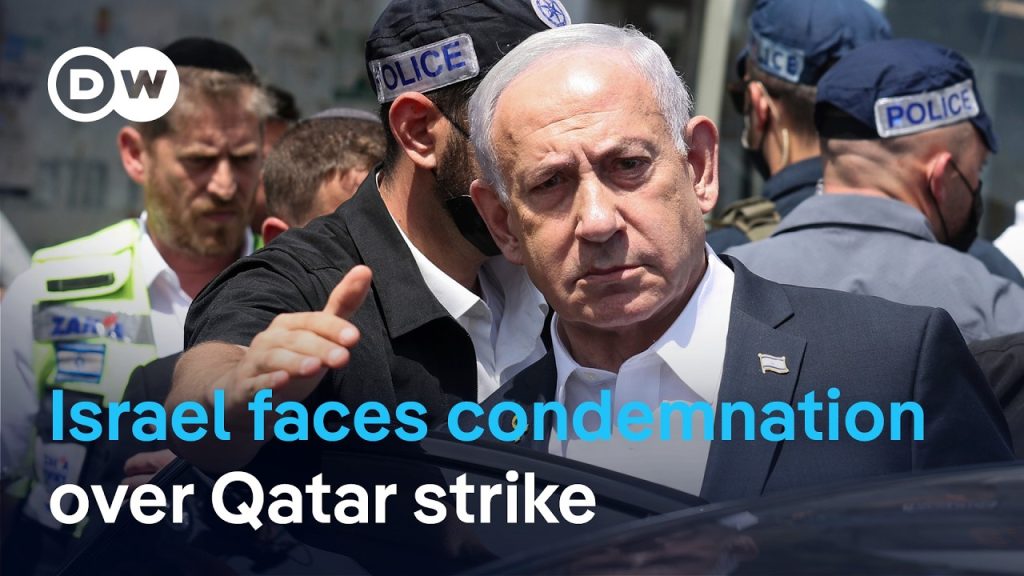
Israel’s recent airstrike on Hamas’s leadership in Qatar has provoked significant international condemnation and raised questions about the implications for ongoing ceasefire negotiations in Gaza. The strike occurred as top Hamas negotiators gathered to discuss a proposed ceasefire deal, complicating efforts for peace in the region.

The United Nations Security Council has called for an emergency meeting in response to the attack, underscoring the gravity of the situation. Arab leaders, as well as officials from Russia and China, have voiced their strong disapproval, highlighting the strike’s potential to undermine diplomatic solutions and escalate tensions further.
On Tuesday, Israeli forces targeted the headquarters of Hamas’s political leadership in Doha, prompting widespread outrage. The Israeli government justified the airstrike, claiming it was a necessary measure against a group it labels as terrorists. However, critics argue that such actions jeopardize efforts to reach a peaceful resolution to the ongoing conflict and threaten the lives of those involved in crucial negotiations.
U.S. President Donald Trump, whose administration has played a controversial role in Middle Eastern diplomacy, expressed that the attack did not align with the interests of either Israel or the United States. This statement reflects a growing concern among international leaders regarding the escalation of violence and the challenges it poses to ongoing diplomatic efforts.
Initial reports from Hamas indicate that only low-ranking members were killed in the Israeli strike, but the broader implications of this military action have cast doubt on the viability of ongoing negotiations aimed at securing a ceasefire and addressing hostage situations in Gaza. The complexities surrounding the timing and execution of the strike remain unclear, raising questions about the strategic calculations that led to this moment.
Professor Sultan Barakat from Hammed bin Khalifa University in Qatar noted the confusion surrounding the timelines and motivations behind the airstrike. He explained that multiple variables are at play, complicating the narrative about who was aware of the attack and at what point. This complexity further emphasizes the precarious nature of the current geopolitical landscape.
The attack’s timing is particularly significant, coinciding with efforts to discuss a ceasefire that could potentially de-escalate the conflict and address humanitarian concerns for the millions affected in Gaza. With diplomatic channels already strained, this airstrike may represent a critical turning point that could derail not just the immediate negotiations but longer-term peace prospects.
As the international community mobilizes to address the fallout from Israel’s actions, the question remains whether peace can be achieved in such a fractured environment. The urgency for a diplomatic resolution has never been more apparent, given the complex interplay of regional politics, the role of external powers, and the pressing need for humanitarian assistance for those caught in the crossfire.
The ongoing situation serves as a reminder of the fragile nature of peace in the Middle East and the intricate web of relationships and power dynamics that influence the conflict. As leaders convene to discuss these disturbing developments, the hope for a sustainable solution hangs in the balance.