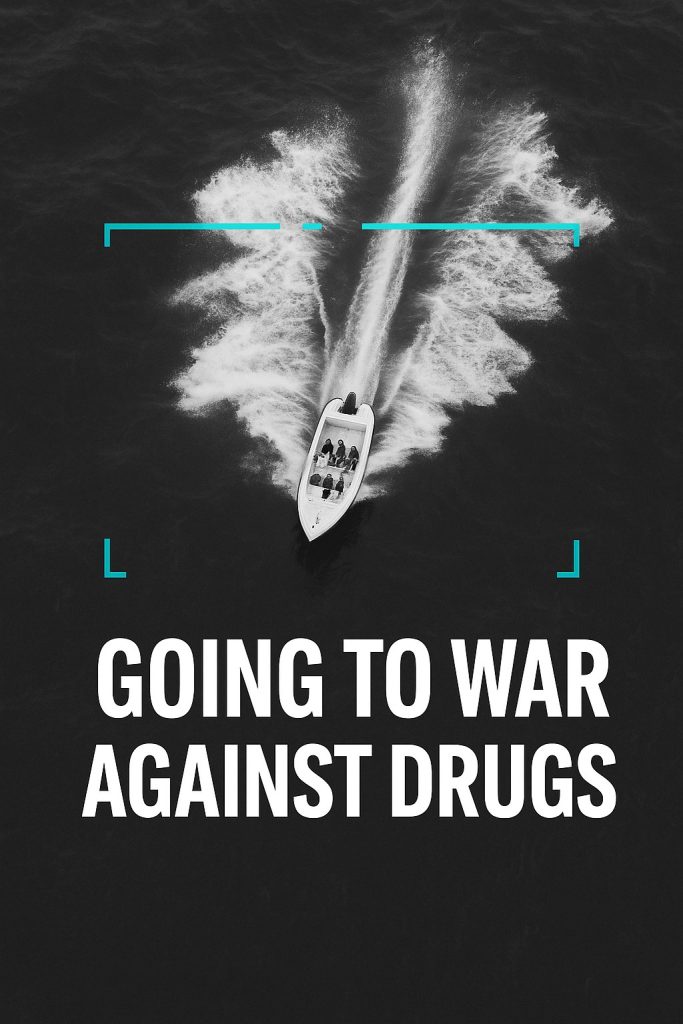
As the U.S. government continues to grapple with the multifaceted crisis of drug addiction and trafficking, a provocative theory has surfaced on social media: the Trump administration’s war on drugs could serve as a strategic cover for opening up lucrative markets in Latin America for American businesses.
Critics suggest that the administration’s intense focus on combating drug cartels and trafficking could be aligning with broader economic interests. Some analysts argue that the war on drugs often provides a convenient narrative to justify U.S. intervention in Latin America, simultaneously fostering relationships and access for American corporations eager to exploit emerging markets.
Former White House officials and political analysts highlighted the timeline of policies introduced by the Trump administration, pointing out tours and discussions with business leaders in areas most impacted by drug-related violence. “When you look at the sweeping rhetoric around drug trafficking, it seems like it goes hand-in-hand with conversations about strengthening economic relations with Latin American countries,” said Dr. Maria Gonzalez, a political economist at Stanford University.
This potential dual agenda is not merely speculation. In July 2020, then-Secretary of State Mike Pompeo announced a new strategy aimed at strengthening alliances with Latin American nations under the guise of fighting narcotics. However, many observers noted that with U.S. investments just as prominently on the agenda, it raised questions about whether the drug war was the primary goal.
The regional implications of this theory are immense. Countries like Colombia and Mexico have historically been under the thumb of U.S. interests while facing insurgent violence and drug-related crime. The potential opening of markets through trade agreements and business partnerships could create a façade of humanitarian intervention while facilitating corporate interests. Over the past few years, U.S. businesses have made significant inroads into Latin America, especially in sectors such as agriculture, technology, and manufacturing.
Advocates for this new economic approach argue that fair market access and trade agreements can lead to reducing the vulnerabilities that fuel drug trafficking. As they see it, increased economic opportunities could disrupt cycles of poverty that both contribute to and are worsened by the drug trade.
On the other hand, critics warn that this strategy comes with ethical ramifications. “We must ask ourselves whether we’re truly aiming to help these nations, or if we’re just seeking to capitalize on their struggles,” cautioned Mark Stein, an international relations expert at Yale University. Many experts are urging caution, suggesting that U.S. engagement should prioritize local well-being over profit margins.
As the debate rages on regarding the true intentions behind U.S. policies in Latin America, the intersection of drug enforcement and business expansion continues to provoke discussions across social media platforms. The hope is that, as this narrative unfolds, transparency in U.S.-Latin American relations can prevail over opportunistic tactics masked as humanitarian efforts.
Where to Learn More
- Opening Latin America to U.S. Businesses – Brookings Institution – Brookings Institution
- What the U.S.’s New Drug Strategy in Latin America is Worth – CNBC – CNBC
- The Drug War as a Cover for U.S. Foreign Policy – The Washington Post – The Washington Post
- Problems with U.S. Drug Policy in Latin America – Foreign Affairs – Foreign Affairs