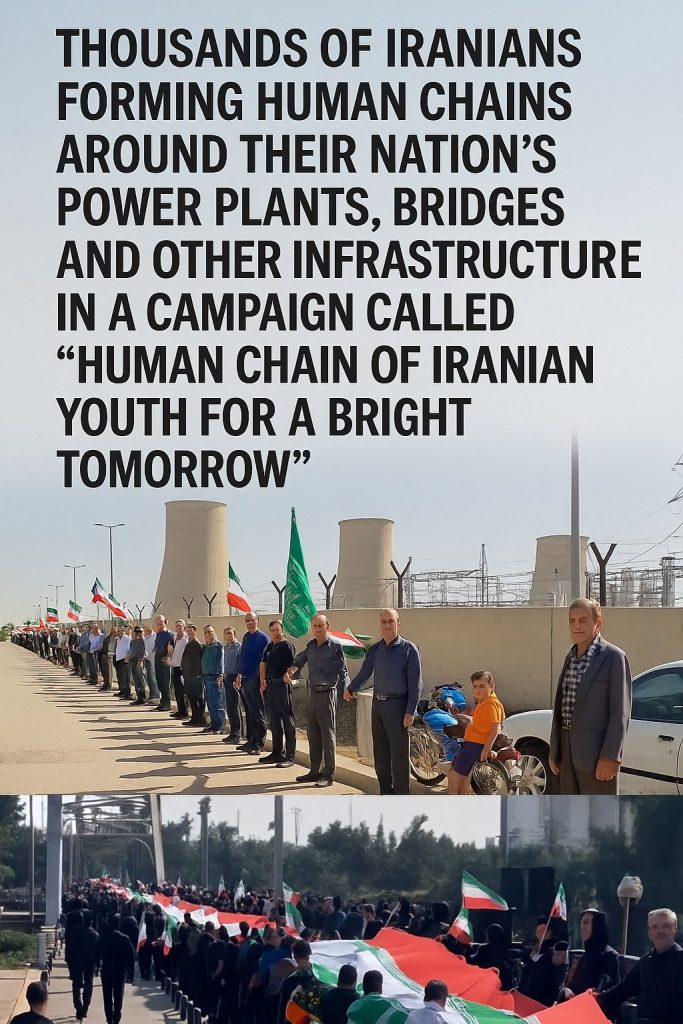
Across Iran today, thousands of young Iranians are joining hands in a powerful display of solidarity, forming human chains around critical infrastructure including power plants, bridges, hospitals, and water treatment facilities. This grassroots movement, known as the “Human Chain of Iranian Youth for a Bright Tomorrow,” reflects the courage and resilience of ordinary people standing together to safeguard the lifelines of their nation.
The backdrop to this unprecedented mobilization is a dire geopolitical standoff. Former U.S. President Donald Trump issued a chilling warning, stating that “a whole civilization will die tonight” if Iran does not comply with his demand to reopen the Strait of Hormuz by a specified deadline. The Strait, a key maritime choke point, has long been a flashpoint in international tensions. However, the stakes today have escalated beyond diplomatic brinkmanship to the threat of military aggression, with American bombs looming over the infrastructures that sustain everyday Iranian life.
What makes this moment heartbreakingly poignant is not merely the threat itself but the faces of those standing in harm’s way — teachers, students, athletes, and everyday citizens who “place their bodies between their country’s lights and American bombs,” as one witness described it. These individuals are not combatants or politicians; they are families striving to protect hospitals where the sick are treated, water plants that supply drinking water, and the ability of children to simply turn on a light in their homes.
“There are no words adequate for the sorrow of watching this,” has been a common refrain across social media platforms. Amnesty International’s secretary general has echoed the urgency of the crisis, warning that any attack on Iran’s infrastructure would inflict the greatest harm on innocent civilians. “Civilians will be the first to suffer,” she cautioned, highlighting the humanitarian catastrophe that such a conflict would unleash.
While the immediate threat looms, many observers warn that the damage has already been done — not just physically but to the global conscience. The world has witnessed threats to extinguish an entire civilization’s “lights” without collectively stepping in to prevent it. This collective silence has become a stain on the conscience of international society, transcending political divisions and partisan loyalties.
This crisis did not emerge overnight. It is the culmination of over a decade of inaction and failure to hold extremism and dangerous rhetoric accountable. Analysts point to ten years of normalized aggression, partisan protection, and institutional failures within the United States. From media outlets that presented inflammatory threats as mere political theater to elected officials who either enabled or failed to challenge incendiary actions, the runway for this moment was paved slowly and incrementally.
History will remember those who stood up and those who looked away. Today’s human chains in Iran exemplify a grassroots resistance, but the broader international community now faces a reckoning. The question remains: will we acknowledge our collective responsibility to protect not just infrastructure, but humanity itself?
For thousands of Iranian youth standing arm in arm beneath the threat of violence, the message is clear — they did not start this threat, they do not deserve it, but their hope for a brighter tomorrow remains unyielded.
Where to Learn More
- Amnesty International Warns of Civilian Risks Amid Iran Tensions – Amnesty International
- Iranians Form Human Chains to Protect Infrastructure – BBC News
- Iranian Youth’s Human Chain Protests Amid Strait of Hormuz Standoff – The New York Times
- Iranian Youth Rally to Protect Critical Infrastructure – Al Jazeera