
A groundbreaking scientific trial has demonstrated that an innovative mosquito control method not only decreases mosquito populations but also significantly reduces the incidence of dengue fever in the surrounding areas.
Dengue, often referred to as “breakbone” fever, is a serious viral infection transmitted by mosquitoes. It can be extremely debilitating and poses a heightened risk if contracted multiple times.
In Singapore, the Aedes aegypti mosquito population is managed by releasing male mosquitoes that have been bred in captivity and are carriers of a natural bacterium known as Wolbachia. This bacterium is commonly found in various insect species.
In this initiative, the Wolbachia has been modified so that any eggs produced by mating with the infected males become sterile. This groundbreaking technique is known as the Wolbachia-mediated incompatible insect technique—sterile insect technique (IIT-SIT), as explained by Medical X Press.
While IIT-SIT has been implemented in several regions worldwide, this marks the first randomized-controlled trial to evaluate its effectiveness in controlling and reducing the transmission of mosquito-borne diseases.
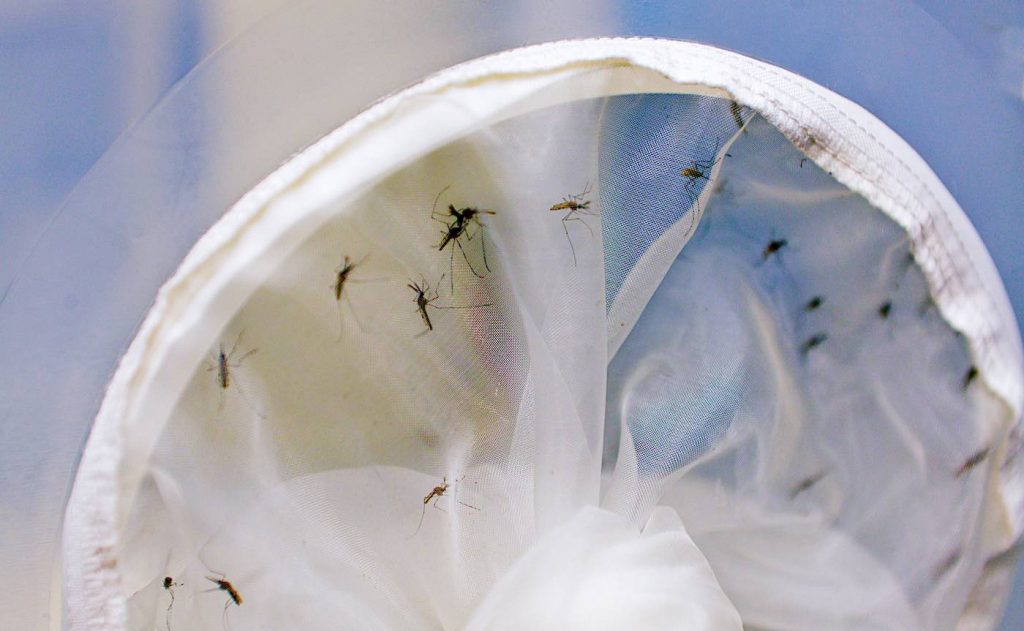
Researchers from the Environmental Health Institute in Singapore’s National Environment Agency, along with collaborators, selected 15 densely populated areas across the city-state. They randomly assigned these areas into two groups: one that would receive the IIT-SIT male mosquitoes and another that would not.
The scientists conducted their research without prior knowledge of which areas received the mosquito releases. They utilized traps to capture and estimate mosquito populations, alongside national health statistics to track dengue fever cases over a 20-month period.
By the conclusion of the study in 2024, the results were striking. The number of mosquitoes captured in traps located in areas where Wolbachia-infected males were released decreased by an impressive 77%. Additionally, only 6% of residents in these study areas tested positive for dengue fever, compared to 21% in the control areas, resulting in a remarkable transmission reduction of approximately 71%.
This study provides the first scientifically robust evidence that the IIT-SIT method, combined with Wolbachia, is effective in controlling both the dengue virus and the mosquitoes that spread it. This finding is particularly valuable as the world faces a surge in dengue cases.
Share these fantastic results with your friends on social media and spread the word about this promising advancement in mosquito control!