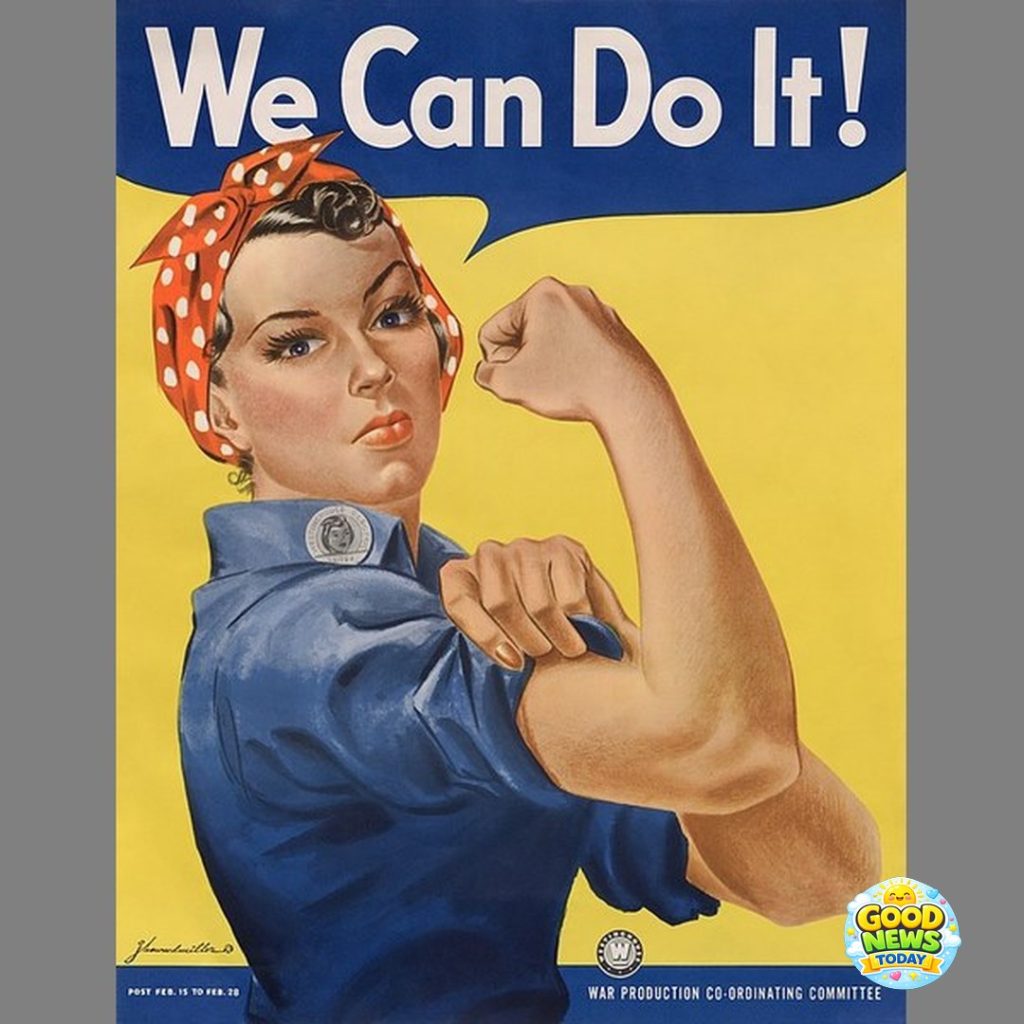
Today marks a significant milestone as we celebrate the 80th anniversary of the iconic “We Can Do It!” poster, which first graced the walls of several Westinghouse Electric factories in Pittsburgh, PA, back in 1943. Initially designed to boost productivity among workers, this powerful image has since become one of the most recognized symbols of American wartime motivation. Although it’s often associated with the Rosie the Riveter series, the poster was primarily aimed at women working with helmet liners made from a resinous material called Micarta. The worker in the poster, proudly wearing her Westinghouse badge, donned red, white, and blue attire, subtly invoking a sense of patriotism that was common among corporate war production committees of the era.
Interestingly, after just two weeks of display, the poster faded into obscurity until it was rediscovered by Washington Post Magazine, leading to its resurgence as an emblem of women’s rights. This newfound recognition culminated in its feature on the cover of Smithsonian Magazine in 1994 and its transformation into a first-class US postage stamp in 1999. Today, it proudly stands as one of the ten most-requested images at the National Archives and Records Administration.
Ed Reis, a dedicated volunteer historian for Westinghouse, pointed out that the original image was not actually shown to female riveters during the war, making the association with Rosie the Riveter somewhat misplaced. Instead, the woman depicted in the poster could humorously be referred to as “Molly the Micarta Molder” or “Helen the Helmet Liner Maker.”
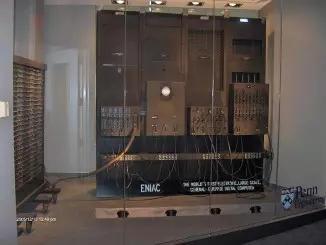
Additionally, in another noteworthy event on this date, we remember the unveiling of the United States’ first all-purpose computer—ENIAC—80 years ago. This groundbreaking machine, known as the Electronic Numerical Integrator And Computer, was not only digital but also programmable, making it a staggering one thousand times faster than the electro-mechanical machines of its time. Funded by the Army, ENIAC was humorously dubbed a “Giant Brain” by newspapers. Measuring approximately 8×3×100 feet and weighing over 27 tons, it was a true marvel of engineering, packed with 17,468 vacuum tubes, 7,200 crystal diodes, 1,500 relays, and much more. Today, it resides at the University of Pennsylvania.
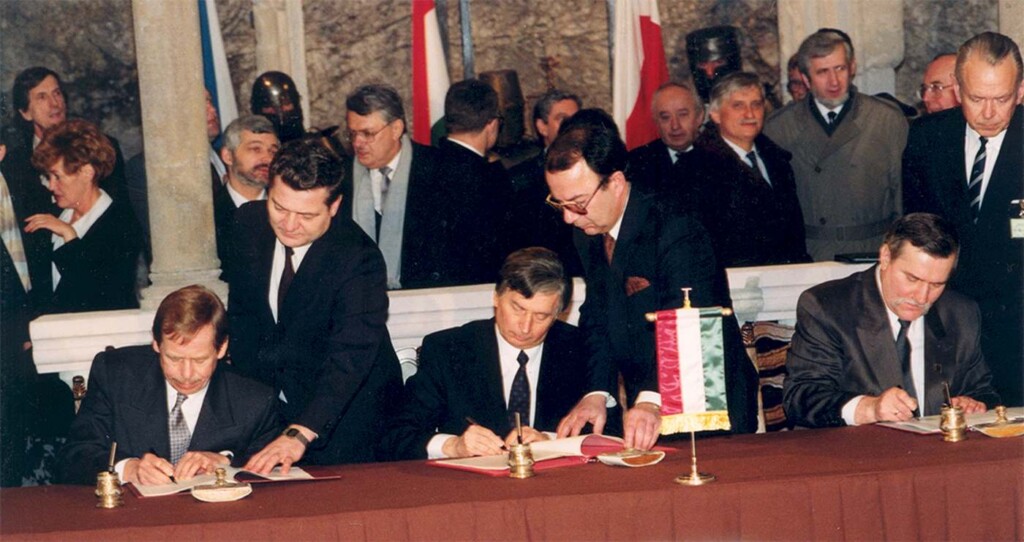
Finally, we also celebrate the formation of the Visegrád Group 35 years ago today, as Czechoslovakia, Poland, and Hungary joined forces to transition from communism toward free market capitalism and European Union integration. This cooperation agreement, signed by notable leaders including Czechoslovakia’s Václav Havel and Poland’s Lech Wałęsa, paved the way for these nations to successfully join the EU together in 2004. If the V4 were a single nation, it would boast the fifth-largest GDP in Europe, showcasing the strength and promise of collaboration.