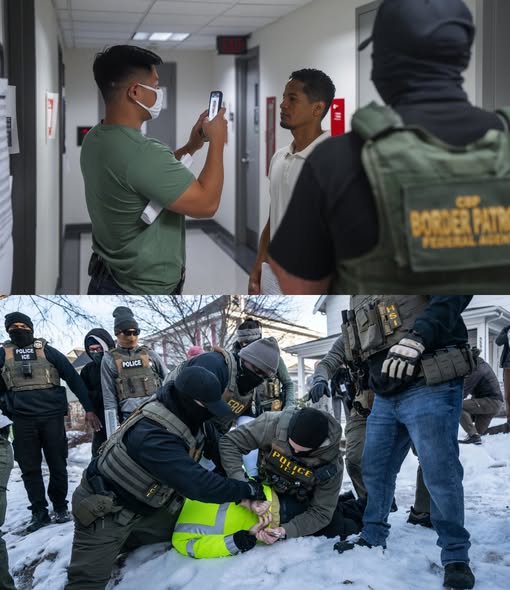
The U.S. Department of Homeland Security (DHS) is rapidly expanding its biometric surveillance capabilities, with recent developments revealing a significant push toward iris recognition technology as part of its broader immigration enforcement efforts. Last week, ICE (Immigration and Customs Enforcement) awarded a no-bid contract worth $25 million to BI2 Technologies, a company specializing in iris scanning systems, marking a massive escalation in federal biometric data collection.
This contract, more than five times larger than any previous DHS deal for the same technology, is set to fund the deployment of hundreds of iris scanners nationwide. The initiative is part of a larger plan under the current administration to intensify immigration enforcement and deportation operations, but critics warn that the implications extend far beyond that scope.
Unlike traditional forms of identification, iris scans provide a permanent, unique biological identifier—an unchangeable marker as distinctive as fingerprints. These scans are being collected from individuals detained by federal authorities, with the government storing the data in vast biometric databases. Once in the database, these identifiers can be used to track individuals indefinitely, raising serious privacy and civil liberties concerns.
Privacy advocates and experts are sounding the alarm. Cooper Quintin of the Electronic Frontier Foundation (EFF) shouted a warning about the potential for abuse. He characterized ICE as “a very rogue agency” capable of expanding iris recognition to include scanning everyone it encounters, not just fugitives or recent deportees. According to Quintin, such infrastructure could facilitate ongoing mass surveillance, transcending law enforcement’s original intent.
This concern isn’t hypothetical. NPR has already reported instances where federal immigration officers collected DNA from detainees—including legal observers and peaceful protesters—who had committed no crime. These individuals’ biological data, which includes DNA and now iris scans, are stored in government databases, enabling long-term tracking and surveillance. And that’s just the beginning.
The implications are alarming: biometric data, which is fixed and irreplaceable, can persist far longer than any temporary detention or legal dispute. As these technologies become more embedded in federal enforcement, the scope of surveillance is poised to expand beyond its initial targets, affecting citizens and non-citizens alike.
Despite the lack of legislative oversight, the federal government’s investment signals a shift toward permanent biometric infrastructure—funded with taxpayer dollars—that can be leveraged for law enforcement activities far removed from immigration enforcement. The potential misuse of this data raises fundamental questions about privacy rights, government overreach, and the future of civil liberties in America.
This new biometric registry, built on weak legal frameworks and with limited public accountability, exemplifies how surveillance tools once considered niche can become pervasive, legacy systems that outlast political administrations and policy debates. As the surveillance state evolves, vigilance from citizens and privacy advocates remains essential in safeguarding constitutional rights.