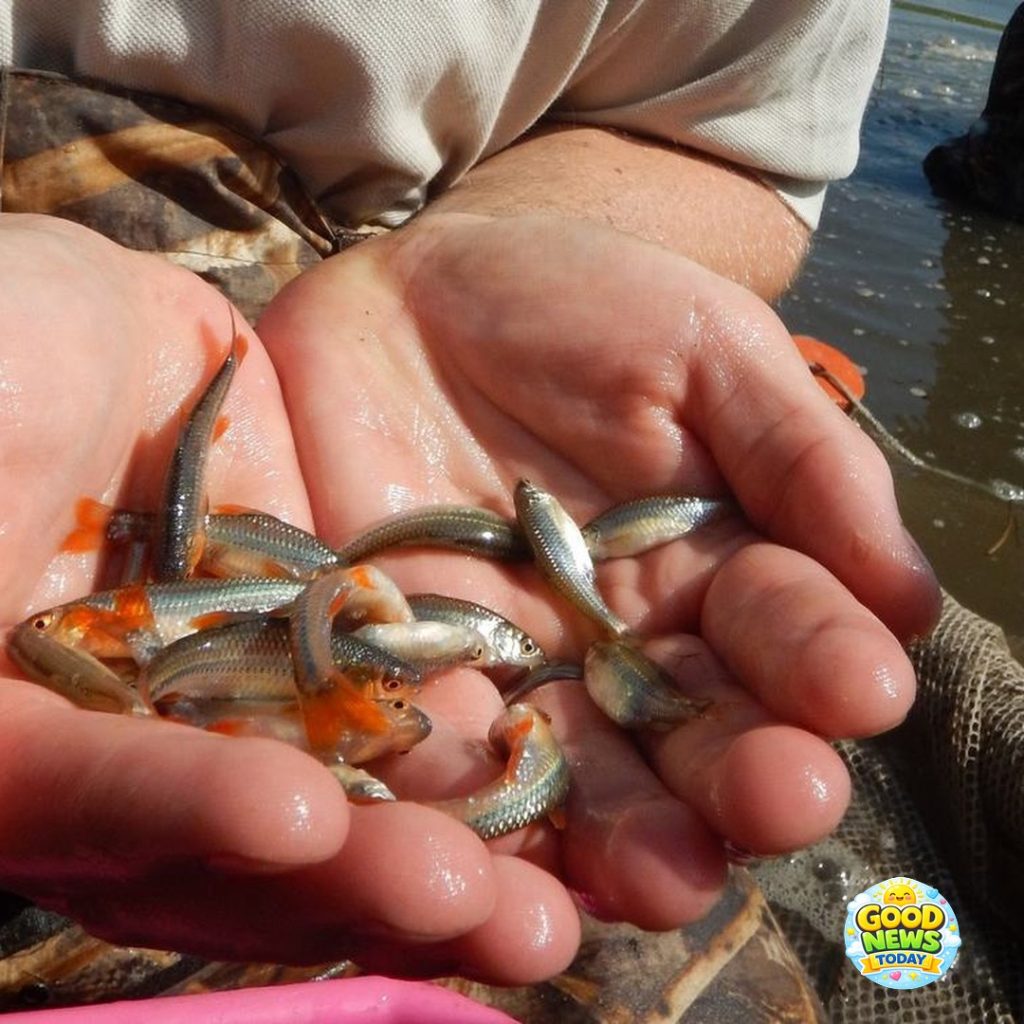
In Iowa, a small yet mighty fish has sparked a remarkable conservation initiative, leading to the restoration of hundreds of ponds to their natural glory. This effort, initially aimed at protecting the federally-endangered Topeka shiner, has also proven effective in addressing the state’s nutrient runoff challenges.
The Topeka shiner, a member of the minnow family, was once abundant throughout Iowa, a state known for its prairies but historically rich in wetland ecosystems. Heavy rains would carve new paths for rivers, creating oxbow lakes—curved water bodies formed when river bends become isolated. These oxbow lakes, which once covered 11% of Iowa, provided a vibrant micro wetland habitat. However, agricultural expansion has led to the disappearance of over 10,000 of these essential water bodies, resulting in the decline of the shiner population.
In 1998, the Topeka shiner was officially listed as endangered. By 2000, the U.S. Fish and Wildlife Service, in partnership with the Iowa chapter of the Nature Conservancy, began identifying and restoring these vital oxbow lakes to help save the shiner species. As the first 20 lakes were restored, conservationists noticed a significant improvement: agricultural pollutants were settling in the mud of these lakes instead of flowing into streams.
“It really is a success story,” remarked Karen Wilke, associate director of freshwater at the Nature Conservancy in Iowa. “Now we’re not just doing it for the Topeka shiner, but we’re also enhancing water quality.”
As the oxbows have been revitalized, the shiner has made a triumphant return. The positive impact extends well beyond the shiner, with around 57 species of fish and 81 species of birds now calling these restored wetlands home. The rejuvenated ecosystems have also attracted mussels, turtles, amphibians, beavers, and even river otters. “I think all the species are eager to reclaim this habitat and have more water available in the landscape,” Wilke noted.
While the restoration of these wetlands comes at a cost of tens of thousands of dollars each, a blend of private funding, state, and federal grants ensures that landowners can participate without financial burden. In 2011, the Iowa Soybean Association joined the cause, bringing renewed energy to the restoration of oxbows in the Boone River watershed in north-central Iowa.
To date, Topeka shiners have been recorded in 60% of the more than 200 oxbow lakes restored across Iowa, with an impressive 97% of these areas being privately owned. This initiative not only supports the revival of an endangered species but also enriches the entire ecosystem, showcasing the power of collaboration in conservation efforts.