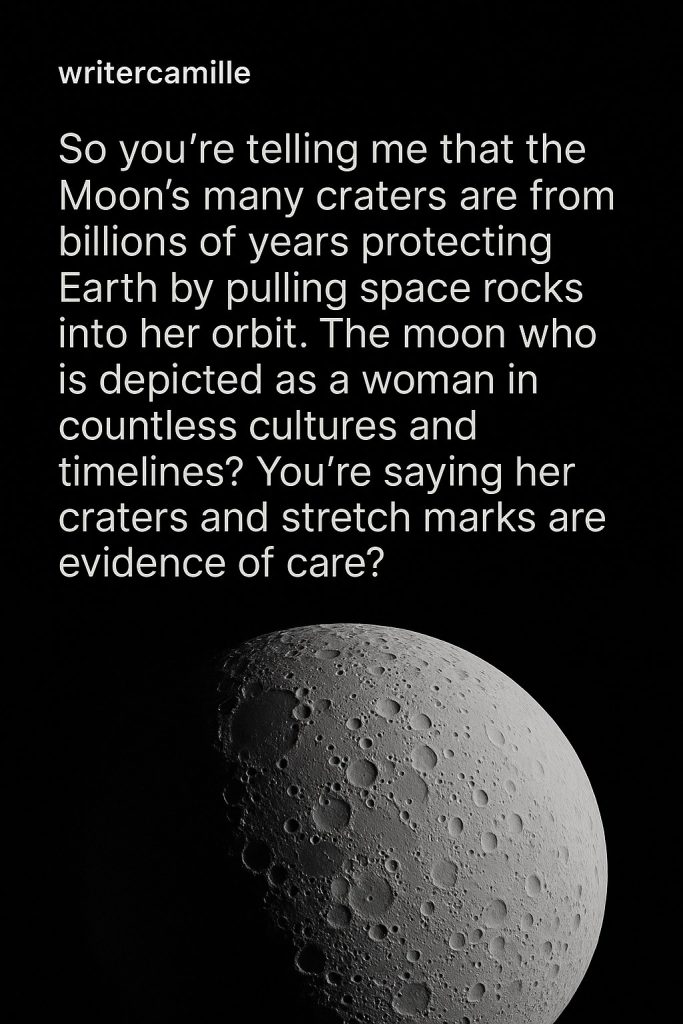
In a viral social media post capturing the imagination of millions, user @writercamille sparked renewed fascination with the Moon’s cratered surface by highlighting its vital role in protecting Earth. The message was simple yet profound: the countless craters pockmarking our lunar neighbor are a record of billions of years of cosmic collisions that the Moon – rather than Earth – largely absorbed.
Why does the Moon have so many craters while Earth’s surface looks comparatively smooth? The answer lies in atmospheric and gravitational differences that make our planet less of a target and better at preserving its surface. Earth’s dense atmosphere burns up many smaller meteoroids before they can reach the ground, and geological processes like erosion, volcanic activity, and plate tectonics constantly renew the Earth’s crust – wiping away impact scars over time.
By contrast, the Moon lacks a significant atmosphere and tectonic activity. Over billions of years, space rocks ranging from tiny micrometeoroids to massive asteroids have struck its surface, leaving the pocked and scarred terrain visible from Earth today. These lunar craters serve as a frozen archive of our solar system’s violent past.
More importantly, the Moon’s gravitational pull acts as a cosmic shield for Earth. By attracting and absorbing many of these space rocks, the Moon reduces the frequency and severity of impacts on Earth’s surface. This protective effect may have been crucial to allowing life to evolve and persist on our planet without catastrophic interruptions from large asteroid collisions.
Scientists have studied the Moon’s craters to better understand the timeline and patterns of asteroid bombardments. For example, the famous Late Heavy Bombardment period some 4 billion years ago, when a surge of impacts reshaped many surfaces in the inner solar system, is well documented by lunar craters. This period likely influenced crucial events in Earth’s geological and biological history.
The viral post shines a spotlight on the often-underappreciated fact that the Moon is not just a passive satellite, but an active participant in the preservation of life on Earth. Its battered surface is evidence not of neglect but of sacrifice — a silent, steadfast guardian absorbing the cosmic hazards that might otherwise devastate our home.
So the next time you gaze up at the Moon’s cratered face, remember the powerful story it tells: billions of years of deflected dangers and cosmic encounters, all helping to keep Earth safe and sound. It’s a stellar reminder that sometimes, scars carry the greatest tales of protection and survival.
Where to Learn More
- Earth’s Moon Overview – NASA Solar System Exploration
- How the Moon Protects Earth from Meteoroids – Space.com
- Why Earth Has Fewer Craters than the Moon – Scientific American
- Late Heavy Bombardment – Encyclopaedia Britannica