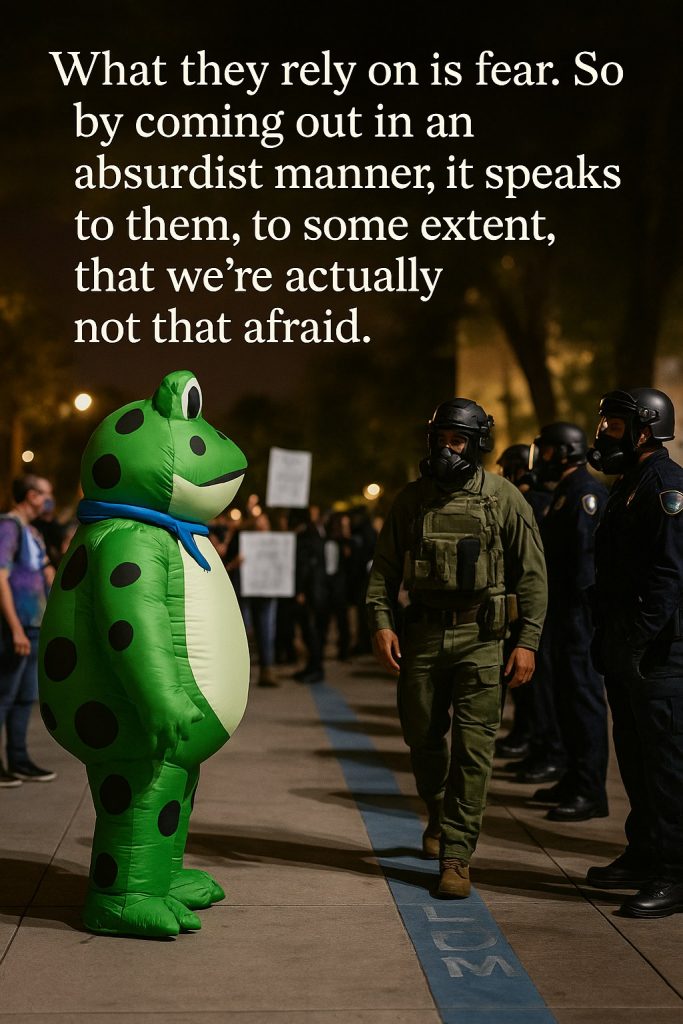
“What they rely on is fear. So by coming out in an absurdist manner, it speaks to them, to some extent, that we’re actually not that afraid.” This statement, resonating across social media platforms, captures a growing cultural shift toward using humor and absurdity as a weapon against intimidation and fear-based tactics.
In an age defined by unprecedented levels of information—and misinformation—fear has become a central tool for control. Various institutions, political groups, and online communities often leverage anxiety as a means to maintain power or suppress dissent. Yet, as this recent viral commentary suggests, a counter-movement is emerging that flips the script: instead of succumbing to fear, individuals and collectives are embracing absurdity to diffuse tension and expose the irrationality behind the threats.
This phenomenon is not merely a social media trend but a profound cultural strategy. The use of absurdism—characterized by highlighting the illogical or nonsensical aspects of a situation—operates on multiple psychological levels. Firstly, it denies the fearmongers the emotional dominance that anxiety usually grants them. By laughing at or mocking the threats, people reclaim their power. Secondly, absurdity highlights inconsistencies and exaggerations in the fear-based narratives, encouraging critical thinking.
Recent online campaigns exemplify this shift. For instance, numerous viral memes and videos have employed bizarre and outlandish imagery to comment on serious political or social issues. These creative expressions not only entertain but serve as a form of resistance that is accessible and difficult to suppress. The strategy also resonates strongly with younger generations, who increasingly seek humor to process complex realities.
Experts in psychology and communication have long studied the disarming effects of humor on fear. Dr. Lisa Feldman Barrett, a renowned neuroscientist, notes that humor engages brain regions that regulate emotional response, often reducing anxiety and aggression. This neuroscientific insight supports why absurdist humor can puncture fear-driven rhetoric effectively.
Moreover, historical movements have used absurdity similarly. The Dada art movement in the early 20th century subverted traditional power structures and war propaganda through nonsensical and chaotic art. Likewise, political activists have staged absurdist performances to draw attention to injustices while undermining authoritarian seriousness.
However, there is also the risk that absurdity may sometimes confuse or alienate audiences if the underlying message is lost in the silliness. The balance is delicate but achievable, as shown by creators who combine sharp satire with absurdist elements to deepen public discourse.
Ultimately, this embrace of absurdity challenges the prevailing narrative that we must be fearful. It says, in effect, “We see your tactics, and we refuse to be intimidated.” In a world awash with challenges, this spirit of resilient, playful defiance could be a key ingredient for social transformation.
Where to Learn More
- “How Humor and Absurdity Undermine Fear-Based Politics” – The New York Times
- “The Psychology of Laughter and Fear” – Psychology Today
- “Absurdism as Political Resistance” – The Atlantic
- “Dada Art Movement” – Britannica